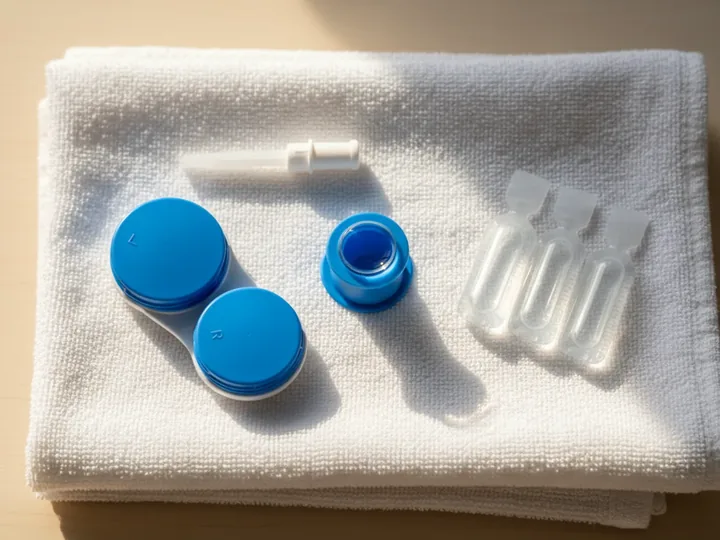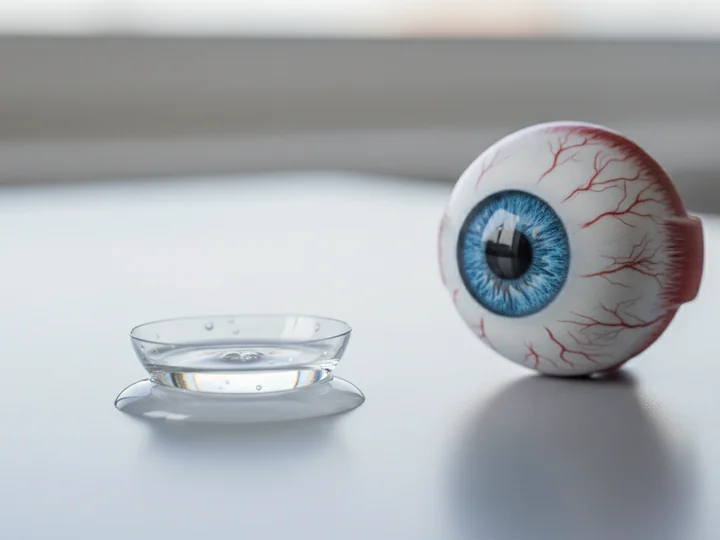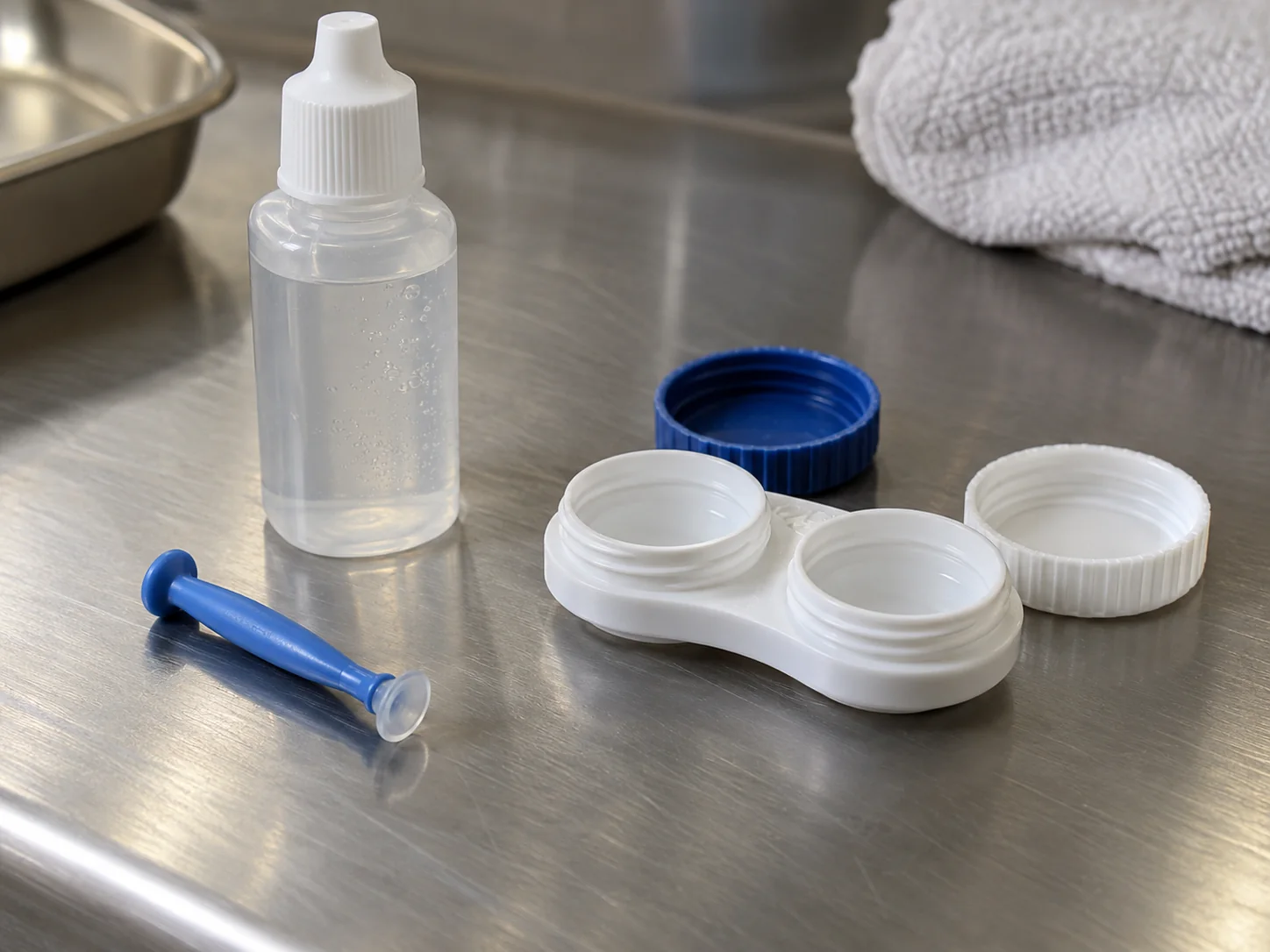
Rewetting drops are lubricating eye drops made to use while your contact lenses are in, to make a dry lens feel comfortable again. Use only drops labeled for contact lenses: the American Optometric Association warns that any eye drops not approved for contact lens wear can cause damage to both the contact lens and the eye, and it says to stay away from drops that promise to get the red out. Preservative-free drops are generally very safe with lenses. Rewetting drops don't clean or disinfect, so they never replace your lens solution. If you reach for drops all day, our optometrists in Los Angeles can find out why at a contact lens exam.
Key takeaways
- Rewetting drops are lubricating drops made for use with contact lenses in, and only drops labeled for contact lenses belong in a lens-wearing eye.
- Skip redness-relief drops with contacts, and favor preservative-free drops, which are generally very safe with lenses.
- Rewetting drops don't clean or disinfect lenses, so never use them as contact lens solution or to store lenses.
- If an eye with a lens turns red, painful or blurry, take the lens out and call us right away, or go to an emergency room when we're closed.
01
What are rewetting drops?
Rewetting drops, sometimes sold as lubricating drops for contacts, are eye drops you put in while your lenses are in. They add moisture to the lens and the surface of the eye, which helps when a lens starts to feel dry, scratchy or sticky late in the day.
They are a comfort product. Saline solution and rewetting drops are not designed to disinfect lenses, so your lenses still need the cleaning and storage routine your eye doctor gave you. Our guide to contact lens solution explains which product does which job.
02
Can you use regular eye drops with contacts?
Only if the package says the drops are for use with contact lenses. Drops that aren't approved for lens wear can damage both the lens and the eye, the AOA warns.
Rewetting drops and artificial tears overlap, since both lubricate the eye. With lenses in, the label is what matters: look for wording such as "for use with contact lenses" or "rewetting drops" on the box, and keep other drops for when the lenses are out.
- Redness relievers: the AOA says to stay away from drops that claim to "get the red out", because they typically contain chemicals that may harm long-term eye health. Our guide to eye drops for red eyes covers them.
- Preservative-free drops: in general, very safe to use with contact lenses.
- Drops with preservatives: the AOA says they can have a toxic effect on the eye and should be avoided with lenses. Our article on preservative-free eye drops explains the difference.
- Prescription eye drops: follow that drug's label. Most prescription dry eye drops go in with the lenses out, as our comparison of prescription dry eye drops shows.
Because lens materials differ, the AOA suggests you ask a doctor of optometry which drops suit your eyes and your contact lens material. The FDA gives the same advice for every lens product: use contact lens products and solutions recommended by your eye care professional.
03
How do you use rewetting drops?
Follow the label on your drops and your eye doctor's directions. The FDA tells wearers to follow their eye care professional's directions and all labeling instructions for lenses and lens care products.
- Use drops made for your type of lens, as the package states.
- Check the date: the FDA says not to use contact lens solutions that have gone beyond the expiration or discard date.
- Never wet a lens with your mouth. Saliva is not a sterile solution.
- Don't use rewetting drops to rinse, clean or store lenses. That's the job of the disinfecting solution your lenses came with.
- If you find yourself using them every hour, have your eyes and lenses checked instead of buying a bigger bottle. Needing drops that often is one of the signs on our contact lens discomfort page.
04
Why do my contacts feel dry?
Contact lenses themselves are one reason: the National Eye Institute lists people who wear contact lenses among those more likely to have dry eye. Screens add to it, since you may blink less when looking at computer or tablet screens.
Your surroundings play a part too. Windy, smoky, or dry environments make tears dry up faster, and dry eye can be a side effect of some medicines, including some taken for colds and allergies, depression and high blood pressure.
Air travel is another. The AOA notes that dry cabin air can make lenses uncomfortable, especially on flights lasting longer than three hours, and that lubricating eye drops approved for use with contact lenses may help during the flight.
When drops stop being enough, the cause is usually the tear film rather than the lens. Lenses that feel like sandpaper by mid-afternoon are a common sign of it, and treating the dryness usually does more than another bottle of drops.
05
Can you use rewetting drops with scleral lenses?
Scleral lenses work differently. We fill them with sterile preservative-free saline only, never multipurpose solution or rewetting drops, because preservatives in the bowl would sit against the cornea all day. Our scleral lens insertion and removal guide walks through the routine. Ask us at your fitting before using any drop while you wear them.
06
When should you stop using drops and see an eye doctor?
Don't keep adding drops to an eye that looks or feels wrong. The AOA advises that you see your doctor of optometry immediately if you experience redness, pain, irritation or blurred vision while wearing your lenses.
If you wear contacts and have eye pain, redness, blurred vision, light sensitivity or a white spot on the cornea, take the lens out first and call us at 310-828-2010 right away for a same-day exam, or go to an emergency room when we're closed.
07
How we help with dry contacts at Cohenmehr Optometry
Most "I can't wear contacts anymore" stories are really dry eye stories, and the fix starts with the eye's surface. At a contact lens exam we assess the tear film the lens has to float on and check how your current lens sits and moves.
From there, the answer might be a different lens material, daily disposables (our default recommendation), or treating the dryness itself with the care at our Dry Eye Center. For eyes that soft lenses can't keep comfortable, a scleral lens carries its own reservoir of saline.
08
Questions patients ask
Can you use rewetting drops without contacts?
Usually there's no need to. Rewetting drops are made and labeled for use with lenses, and for dry eyes without lenses, the most common treatment for mild dry eye is a type of eye drops called artificial tears. Read the package, and ask us if you're not sure a product suits your eyes, especially if you use drops every day.
Can you use rewetting drops as contact solution?
No. Saline solution and rewetting drops are not designed to disinfect lenses, so they can't replace the solution you clean and store lenses in. Store lenses only in fresh disinfecting solution, and the FDA adds that you should never reuse any lens solution. Our contact lens solution guide compares the products.
Are rewetting drops bad for your eyes?
Not when they're labeled for contact lenses and used as directed. The concerns are with other drops: the AOA says eye drops that contain preservatives can have a toxic effect on the eye and should be avoided with lenses, and redness relievers aren't meant for lens wear. If drops sting, or you need them more and more, have your eyes and lenses checked.
Can rewetting drops help a contact lens that's stuck?
They can. The AOA says that if a lens is exposed to water, you can instill a lubricating drop to help loosen the lens on the eye before removing it with clean, dry hands. Our article on a contact lens stuck in the eye covers what to do when a lens won't come out.
09
Sources
- American Optometric Association: Contact lens care
- FDA: Contact lens solutions and products
- National Eye Institute: Dry eye
- National Eye Institute: Causes of dry eye
Written by
Dr. Brandon Cohenmehr, OD
Specialty contact lenses, with a focus on Ortho-K, scleral lenses, and co-managing patients with keratoconus and other corneal disease. A graduate of SUNY College of Optometry.
About Dr. Brandon →