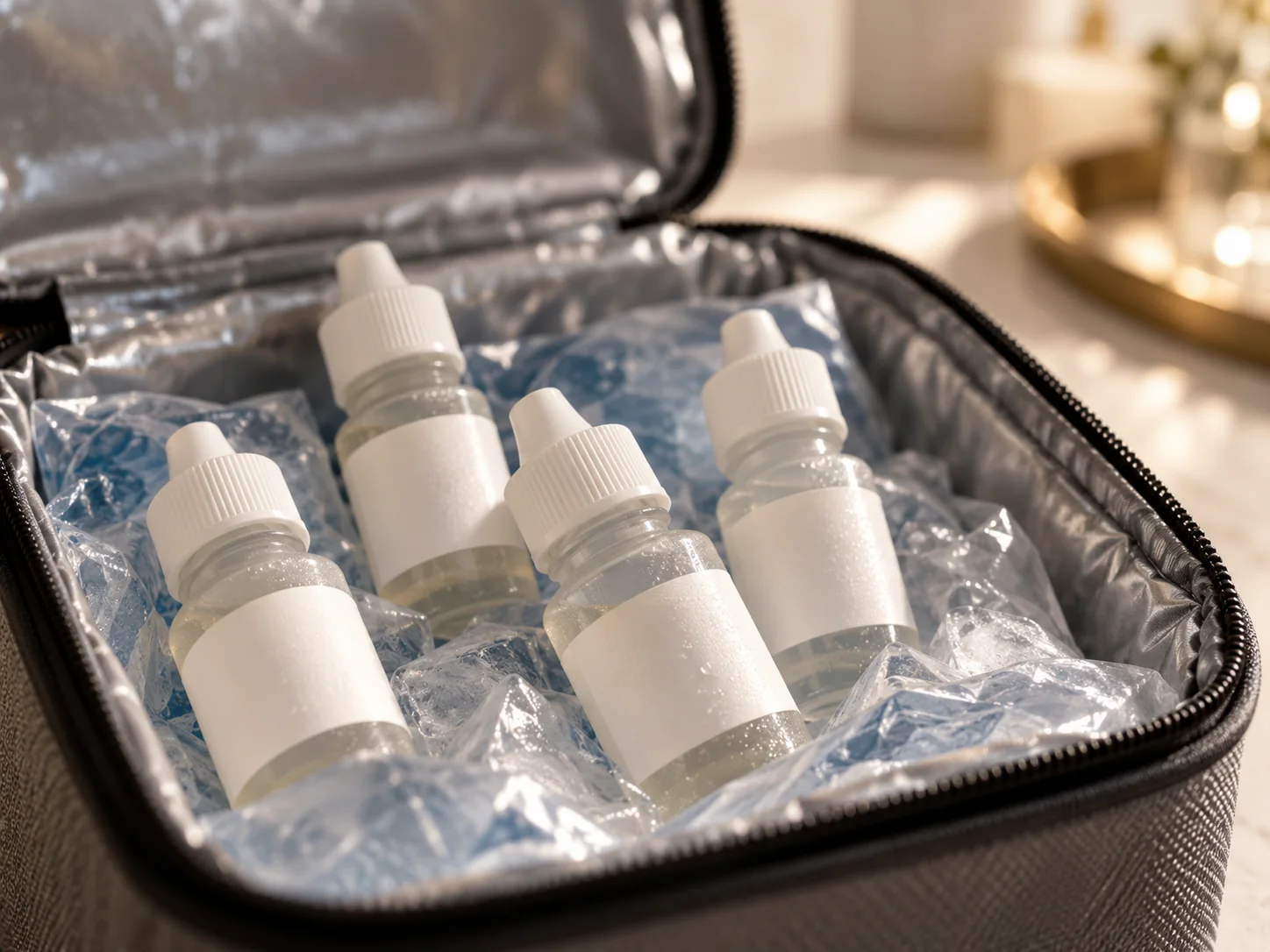
Drops made from the one ingredient bottles can’t copy: you.
Serum tears are compounded from your own blood — drawn, spun, diluted and bottled — carrying growth factors and proteins real tears contain and artificial ones never will. They are a select-case tool for surfaces that refuse to heal.
Serum tears sit near the top of the ladder: after lubricants, anti-inflammatories and gland treatment, alongside amniotic membranes and scleral lenses. For the right surface they change the trajectory; for most dry eye they are more than is needed.
A targeted treatment, not a first-line one
Often paired with a scleral lens that holds moisture against the cornea
Reassessed on a set schedule like any prescription
Considered when
Severe dry eye persists despite prescription therapy
The corneal surface damages faster than it heals
Sjögren’s or graft-versus-host disease drives dryness
Nerve-related surface disease blunts normal healing
How they happen
A standard blood draw goes to a compounding pharmacy; serum is separated, diluted to prescription strength and bottled into single-use vials you keep cold. Our Los Angeles eye doctors coordinate the order and recheck the surface on schedule.
They are made from your own blood under pharmacy compounding standards; handling and storage rules exist to keep them that way, and we review them with you.
Coverage varies widely; compounding is often out of pocket. We tell you the realistic cost before any blood is drawn.
Surfaces that respond usually show it within weeks on our staining and comfort checks — which is when we decide whether to continue.
A compounding pharmacy makes them from a standard blood draw: the blood is spun to separate the serum, which is diluted to prescription strength and bottled into single-use vials that you keep cold, with spares frozen. Serum from your own blood carries growth factors, proteins and vitamins also found in tears, at similar or higher levels. We coordinate the order and recheck your eye surface on a set schedule.
Keep the supply in the freezer and only the vial you are using in the refrigerator. Serum drops contain no preservative, so follow the cold-storage and single-use rules exactly: thaw one vial at a time and use it as your instructions say. Ask the pharmacy how long the frozen supply and an opened vial keep, and stick to those dates.
No. The FDA has not approved serum eye drops. They are compounded from your own blood, for you alone, on a doctor's prescription, and compounded drugs are not FDA-approved: the FDA does not verify their safety, effectiveness or quality. Doctors use them for severe dry eye that has damaged the eye's surface, to help it heal, and reserve them for eyes that first-line treatment has not helped. We recommend them only when your exam says so.