
Same-day urgent eye care
Mon 10–5 · Tue–Fri 8–5 310-828-2010 Book online Intake form
Cohenmehr Optometry — Vision · Dry Eye · Keratoconus Book appointment
Cohenmehr OptometryVision · Dry Eye · Keratoconus Center
Our Practice
Meet the Doctors TestimonialsShare FeedbackTraveling to See UsAreas We Serve Hours & Directions
Eye Care

Routine care

Comprehensive Eye CareContact Lens ExamsComputer Vision SyndromeGlasses and Contact LensesNeurolensAdvanced Diagnostics

Medical eye care

Glaucoma & Ocular DiseaseDiabetic Eye ExamsMacular Degeneration CareLow VisionStye & Chalazion TreatmentUrgent Care

Children’s vision

Pediatric Eye ExamsMyopia ManagementAtropineOrtho-KEssilor Stellest LensesVision Therapy

Surgery co-management

Surgical Co-ManagementLASIKPRKSMILEEVO ICLRefractive Lens ExchangeCataract SurgeryCorneal TransplantPterygium Surgery
Dry Eye
The Dry Eye CenterOptiLIFTIPL (Intense Pulsed Light)Punctal PlugsBlephExAmniotic MembranesPrescription DropsAutologous Serum DropsMeibomian Gland ProbingIPL for Rosacea

Understand

Types of Dry EyeThe Tear FilmDemodex BlepharitisDry Eye After LASIKMenopause & Dry EyeSjögren’s & Dry EyeContact Lens Discomfort

Cosmetics

Upneeq® · Buy OnlineUpneeq Intake Form
Myopia Control
The Myopia ProgramMyopia Estimator — free toolOrtho-K — $1,500 totalAtropineStellest LensesMultifocal ContactsMiSight 1 Day

For parents

Choosing a TreatmentWhy Myopia MattersOutdoor Time & ScreensFirst Ortho-K NightMeasuring Progression
Keratoconus
The Keratoconus CenterScleral Contact LensesSpecialty Contact LensesScleral Lens UsesEaglet Surface ProfilerScleral Lens Care

Go deeper

Eye Rubbing & KeratoconusKeratoconus in TeensCorneal HydropsTransplant Co-Management
Scleral Lenses

The lenses

Scleral Contact LensesEvery Use, at a GlanceEaglet Surface ProfilerScleral vs RGP vs HybridSpecialty Contact LensesSpecialty Soft & ProstheticLens Care & HandlingTraveling to See Us

Corneal conditions

KeratoconusPost-LASIK EctasiaPellucid Marginal DegenerationCorneal ScarringAfter Corneal TransplantAfter Radial Keratotomy (RK)Post-Surgical ComplicationsOcular Shingles Scarring

Surface disease & more

Severe Dry EyeSjögren’s SyndromeStevens-Johnson SyndromeGraft-vs-Host DiseaseBell’s Palsy & ExposureRare Tear DeficiencyPresbyopia & High RxSports & Active Wear
Library
Start With a SymptomEye Conditions A–ZArticlesFree ToolsFull Site Index

Patients

Patient Intake FormCommon QuestionsAccepted InsurancePaying for Care (FSA/HSA)
Call the office310-828-2010
Book appointment

Medically reviewed by Dr. Bijan Cohenmehr, OD Last reviewed

Menopause & Dry Eye

The most under-explained dry eye there is.

Dry eye that arrives in the same season of life as hot flashes is not coincidence. Shifting hormones change the oil glands in the lids and the watery tears behind them — which is why artificial tears alone so often disappoint, and why treating the glands works.

A woman reading comfortably by a bright window
When
Perimenopause onward, commonly
What changes
Gland oil and tear volume
Pattern
Burning, evening blur, wind tears
Plan
Gland-directed care, not just drops

The mechanism

Hormones run the tear factory.
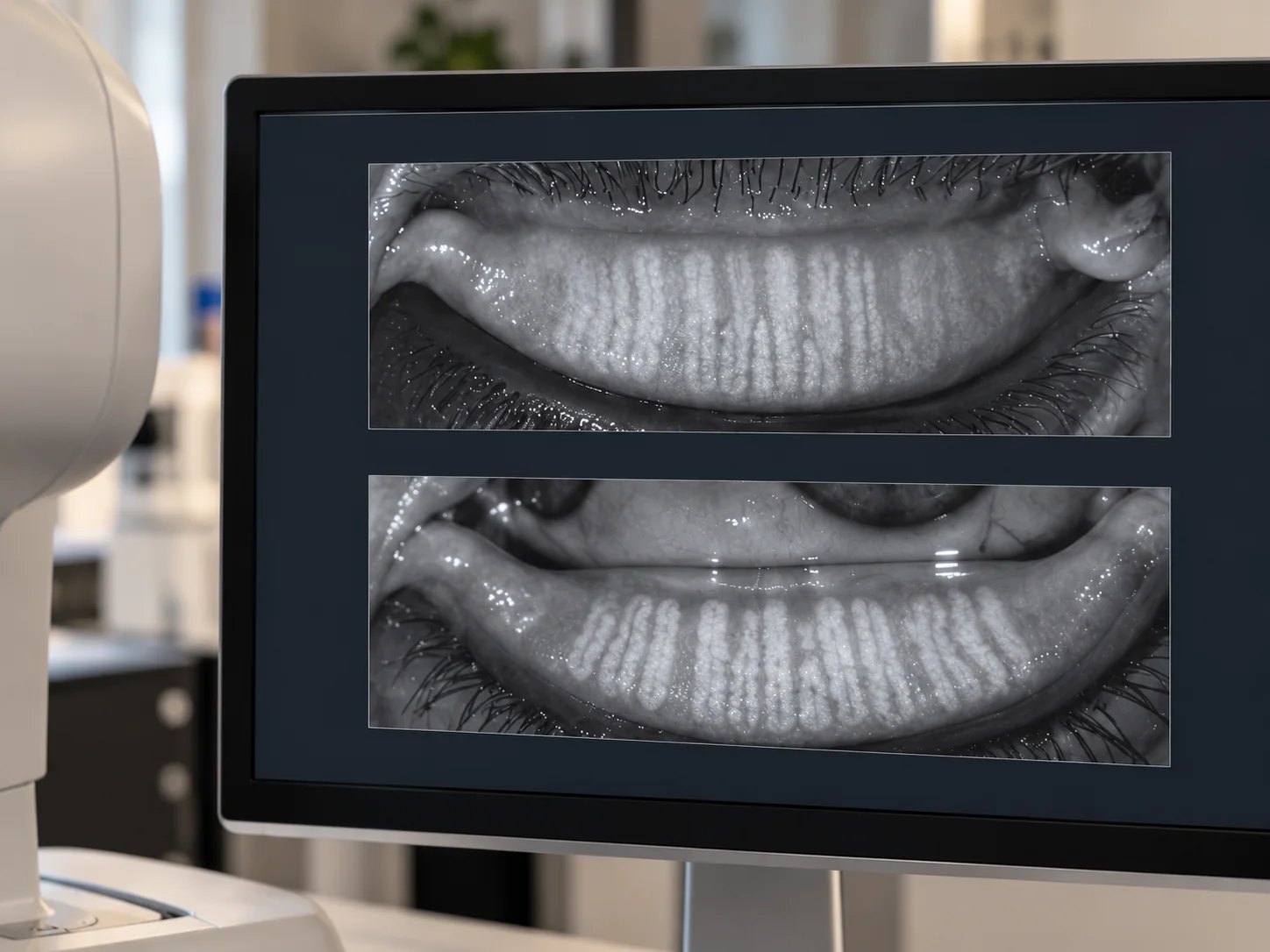
Meibography image of thinning glands

The meibomian glands are hormone-responsive tissue. As androgen levels fall, their oil thins out in quality and quantity; tears evaporate faster, the surface inflames, and comfort slides, often years before anyone names it.

  • Burning and tired eyes by evening
  • Makeup and wind suddenly provoke tearing
  • Contacts that were fine for decades turn hostile
  • Morning grit, evening blur

This is gland disease with a hormonal driver, which is why the effective treatments are the gland treatments.

What actually helps

Treat the glands the hormones changed.

Common questions

Hormones & dry eye, answered.

Anything else, call the office at 310-828-2010.

  • No. It is a gland condition with a hormonal trigger, and gland-directed treatment, starting with imaging, changes it.

  • Systemic hormone decisions belong with your physician; eye-side results are mixed either way. We treat what the glands show regardless.

  • Drops replace water for minutes; they cannot replace oil. When the oil layer is the failure, evaporation wins until the glands are treated.

  • It can bring it on. Dry eye is more common in women, and the hormone changes of menopause can make it harder for the body to make tears. It remains treatable: imaging the oil glands in the lids shows which treatment fits, and gland-directed care works where drops alone keep falling short.

Hormones & dry eye near you

12222 Wilshire Blvd, on the Santa Monica border.

West Los AngelesBrentwoodSanta MonicaWestwoodBeverly HillsCulver CityPacific PalisadesWest HollywoodMarina del ReyNewport Beach

Also consider

Next step

Eyes that changed when everything else did?

An evaluation with gland imaging at Cohenmehr Optometry explains it — and starts fixing it — in one visit.

Book an evaluation Or call 310-828-2010