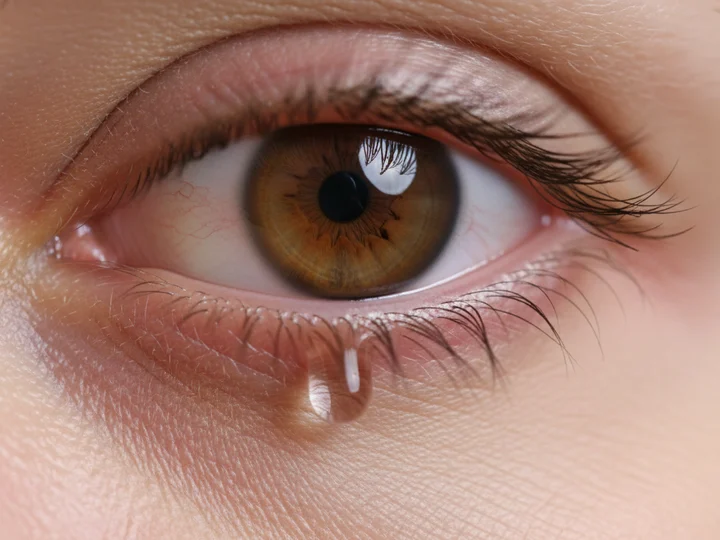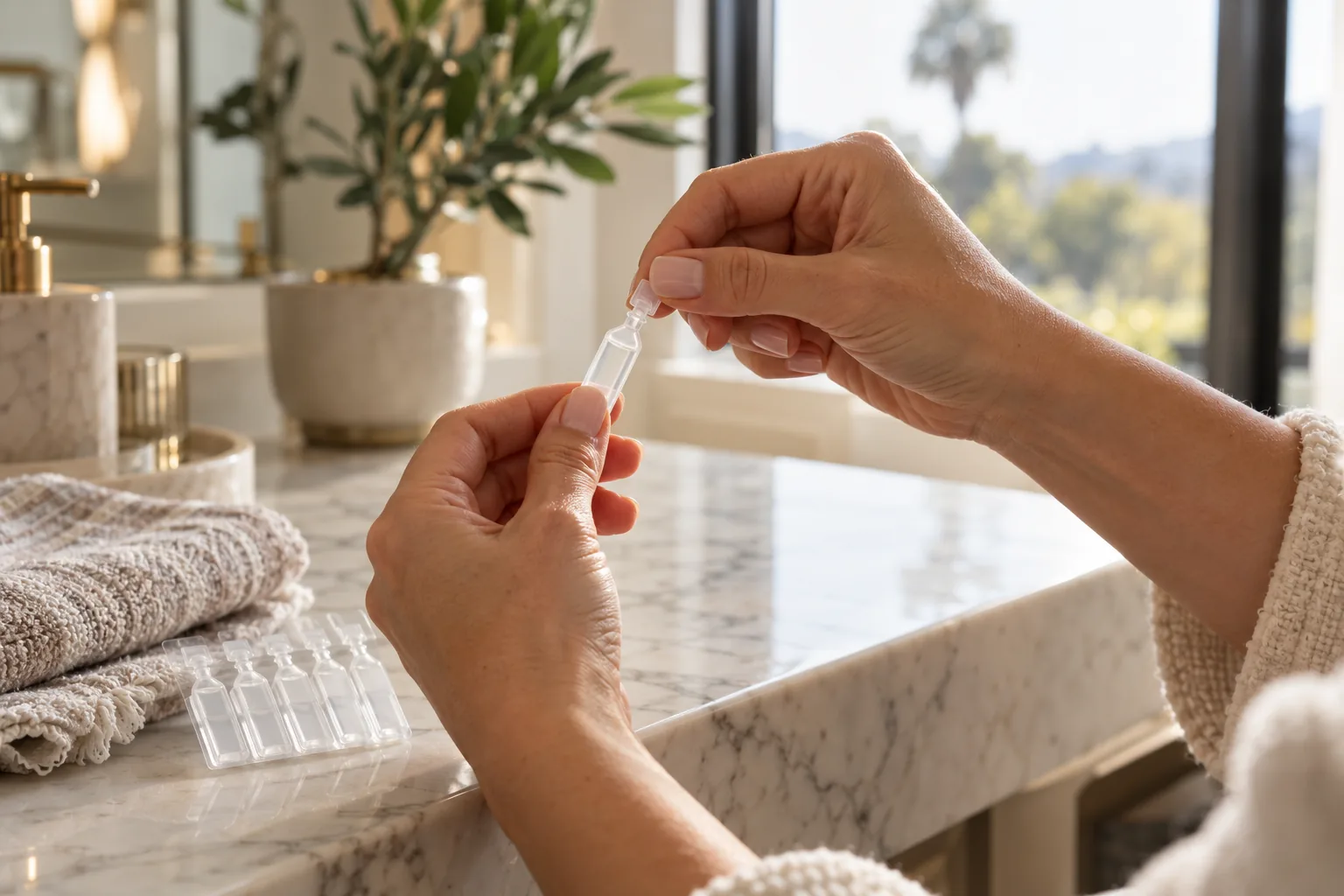
Preservative-free eye drops are artificial tears and other eye drops made without added preservatives. They come in single-use vials that you open, use once and throw away, or in multidose bottles. The American Optometric Association recommends preservative-free artificial tears because they contain fewer additives, which can further irritate the eyes. That matters most if you use drops several times a day, have moderate or severe dry eye, wear contact lenses or put in prescription drops every day. For frequent use, preservative-free is what we usually recommend, and our dry eye home care guide shows where drops fit in a daily routine.
Key takeaways
- Preservative-free drops make the most sense if you use them several times a day, have moderate or severe dry eye, wear contacts or use daily prescription drops.
- Single-use vials are thrown away after one use, while preservative-free multidose bottles must keep germs out on their own, so choose a brand your eye doctor recommends.
- Keep the tip from touching your eye or anything else, cap the bottle after each use, and wait at least 5 minutes between different drops.
- For discharge, eye pain, redness or blurry vision, take out any contacts and get a same-day exam, or go to an emergency room when the office is closed.
01
What does preservative-free mean on eye drops?
It means the drop contains no added preservative. Preservatives are listed with the inactive ingredients on the label, so that's where to check. Benzalkonium chloride (BAK) is one example: it is added as a preservative to the glaucoma drop Xalatan, and it appears among the inactive ingredients of the over-the-counter allergy drop Pataday.
Without a preservative, the package has to keep the drops clean. Single-use vials do that by being thrown away after one use: the Refresh Plus label says to twist off the tab, use one or two drops and discard the container, and never to reuse one once it's open. Preservative-free drops also come in multidose bottles, which need more care in choosing.
02
Why can preservatives irritate your eyes?
Because a preservative is one more additive landing on an eye that may already be dry and irritated. That's the reason the AOA gives for recommending preservative-free tears.
Exposure adds up. Every drop of a preserved product brings a little preservative with it, so someone using artificial tears every hour, or several prescription drops a day, gets far more than someone who uses a drop once in a while.
Contact lenses can hold on to preservatives too. The Xalatan label warns that its preservative may be absorbed by contact lenses, and it tells wearers to take their lenses out before each dose and wait 15 minutes before putting them back in.
Scleral lens wearers fill each lens with preservative-free saline for a similar reason: that fluid sits against the cornea all day; see our guide to scleral lens care.
03
Who should use preservative-free eye drops?
Preservative-free drops make the most sense if you:
- Use artificial tears several times a day, every day.
- Have moderate or severe dry eye, including dry eye from Sjögren's or another autoimmune disease.
- Are healing from LASIK or another eye surgery. Some preservative-free labels tell you to follow your eye doctor's instructions when you use them after surgery such as LASIK, and our page on dry eye after LASIK covers the months of healing.
- Wear contact lenses. Some preservatives can be absorbed by lenses, so ask which drops can go in while your lenses are in.
- Use prescription drops every day, such as glaucoma drops. Ask your eye doctor whether a preservative-free version exists.
If you use drops only now and then and they feel comfortable, ask at your next exam whether a preserved bottle is fine for you.
04
Single-use vials or a preservative-free bottle: which should you buy?
Both leave out the preservative. The difference is how each one stays clean between doses.
| Package | How you use it | What to watch for |
|---|---|---|
| Single-use vials | Twist off the tab, use the drops, throw the vial away | Use a vial only if it's intact, and don't save an opened one for later |
| Multidose bottle | The same bottle, opened again and again | Choose a brand your eye doctor recommends, and stop using any product named in an FDA warning |
Multidose bottles are convenient, but without a preservative the bottle has to keep germs out on its own. In 2022 and 2023, an outbreak of a drug-resistant bacterial infection was linked most often to EzriCare Artificial Tears, a preservative-free product packaged in multidose bottles. By May 2023 the CDC had counted 81 patients in 18 states, including 14 with vision loss and 4 who had an eye surgically removed. The FDA found that the maker sold eye drops in multi-use bottles without an adequate preservative.
05
Are eye drops bad for your eyes?
Usually not. Artificial tears are the most common treatment for mild dry eye, and you can buy them without a prescription. The AOA says they can be used as often as needed to supplement your own tears. Problems come from a few specific places:
- Preservatives, when preserved drops are used many times a day.
- Redness-relief drops used too often. Labels for tetrahydrozoline drops warn that overuse may cause more eye redness.
- Contaminated drops. The Xalatan label warns that a tip touching the eye or the skin around it can pick up bacteria known to cause eye infections, and that serious eye damage and loss of vision may result from using contaminated solutions.
Stop using an over-the-counter drop and ask a doctor if you have eye pain, changes in vision, or continued redness or irritation, or if symptoms get worse or last more than 72 hours. Don't stop a prescription drop, such as a glaucoma drop, on your own: call the doctor who prescribed it, because glaucoma drops that aren't used as prescribed can cost you vision.
Signs of an eye infection, such as yellow, green or clear discharge, eye pain, redness, light sensitivity or blurry vision, need a same-day exam; if you wear contact lenses, take them out first. During office hours, call us at 310-828-2010 for a same-day visit; when we're closed, go to an emergency room. If you've used a recalled product such as EzriCare Artificial Tears and notice any of these signs, the CDC says to seek medical care immediately.
06
How do you keep eye drops clean?
The labels spell it out:
- Don't let the tip touch your eye or any other surface.
- Don't use drops that have changed color or turned cloudy.
- Put the cap back on a bottle right after each use.
If you use more than one kind of drop, wait at least 5 minutes between them, as the Lumify label says, and ask your eye doctor what order to use them in.
07
When are artificial tears not enough?
If relief lasts minutes rather than hours, your mornings start crusty, burning or blurry, or you're using drops more than four times a day, home care alone isn't keeping up. That's the time for a dry eye evaluation.
The right drop depends on your type of dry eye. Eyes that make too few tears and eyes whose tears evaporate too fast need different help, so our optometrists in Los Angeles start by imaging the meibomian glands (the oil glands along the eyelids) and checking how stable your tear film is.
From there, prescription dry eye drops can calm inflammation, help your eyes make more of their own tears or slow evaporation, and in-office treatment such as IPL works on the oil glands themselves. Preservative-free tears usually stay in the routine alongside them.
08
Questions patients ask
Do eye drops expire?
Yes. Use eye drops before the expiration date marked on the container, and throw out any that have changed color or turned cloudy. Store them the way the label says: Refresh Plus at 59°F to 77°F, for example, while unopened bottles of the glaucoma drop Xalatan belong in the refrigerator.
How long are eye drops good after opening?
It depends on the package. A single-use vial is meant for one use, so throw it away once it's open, even if drops are left. Vials sold in a foil pouch can have a deadline too: unopened Zioptan vials go in the trash 30 days after the pouch is first opened. Bottles follow their own labels; an opened bottle of Xalatan can be kept at room temperature for 6 weeks. If the label doesn't say, ask your pharmacist.
Is Lumify preservative-free?
The standard bottle isn't: Lumify Redness Reliever lists benzalkonium chloride among its inactive ingredients. Lumify Preservative Free has the same active ingredient, brimonidine 0.025%, without it, and comes in single-use vials that you throw away right after use. Either way it's a redness reliever, not a dry eye treatment. If your eyes turn red often, an exam can find out why; redness is one of the symptoms of dry eye, and a dry eye evaluation checks for it.
What are the side effects of glaucoma eye drops?
Possible side effects include stinging, itching, burning and redness in the eye, and changes in eye color or in the skin around the eye. Redness is among the most common reactions listed for latanoprost (Xalatan), which contains the preservative benzalkonium chloride, and it is the most common one for Zioptan (tafluprost), which has no preservative. If a drop bothers you, talk to the doctor who prescribed it before changing anything: if you don't use glaucoma drops as prescribed, you could lose vision. Our glaucoma care page explains how we test for and monitor glaucoma.
09
Sources
- American Optometric Association: Dry eye
- DailyMed: Xalatan (latanoprost) label
- DailyMed: Pataday Once Daily Relief label
- DailyMed: Refresh Plus label
- CDC: Outbreak linked to artificial tears
- FDA: Warning on EzriCare Artificial Tears
- National Eye Institute: Dry eye
- DailyMed: Visine Red Eye Comfort label
- National Eye Institute: Glaucoma medicines
- DailyMed: Lumify label
- DailyMed: Zioptan (tafluprost) label
- DailyMed: Lumify Preservative Free label

Written by
Dr. Bijan Cohenmehr, OD
Founder of Cohenmehr Optometry, in practice for over 40 years. He leads the practice’s dry eye care and myopia management. A graduate of SUNY College of Optometry.
About Dr. Bijan →