
Medically reviewed by Dr. Brandon Cohenmehr, OD Last reviewed
Corneal Cross-Linking (CXL) for Keratoconus in Los Angeles
Stop the cone from getting worse.
Corneal cross-linking is a procedure performed by a corneal surgeon that uses vitamin B2 (riboflavin) and ultraviolet light to strengthen the cornea and help halt the progression of keratoconus. We don’t perform CXL in our office — we decide when it’s time, refer to trusted corneal specialists, and manage everything after. And the field just moved: in October 2025 the FDA approved Epioxa, an epithelium-on (“epi-on”) cross-linking therapy — no incision, no surface removal. Our office is an Epioxa Keratoconus Certified Detection Center: we find the progression that qualifies a cornea, and coordinate everything around the treatment.
- Purpose
- Halt keratoconus progression
- Performed by
- Corneal surgeons we co-manage with
- Our role
- Detect progression, refer, follow up
- Afterward
- Scleral lenses for best vision
We typically consider CXL referral when
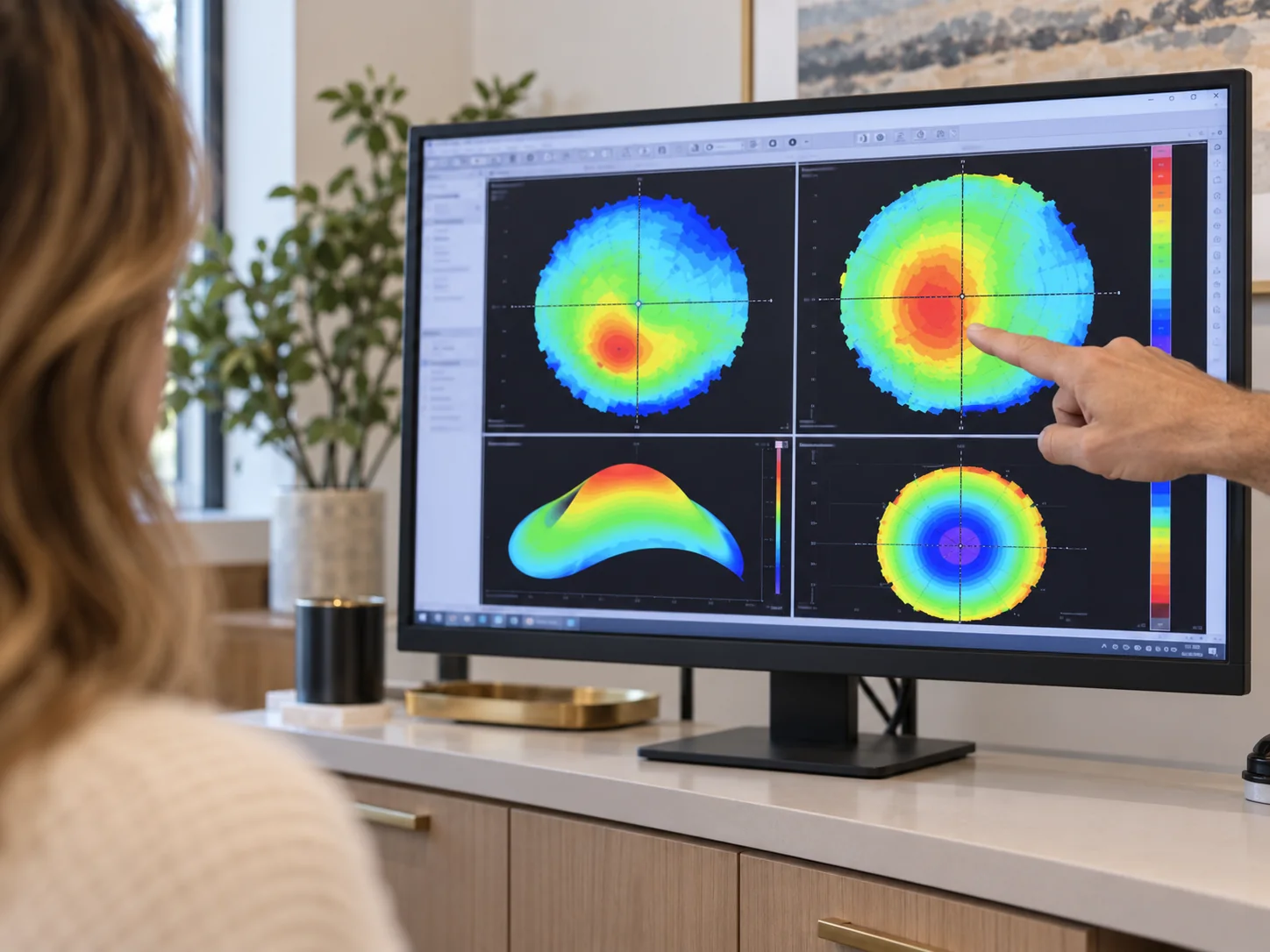
- There is documented progression on topography and tomography
- The patient is young — higher risk of progression
- There is a family history of keratoconus
- Eye rubbing or poorly controlled allergy keeps stressing the cornea
Protect, then see
CXL is about protecting your cornea; scleral lenses are about seeing your best. We manage both parts of that equation with you and your surgeon.
New: FDA-approved epi-on CXL
Epioxa — cross-linking without removing the surface.
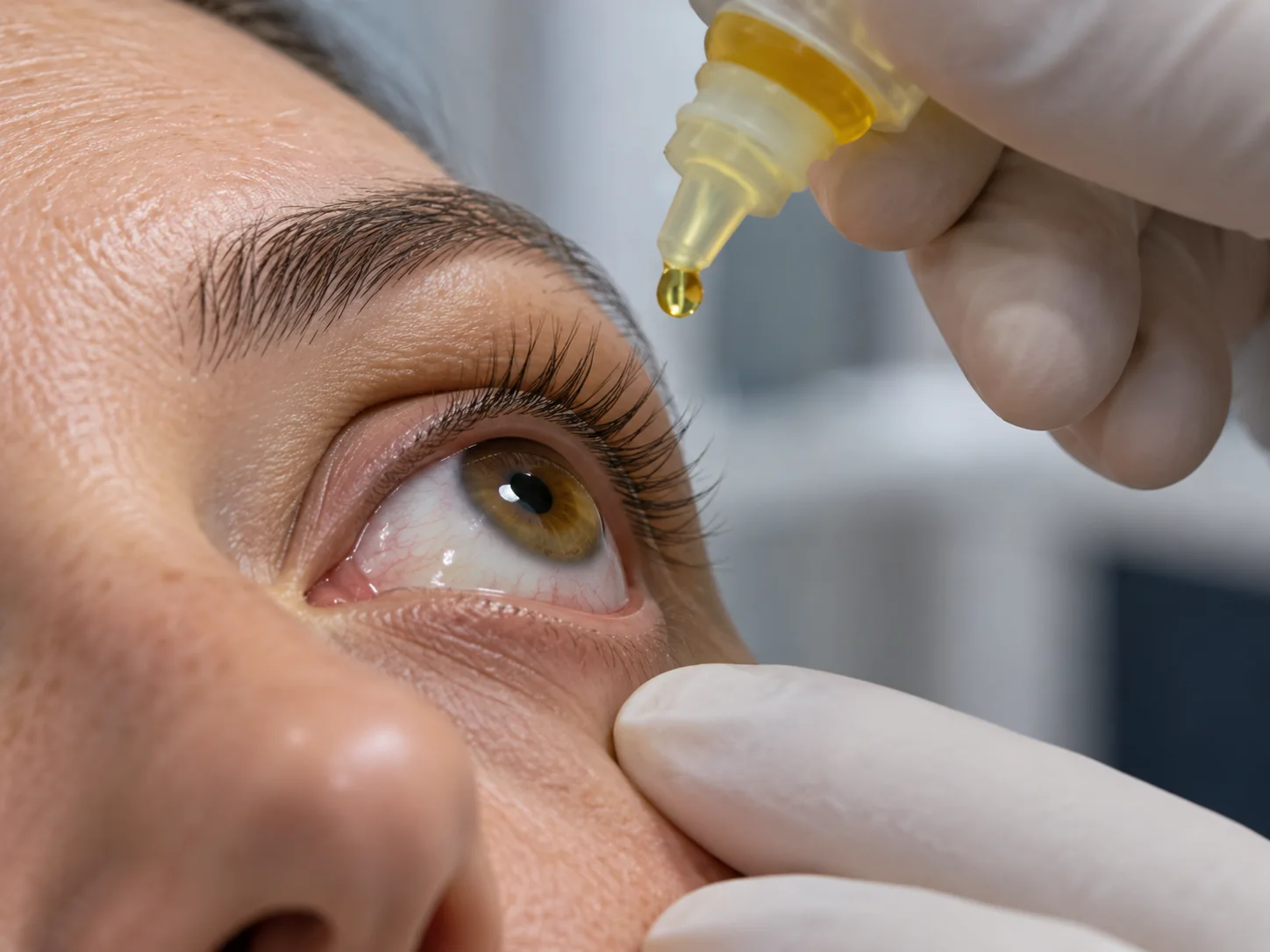
Cross-linking now comes in two forms. Traditional “epi-off” CXL removes the cornea’s thin surface layer so riboflavin can soak in — effective, but with a scratchy recovery week. Epioxa, FDA-approved in October 2025, is an epi-on alternative: two oxygen-enriched riboflavin formulations are applied in sequence onto an intact surface, then activated by UV light in an oxygen-enriched environment.
- Epithelium
Epi-off: removed, regrows over days. Epioxa: left intact, with no incision and no scrape.
- Comfort & recovery
The surface stays in place and a bandage contact lens goes on afterward; the treated eye may be uncomfortable, and sunglasses may help with light sensitivity.
- Evidence
Approved on two randomized, sham-controlled trials of more than 400 patients, each showing a statistically significant treatment effect.
- Availability
Commercially available through corneal surgeons as of 2026; we counsel on epi-on vs. epi-off, coordinate the referral, and run your aftercare.
Cohenmehr Optometry is an Epioxa Keratoconus Certified Detection Center. The imaging that catches progression early is what qualifies a cornea for treatment while it still matters.
After CXL
What happens once the cornea is stable.
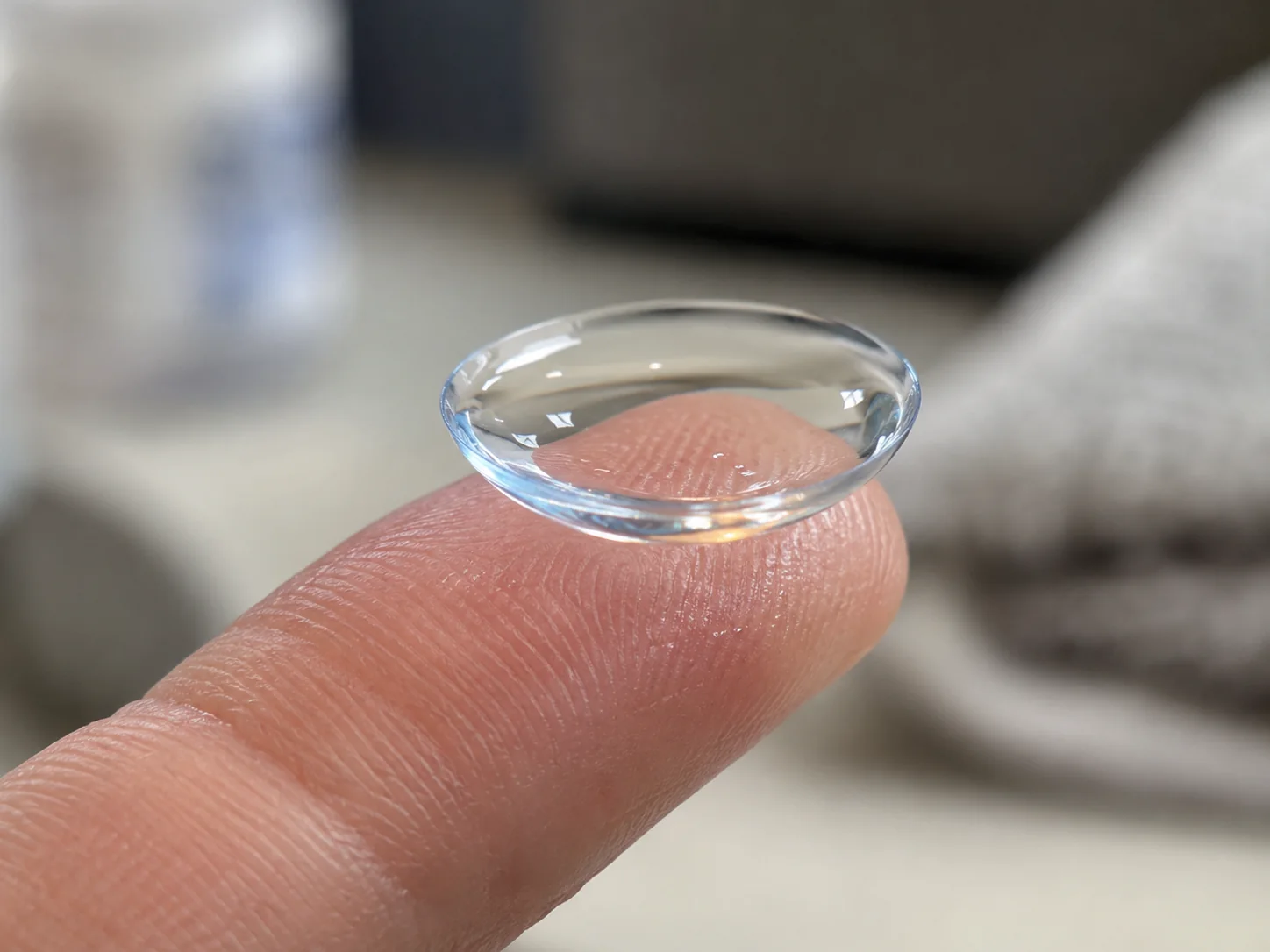
After your procedure, you come back to our eye doctors in Los Angeles for ongoing follow-up and imaging. We monitor the cornea to confirm it stays stable over time — and once healing is adequate, we focus on optimizing your vision, usually with scleral lenses or other specialty lenses.
Your surgeon gets complete imaging and clinical data before and after; you get the process explained in plain language at every step.
Monitoring first
CXL starts with catching change.
- Baseline topography, tomography and pachymetry
- Every visit compared against your baseline
- Younger and faster-changing eyes seen more often
- An Epioxa Keratoconus Certified Detection Center
Also consider
Next step
Keratoconus moving? Act while it matters.
Book an evaluation with corneal imaging. Progression is the signal we look for, and now that Epioxa is FDA-approved, catching it early matters even more.