
Same-day urgent eye care
Mon 10–5 · Tue–Fri 8–5 310-828-2010 Book online Intake form
Cohenmehr Optometry — Vision · Dry Eye · Keratoconus Book appointment
Cohenmehr OptometryVision · Dry Eye · Keratoconus Center
Our Practice
Meet the Doctors TestimonialsShare FeedbackTraveling to See UsAreas We Serve Hours & Directions
Eye Care

Routine care

Comprehensive Eye CareContact Lens ExamsComputer Vision SyndromeGlasses and Contact LensesNeurolensAdvanced Diagnostics

Medical eye care

Glaucoma & Ocular DiseaseDiabetic Eye ExamsMacular Degeneration CareLow VisionStye & Chalazion TreatmentUrgent Care

Children’s vision

Pediatric Eye ExamsMyopia ManagementAtropineOrtho-KEssilor Stellest LensesVision Therapy

Surgery co-management

Surgical Co-ManagementLASIKPRKSMILEEVO ICLRefractive Lens ExchangeCataract SurgeryCorneal TransplantPterygium Surgery
Dry Eye
The Dry Eye CenterOptiLIFTIPL (Intense Pulsed Light)Punctal PlugsBlephExAmniotic MembranesPrescription DropsAutologous Serum DropsMeibomian Gland ProbingIPL for Rosacea

Understand

Types of Dry EyeThe Tear FilmDemodex BlepharitisDry Eye After LASIKMenopause & Dry EyeSjögren’s & Dry EyeContact Lens Discomfort

Cosmetics

Upneeq® · Buy OnlineUpneeq Intake Form
Myopia Control
The Myopia ProgramMyopia Estimator — free toolOrtho-K — $1,500 totalAtropineStellest LensesMultifocal ContactsMiSight 1 Day

For parents

Choosing a TreatmentWhy Myopia MattersOutdoor Time & ScreensFirst Ortho-K NightMeasuring Progression
Keratoconus
The Keratoconus CenterScleral Contact LensesSpecialty Contact LensesScleral Lens UsesEaglet Surface ProfilerScleral Lens Care

Go deeper

Eye Rubbing & KeratoconusKeratoconus in TeensCorneal HydropsTransplant Co-Management
Scleral Lenses

The lenses

Scleral Contact LensesEvery Use, at a GlanceEaglet Surface ProfilerScleral vs RGP vs HybridSpecialty Contact LensesSpecialty Soft & ProstheticLens Care & HandlingTraveling to See Us

Corneal conditions

KeratoconusPost-LASIK EctasiaPellucid Marginal DegenerationCorneal ScarringAfter Corneal TransplantAfter Radial Keratotomy (RK)Post-Surgical ComplicationsOcular Shingles Scarring

Surface disease & more

Severe Dry EyeSjögren’s SyndromeStevens-Johnson SyndromeGraft-vs-Host DiseaseBell’s Palsy & ExposureRare Tear DeficiencyPresbyopia & High RxSports & Active Wear
Library
Start With a SymptomEye Conditions A–ZArticlesFree ToolsFull Site Index

Patients

Patient Intake FormCommon QuestionsAccepted InsurancePaying for Care (FSA/HSA)
Call the office310-828-2010
Book appointment

Medically reviewed by Dr. Bijan Cohenmehr, OD Last reviewed

Amniotic Membrane Treatment for Dry Eye in Los Angeles

For scratches, non-healing spots and severe dry eye.

Some dry eye patients don’t just feel “dry” — they feel sharp, stabbing pain, like a needle in the eye, or a scratch that never fully goes away. That is where amniotic membrane therapy comes in: think of it as a supercharged healing bandage for the eye.
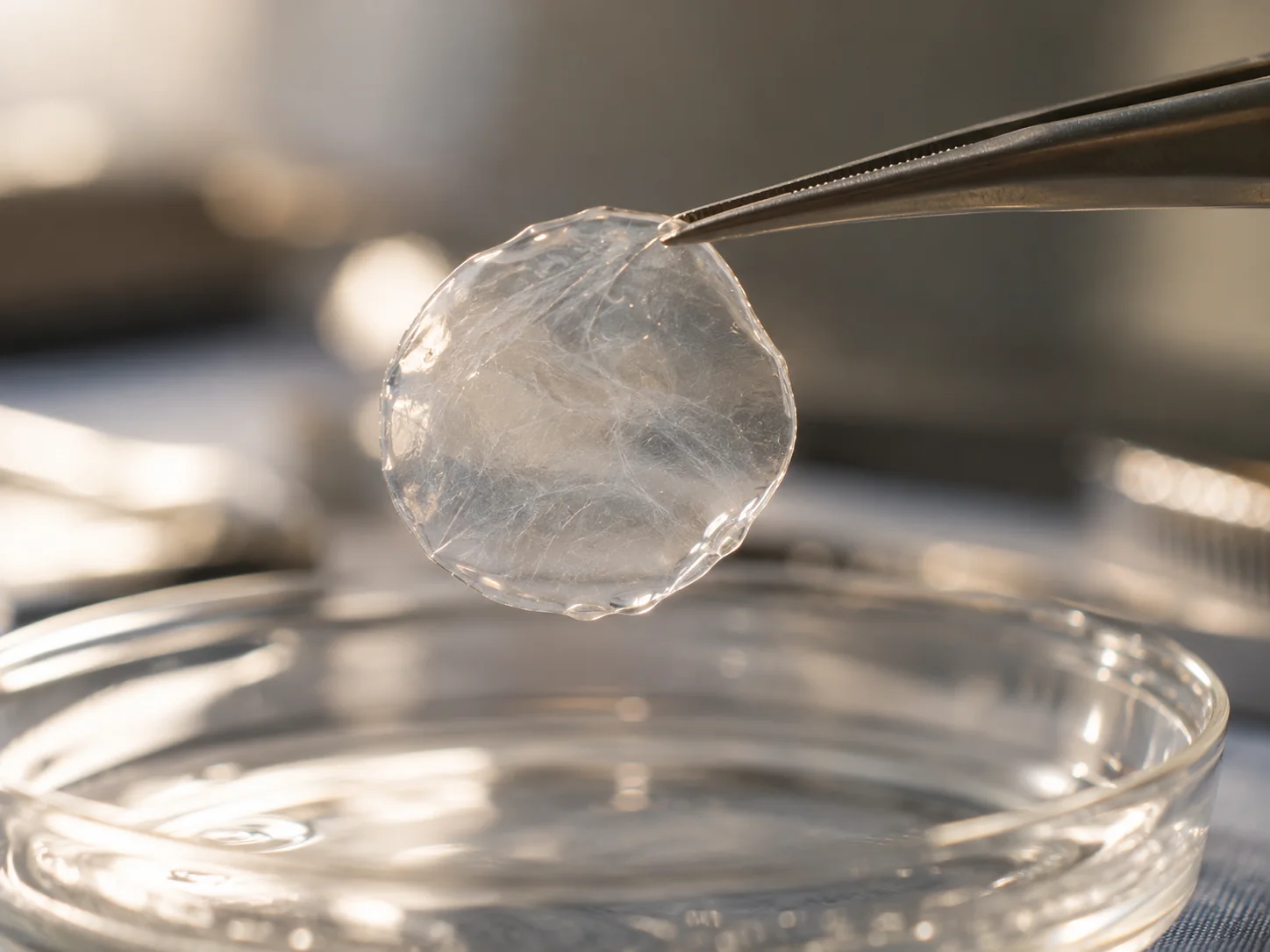
Placing an amniotic membrane
What it is
An ultra-thin natural healing tissue
Feels like
A thicker contact lens, a few days
For
Erosions, non-healing spots, severe dryness
Coverage
Often medical insurance

It may be right if you notice

  • Stabbing pain first thing in the morning when you open your eyes
  • A feeling of glass, sand, or an eyelash you can’t rinse out
  • Sudden burning, tearing, or light sensitivity that comes and goes
  • A “spot” on the eye that keeps getting irritated over and over

What happens

Numbing drops, then the membrane is gently placed — no shots, no operating room, no cutting. It’s held in place by a contact lens or, with Prokera, by its own clear ring; vision is blurrier for a few days, and the surface is intensely healed and protected the whole time.

Coverage

A medical treatment, billed as one.

Because this treats medical problems (severe dry eye, non-healing scratches, recurring erosions), it is often covered by medical insurance, not just vision plans. We document your condition with photos and testing, work with your insurer on prior authorization when needed, and go over expected costs before you decide.

For the right patient, amniotic membrane therapy calms that “needle in the eye” feeling and helps stubborn spots finally heal — especially combined with IPL, punctal plugs, and prescription dry eye medication.

Severe surface disease

When the surface needs more than drops.

Common questions

Amniotic membranes, answered.

Anything else, call the office at 310-828-2010.

  • No — numbing drops first, then gentle placement. Most patients are surprised how simple it is.

  • A few days, while it protects the damaged area and signals the surface to heal more smoothly.

  • Somewhat, while the membrane is in place. The blur is a temporary trade-off for healing.

  • It is the innermost layer of the membranes that surround a baby in the womb, collected from full-term placental tissue, and eye doctors use it as a healing bandage on the surface of the eye. Donors are tested for infections including HIV, hepatitis B and C and syphilis, as FDA rules require for donated human tissue, and the membrane is treated with antibiotics during collection. Here it goes on in the office, held in place by a contact lens or, with Prokera, by its own clear ring.

  • It acts as a biological bandage: placed on the eye like a bandage contact lens, it physically protects the damaged surface and creates a healing environment underneath. Its basement layer is similar in makeup to the cornea and conjunctiva, which helps new surface cells grow, and the tissue calms inflammation, limits scarring and holds back new blood vessel growth. That is how it helps recurrent erosions and spots that won't heal, especially combined with IPL, punctal plugs and prescription dry eye medication.

Also consider

Next step

Pain that keeps returning deserves more.

Book an evaluation with a Los Angeles eye doctor — recurrent erosions have a treatment path.

Book Today Or call 310-828-2010