
Medically reviewed by Dr. Bijan Cohenmehr, OD Last reviewed
Dry Eye–Induced Tearing
The eyes that water all day are usually the eyes that are dry.
It sounds backward: eyes that overflow with tears being diagnosed as dry. But chronic watering is one of the most common ways dry eye announces itself. When the tear film fails, the irritated surface triggers an emergency flood of watery tears — volume without the oil and mucin that make tears useful, so they spill down your cheek while the dryness remains.
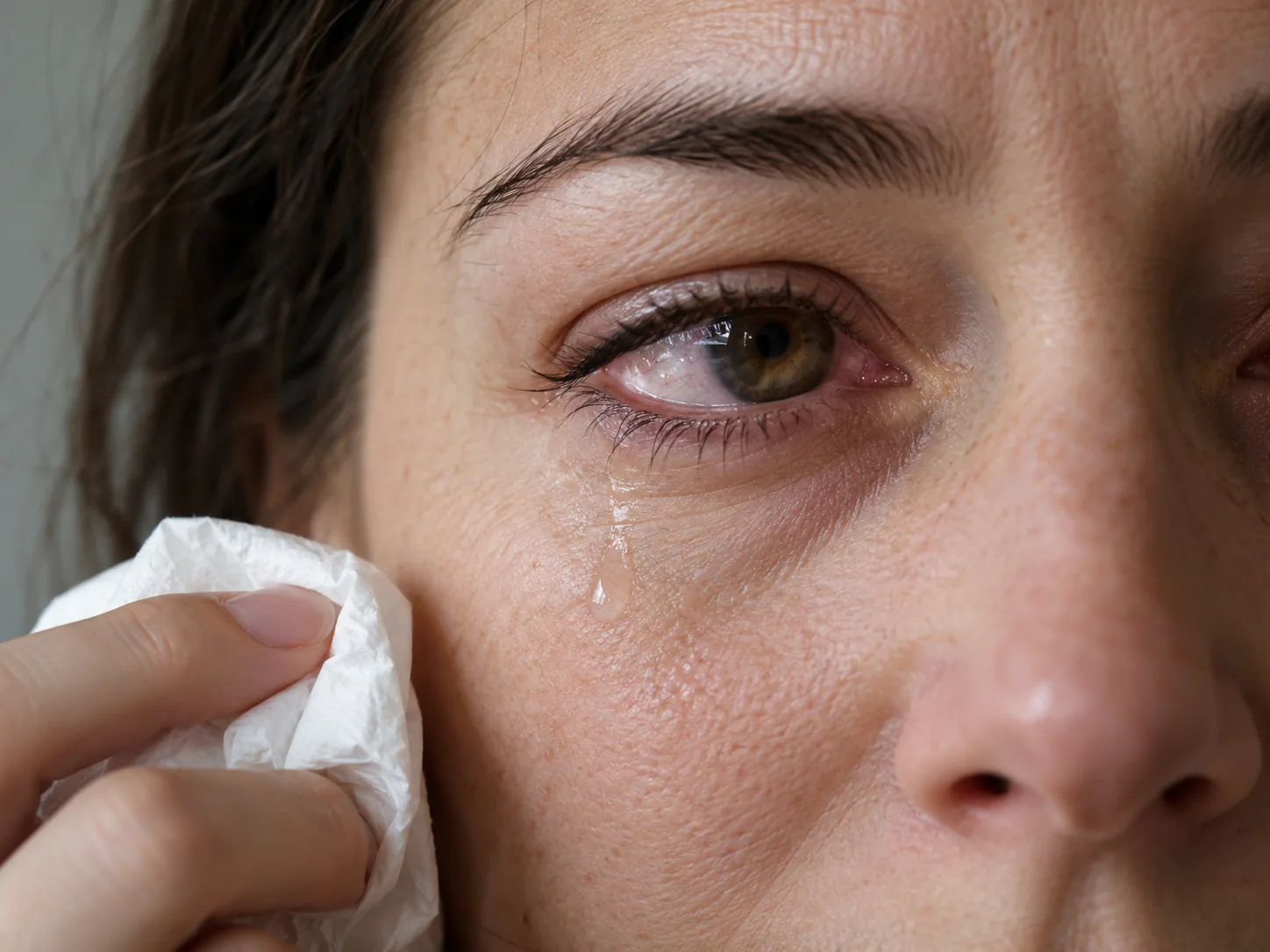
- The paradox
- Watery eyes, dry diagnosis
- The mechanism
- Reflex tearing — an alarm response
- The culprit
- Usually a failing oil layer
- The fix
- Treat the dryness, not the overflow
The mechanism
An alarm system answering the wrong problem.
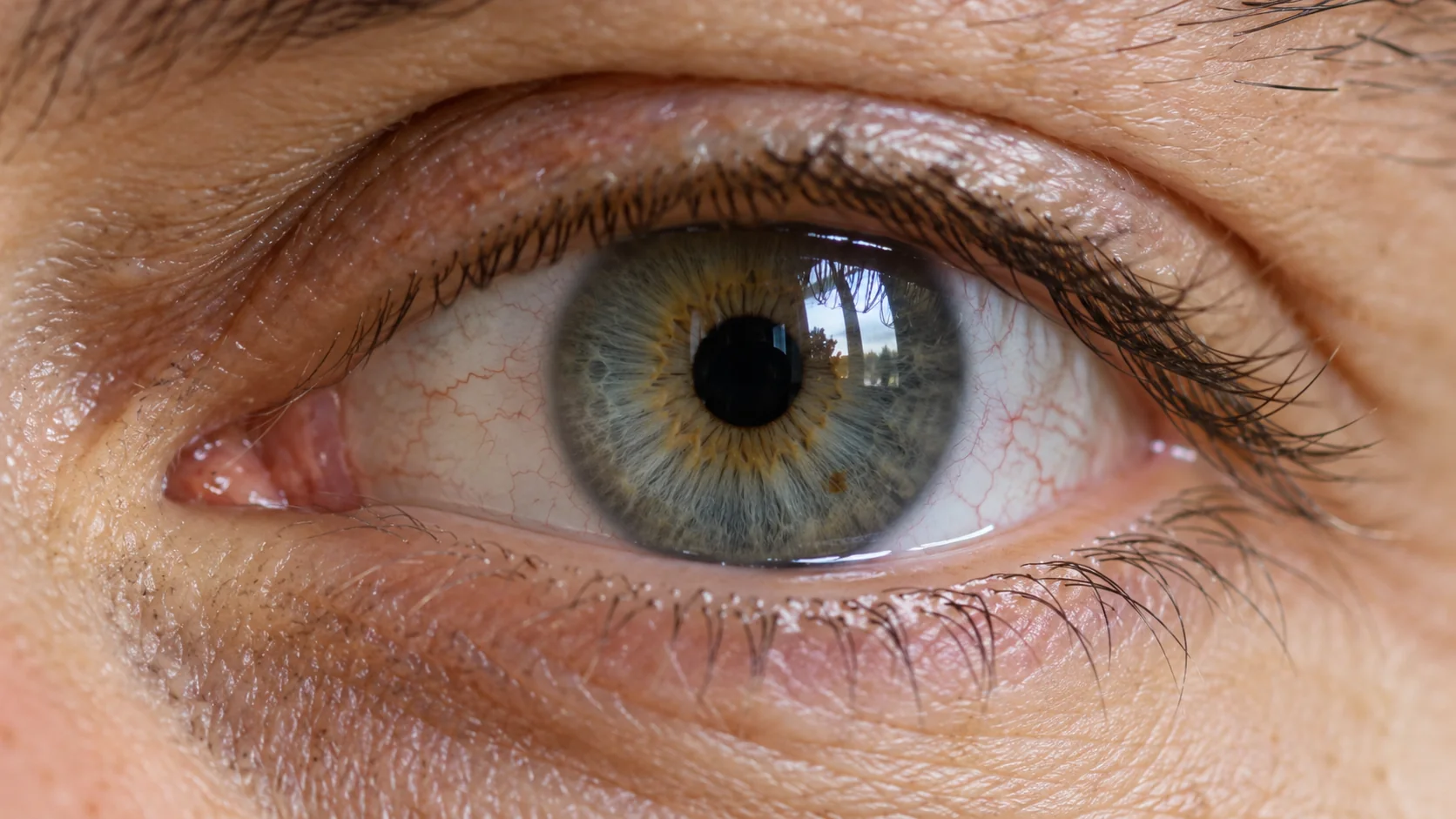
A healthy tear film is three layers: mucin to spread, water to nourish, oil to seal against evaporation. When the oil fails (most often from meibomian gland dysfunction), tears evaporate too fast, the surface dries between blinks, and its nerves fire an alarm. The lacrimal gland answers with a flood of watery reflex tears.
- The trigger
A drying, irritated surface, not sadness, allergies or “too many tears.”
- The response
High-volume watery tears without the oil layer that makes tears stay.
- The result
Overflow onto the lids and cheeks, then dryness again within minutes.
- The tell
Watering that flares with wind, screens, reading and cold air, exactly the conditions that speed evaporation.
Most people don’t realize that eyes that water and burn or feel gritty at the same time are describing dryness, not excess.
What else waters
Not every watery eye is dry — the exam sorts it.
Dry eye is the most common cause of chronic watering, but not the only one. Part of the evaluation is ruling the others in or out:
- Blocked or narrowed tear drainage: tears pool and spill because they can’t leave
- Eyelid position and blink problems: lids that don’t spread or drain tears properly
- Allergies — watering with prominent itching
- Blepharitis and lash-line disease irritating the surface
- A foreign body or abrasion: usually one eye, sudden, and painful
This is why testing beats guessing: tear breakup time, meibography of the oil glands, drainage checks and lid evaluation separate “making too many tears” from “losing tears too fast”; the two problems have opposite treatments.
Stopping the cycle
Fix the film and the watering stops itself.
- 01
Image the glands
Meibography shows whether the oil glands are blocked, shortened or dropping out, the usual engine behind reflex tearing.
- 02
Treat the cause
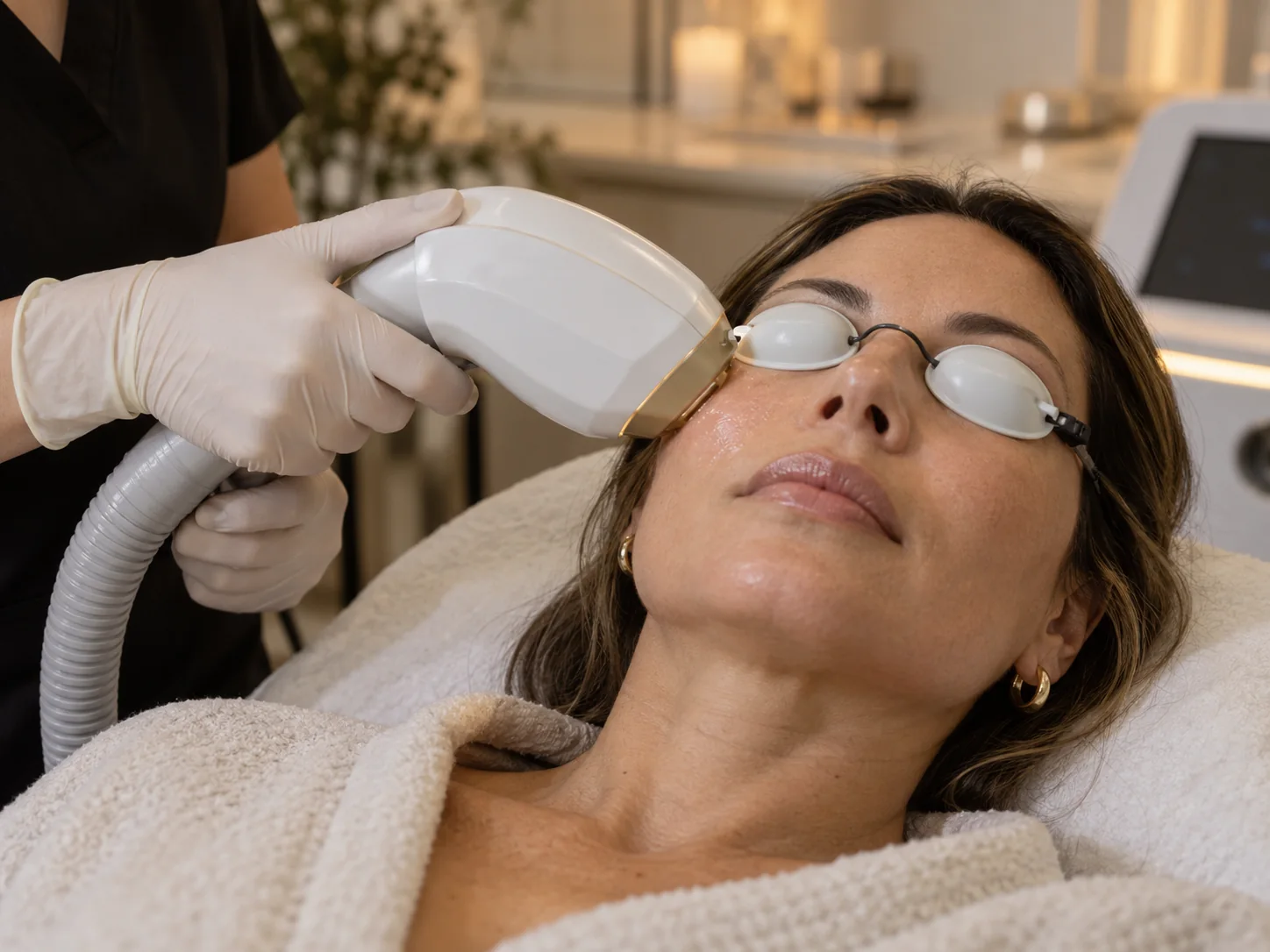
IPL and OptiLIFT restore oil flow and blink mechanics; prescription drops calm the inflammation that keeps the surface over-reactive.
- 03
Support the surface
Preservative-free tears on a schedule and lid care steady the film between treatments, which means fewer alarms and floods.
- 04
Recheck the overflow
As the film stabilizes, reflex tearing fades; if watering persists, drainage and lid position get a closer look.
This page is for you if
- Your eyes water while reading, driving or on screens
- Wind, cold air or air conditioning sets off the streaming
- You dab tears all day yet your eyes still feel gritty or burn
- Tears overflow onto your cheeks for no visible reason
- Watering is worse in one eye, or worse by evening
Why the flood doesn’t help
Reflex tears are the eye’s sprinkler system: mostly water, released in a rush. They lack the oil layer that keeps tears on the eye, so they evaporate or spill within moments, and the irritation that triggered them never resolves. The cycle repeats all day.
The program
Watering is a dry eye symptom. We treat dry eye at the source.
Dry eye–induced tearing near you
12222 Wilshire Blvd, on the Santa Monica border.
Also consider
Next step
Tired of explaining that your watery eyes are dry?
One evaluation at Cohenmehr Optometry reads the tear film, the glands, the lids and the drainage — and tells you which one is flooding your day. West Los Angeles, on the Santa Monica border.