
Same-day urgent eye care
Mon 10–5 · Tue–Fri 8–5 310-828-2010 Book online Intake form
Cohenmehr Optometry — Vision · Dry Eye · Keratoconus Book appointment
Cohenmehr OptometryVision · Dry Eye · Keratoconus Center
Our Practice
Meet the Doctors TestimonialsShare FeedbackTraveling to See UsAreas We Serve Hours & Directions
Eye Care

Routine care

Comprehensive Eye CareContact Lens ExamsComputer Vision SyndromeGlasses and Contact LensesNeurolensAdvanced Diagnostics

Medical eye care

Glaucoma & Ocular DiseaseDiabetic Eye ExamsMacular Degeneration CareLow VisionStye & Chalazion TreatmentUrgent Care

Children’s vision

Pediatric Eye ExamsMyopia ManagementAtropineOrtho-KEssilor Stellest LensesVision Therapy

Surgery co-management

Surgical Co-ManagementLASIKPRKSMILEEVO ICLRefractive Lens ExchangeCataract SurgeryCorneal TransplantPterygium Surgery
Dry Eye
The Dry Eye CenterOptiLIFTIPL (Intense Pulsed Light)Punctal PlugsBlephExAmniotic MembranesPrescription DropsAutologous Serum DropsMeibomian Gland ProbingIPL for Rosacea

Understand

Types of Dry EyeThe Tear FilmDemodex BlepharitisDry Eye After LASIKMenopause & Dry EyeSjögren’s & Dry EyeContact Lens Discomfort

Cosmetics

Upneeq® · Buy OnlineUpneeq Intake Form
Myopia Control
The Myopia ProgramMyopia Estimator — free toolOrtho-K — $1,500 totalAtropineStellest LensesMultifocal ContactsMiSight 1 Day

For parents

Choosing a TreatmentWhy Myopia MattersOutdoor Time & ScreensFirst Ortho-K NightMeasuring Progression
Keratoconus
The Keratoconus CenterScleral Contact LensesSpecialty Contact LensesScleral Lens UsesEaglet Surface ProfilerScleral Lens Care

Go deeper

Eye Rubbing & KeratoconusKeratoconus in TeensCorneal HydropsTransplant Co-Management
Scleral Lenses

The lenses

Scleral Contact LensesEvery Use, at a GlanceEaglet Surface ProfilerScleral vs RGP vs HybridSpecialty Contact LensesSpecialty Soft & ProstheticLens Care & HandlingTraveling to See Us

Corneal conditions

KeratoconusPost-LASIK EctasiaPellucid Marginal DegenerationCorneal ScarringAfter Corneal TransplantAfter Radial Keratotomy (RK)Post-Surgical ComplicationsOcular Shingles Scarring

Surface disease & more

Severe Dry EyeSjögren’s SyndromeStevens-Johnson SyndromeGraft-vs-Host DiseaseBell’s Palsy & ExposureRare Tear DeficiencyPresbyopia & High RxSports & Active Wear
Library
Start With a SymptomEye Conditions A–ZArticlesFree ToolsFull Site Index

Patients

Patient Intake FormCommon QuestionsAccepted InsurancePaying for Care (FSA/HSA)
Call the office310-828-2010
Book appointment

Medically reviewed by Dr. Brandon Cohenmehr, OD Last reviewed

Scleral Lenses After Eye Surgery in Los Angeles

When surgery leaves the cornea irregular, a fluid reservoir restores the optics.

Eye surgery saves sight — and sometimes leaves an irregular surface behind. When glasses and soft lenses can’t focus a post-surgical cornea, a free-form scleral lens vaults over it entirely and replaces it with a perfectly smooth optical surface. We fit the complex cases, co-managed with your surgeon.
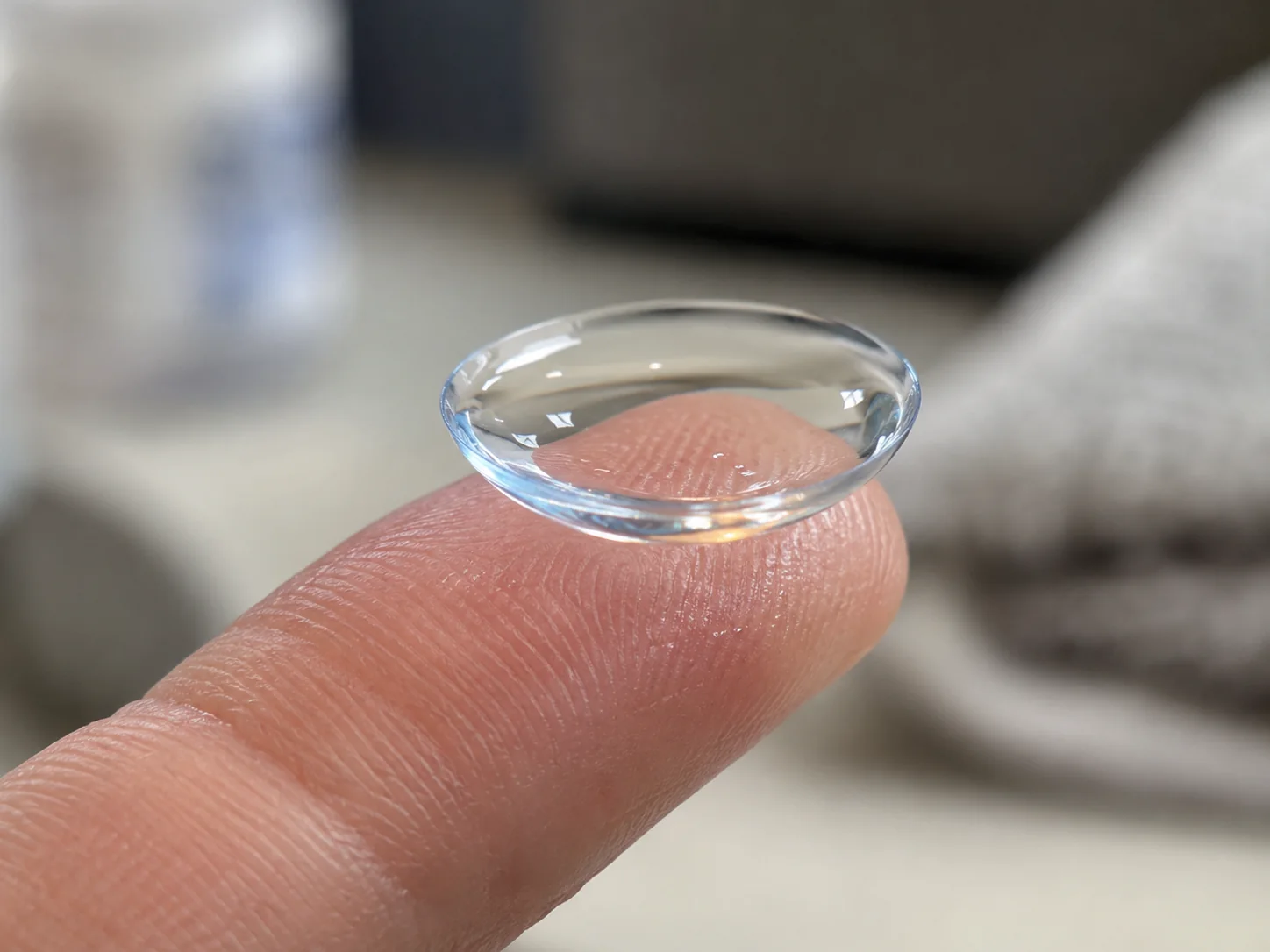
A scleral lens filled with saline before insertion
Fit from
An Eaglet ESP scan
Optics
Fluid-reservoir smoothing
Comfort
Vaults the cornea
Timeline
Often fit in one week

The problem

Healed — but not optically smooth.
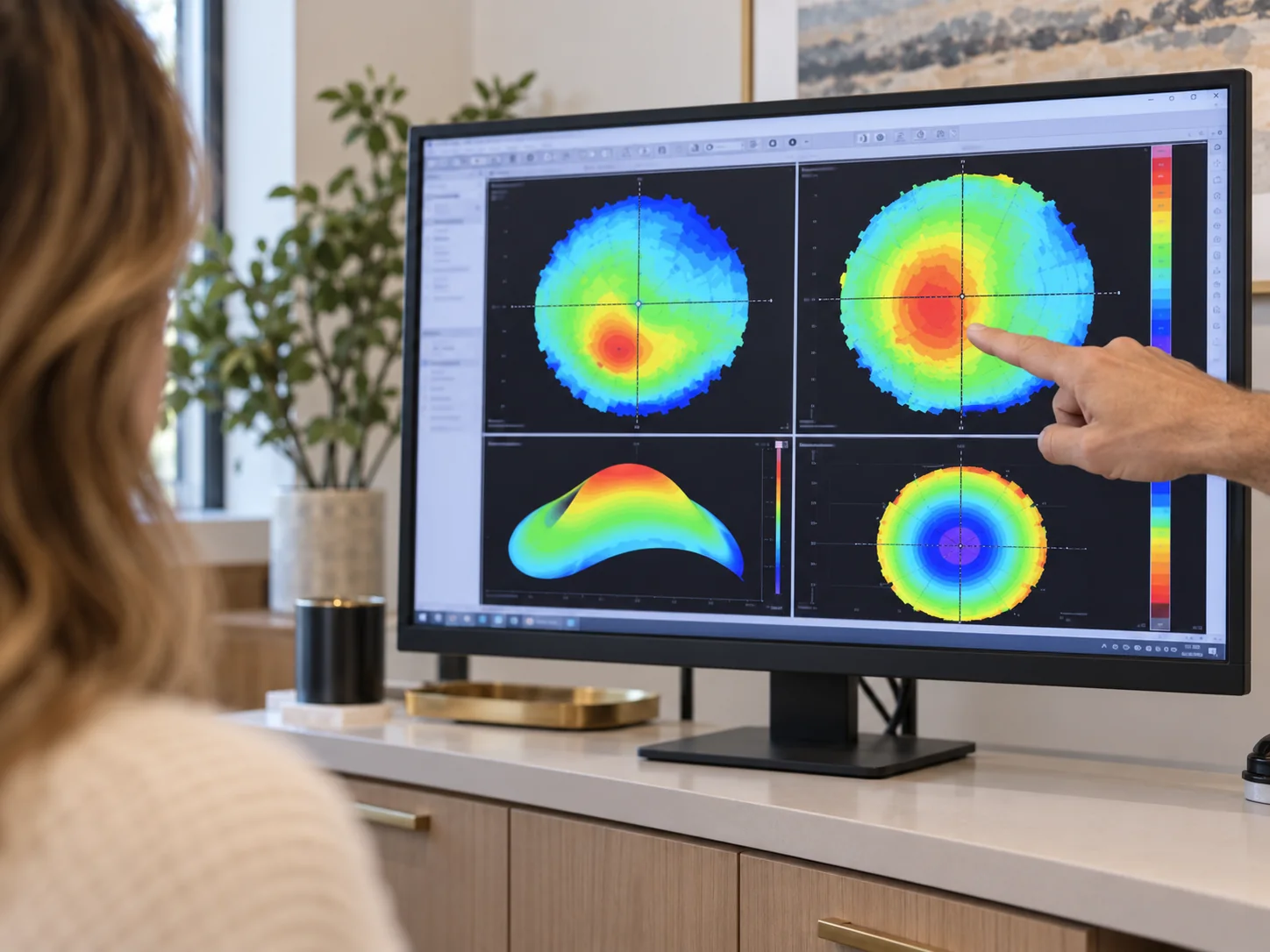
Reviewing a post-surgical corneal topography

A cornea that has been cut, grafted or reshaped rarely heals into a perfect optical dome. It heals into a surface with hills, valleys and seams that scatter light. The result is irregular astigmatism: ghosting, halos, starbursts and blur that no glasses prescription can fully correct, because glasses can only correct regular curves.

  • Corneal transplants (PK and DALK): graft-host junctions and suture-shaped astigmatism
  • Radial keratotomy (RK): fluctuating vision over flattened, scarred corneas
  • LASIK and PRK complications: ectasia, irregular flaps, decentered ablations
  • Complicated cataract surgery, including aphakia: high residual prescriptions
  • Pterygium and trauma repair: scarring that pulls the surface out of shape

If any of these describe your eye, the blur you live with is probably not the best vision your eye can deliver; it’s the best vision a spectacle lens can deliver through an irregular window.

The scleral answer

A new surface, not a compromise.

A scleral lens never touches the healed cornea. It rests on the white of the eye and holds a cushion of fluid over the surgery site — the fluid fills every irregularity, and the lens’s front surface becomes the eye’s new optical window.

The reservoir does the correcting
Saline fills the hills and valleys and optically erases the irregularity. Vision is often the best since before surgery.
Free-form, from a map
The Eaglet Eye Surface Profiler maps the eye with hundreds of thousands of points, so the lens is designed around grafts, scars and elevations instead of being forced onto them.
Protects while it corrects
The fluid layer continuously bathes a fragile, post-surgical surface, so the same lens gives comfort and supports healing.
Co-managed with your surgeon
We coordinate timing, clearances and reports so the fit supports the surgical result.
How the fitting works

Common questions

After surgery, answered.

Anything else, call the office at 310-828-2010.

  • The common ones: corneal transplants (PK and DALK), radial keratotomy (RK), LASIK or PRK with ectasia or irregular healing, complicated cataract surgery including aphakia, and pterygium or trauma repairs that scar the surface. Anything that leaves irregular astigmatism is a candidate.

  • Once the surface is stable and your surgeon clears it — the timing varies by procedure, from a few weeks to several months (transplants often wait for suture adjustments). We coordinate directly with your surgeon so the fit starts the moment it’s safe.

  • No — that’s the point of the design. The lens vaults the cornea completely, clearing the graft and its junction, and lands only on the white of the eye. The Eaglet ESP map lets us design clearance around every elevation.

  • Glasses correct regular curves. A post-surgical cornea is irregular, with different powers at every point, so some blur always remains. The scleral lens’s fluid reservoir replaces the irregular surface optically, which is why the improvement is often dramatic.

  • Yes — post-surgical fits are co-managed. We send reports, respect healing timelines, and loop the surgeon in on anything the fit reveals. Many of our post-surgical patients are referred to us by their surgeons.

  • Often, yes — scleral lenses for post-surgical corneas are frequently covered as medically necessary contact lenses under medical insurance. We document the medical necessity and verify benefits before you commit: 310-828-2010.

Post-surgical scleral lens fittings near you

12222 Wilshire Blvd, on the Santa Monica border. Free parking on Wellesley, just south of Wilshire.

West Los AngelesBrentwoodSanta MonicaWestwoodBeverly HillsCentury CityBel AirCulver CityMar VistaVeniceMarina del ReyPacific PalisadesWest Hollywood

Also consider

Next step

From complicated to corrected.

Bring your surgical history — our eye doctors in Los Angeles will map the eye, show you the surface, and tell you honestly what a scleral lens can restore. Patients fly in for these fittings; most are completed within one week.

Book Today Or call 310-828-2010