
Same-day urgent eye care
Mon 10–5 · Tue–Fri 8–5 310-828-2010 Book online Intake form
Cohenmehr Optometry — Vision · Dry Eye · Keratoconus Book appointment
Cohenmehr OptometryVision · Dry Eye · Keratoconus Center
Our Practice
Meet the Doctors TestimonialsShare FeedbackTraveling to See UsAreas We Serve Hours & Directions
Eye Care

Routine care

Comprehensive Eye CareContact Lens ExamsComputer Vision SyndromeGlasses and Contact LensesNeurolensAdvanced Diagnostics

Medical eye care

Glaucoma & Ocular DiseaseDiabetic Eye ExamsMacular Degeneration CareLow VisionStye & Chalazion TreatmentUrgent Care

Children’s vision

Pediatric Eye ExamsMyopia ManagementAtropineOrtho-KEssilor Stellest LensesVision Therapy

Surgery co-management

Surgical Co-ManagementLASIKPRKSMILEEVO ICLRefractive Lens ExchangeCataract SurgeryCorneal TransplantPterygium Surgery
Dry Eye
The Dry Eye CenterOptiLIFTIPL (Intense Pulsed Light)Punctal PlugsBlephExAmniotic MembranesPrescription DropsAutologous Serum DropsMeibomian Gland ProbingIPL for Rosacea

Understand

Types of Dry EyeThe Tear FilmDemodex BlepharitisDry Eye After LASIKMenopause & Dry EyeSjögren’s & Dry EyeContact Lens Discomfort

Cosmetics

Upneeq® · Buy OnlineUpneeq Intake Form
Myopia Control
The Myopia ProgramMyopia Estimator — free toolOrtho-K — $1,500 totalAtropineStellest LensesMultifocal ContactsMiSight 1 Day

For parents

Choosing a TreatmentWhy Myopia MattersOutdoor Time & ScreensFirst Ortho-K NightMeasuring Progression
Keratoconus
The Keratoconus CenterScleral Contact LensesSpecialty Contact LensesScleral Lens UsesEaglet Surface ProfilerScleral Lens Care

Go deeper

Eye Rubbing & KeratoconusKeratoconus in TeensCorneal HydropsTransplant Co-Management
Scleral Lenses

The lenses

Scleral Contact LensesEvery Use, at a GlanceEaglet Surface ProfilerScleral vs RGP vs HybridSpecialty Contact LensesSpecialty Soft & ProstheticLens Care & HandlingTraveling to See Us

Corneal conditions

KeratoconusPost-LASIK EctasiaPellucid Marginal DegenerationCorneal ScarringAfter Corneal TransplantAfter Radial Keratotomy (RK)Post-Surgical ComplicationsOcular Shingles Scarring

Surface disease & more

Severe Dry EyeSjögren’s SyndromeStevens-Johnson SyndromeGraft-vs-Host DiseaseBell’s Palsy & ExposureRare Tear DeficiencyPresbyopia & High RxSports & Active Wear
Library
Start With a SymptomEye Conditions A–ZArticlesFree ToolsFull Site Index

Patients

Patient Intake FormCommon QuestionsAccepted InsurancePaying for Care (FSA/HSA)
Call the office310-828-2010
Book appointment

Medically reviewed by Dr. Brandon Cohenmehr, OD Last reviewed

Keratoconus in Teens

Young corneas change fastest — which makes timing everything.

Keratoconus usually announces itself in the teens or twenties, and the younger the eye, the faster it can steepen. For parents, the job is simple to state: catch it early, stop the rubbing, and act on progression without delay.
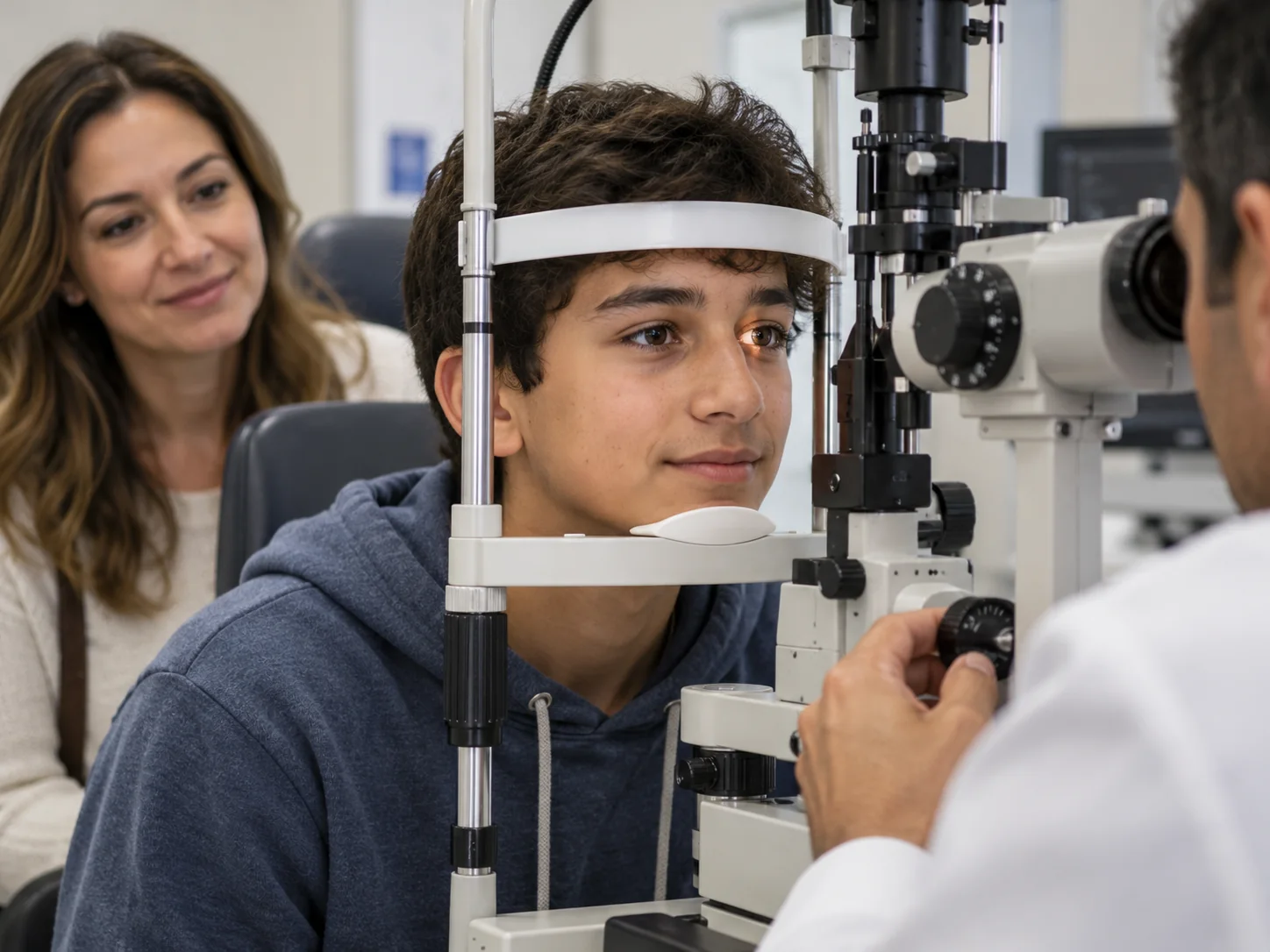
A teenager at the slit lamp
Typical onset
Teens and twenties
Watch for
Frequent prescription changes
Key decision
Cross-linking when progressing
School life
Scleral lenses handle sports and screens

The plan for a teen

Map. Watch closely. Act fast.
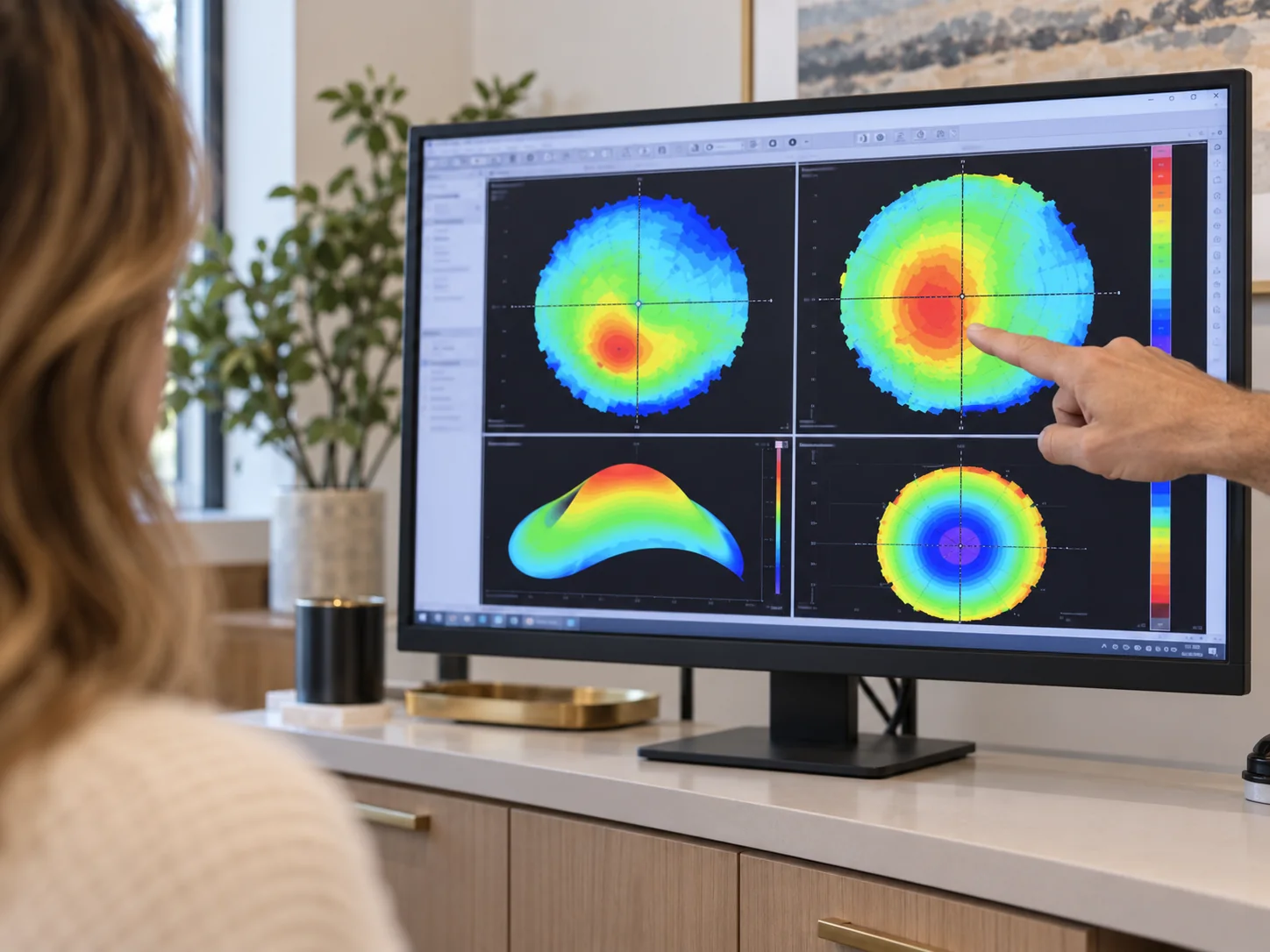
Reviewing a corneal map with a parent
  1. 01

    Baseline maps

    Topography, tomography and pachymetry set the yardstick every later visit is measured against.

  2. 02

    Short-interval monitoring

    Young or changing eyes are re-mapped more often than adults; stability earns longer gaps.

  3. 03

    Cross-linking on progression

    Documented change triggers a referral to a corneal surgeon we co-manage with; follow-up imaging returns here.

  4. 04

    Vision for real life

    Free-form scleral lenses designed from an Eaglet Eye Surface Profiler map stay stable through sports, screens and finals.

Teens take to scleral lenses better than parents expect. Insertion and removal become routine within days, and the payoff is a full school day of stable vision.

Signs parents actually notice

  • New glasses every few months that never feel right
  • Squinting, ghosting complaints, one eye “weaker”
  • Sitting closer to boards and screens
  • Constant eye rubbing, especially allergy season

The window

Progression is most likely while the eye is young. Documented change on our maps is the trigger for a cross-linking referral, to strengthen the cornea before more vision quality is lost.

For parents

What we ask of the family.

  • Control the itch; retire the knuckles
  • Keep the monitoring schedule even when vision feels fine
  • Bring the lenses to every visit
  • Call the same day for sudden haze or pain
Book a teen evaluation

Common questions

Keratoconus in teens, answered.

Anything else, call the office at 310-828-2010.

  • Cross-linking — a surgeon-performed strengthening procedure — is recommended when maps document progression. It is about stopping change; lenses do the seeing.

  • Yes. Sclerals are large and stable, and they do not pop out the way small rigid lenses can. Many teen athletes prefer them.

  • Young or changing eyes are typically re-mapped every few months; stable eyes earn longer intervals. Your schedule is set from the maps, not a calendar default.

  • Most often in the late teens or early twenties, when symptoms usually first appear. Keratoconus may then progress for 10 to 20 years before it slows. That is why children and teens with keratoconus are re-mapped every few months, and why documented progression leads straight to a cross-linking referral.

  • Yes. Keratoconus runs in families: about 1 in 10 people with it has a close relative who has it too. Siblings and children of a patient should have their corneas measured, especially if they have allergies or rub their eyes, two other risk factors, because early keratoconus can look like ordinary astigmatism that glasses correct until the cornea's curvature is measured.

  • Keratoconus does not usually lead to complete blindness, but untreated progression can leave vision that glasses cannot correct and, in advanced cases, scarring that needs a corneal transplant. That is why we stage it, watch it, refer for cross-linking when it moves, and fit lenses that restore functional vision at every stage.

Keratoconus in teens near you

12222 Wilshire Blvd, on the Santa Monica border.

West Los AngelesBrentwoodSanta MonicaWestwoodBeverly HillsCulver CityPacific PalisadesWest HollywoodMarina del ReyNewport Beach

Also consider

Next step

A new keratoconus diagnosis in the family?

Bring the questions — the first visit with our eye doctors in Los Angeles sets the baseline and the plan, and both parents are welcome in the room.

Book a teen evaluation Or call 310-828-2010