An honest candidacy exam before, and attentive care after.
LASIK gives millions of people clearer vision — and the best outcomes start with the right screening. We evaluate whether your corneas and prescription suit surgery, refer you to a trusted refractive surgeon, and manage your recovery afterward.
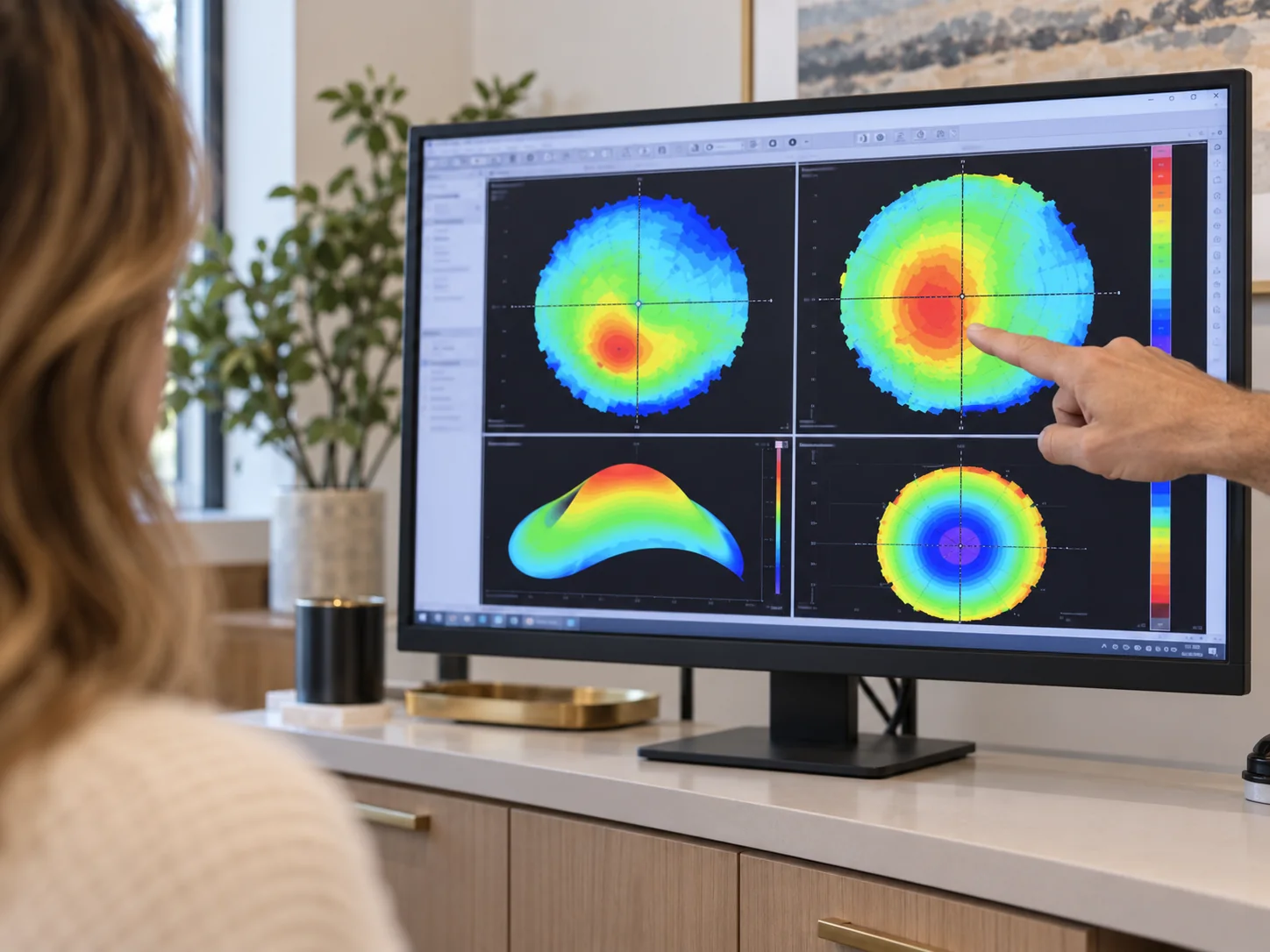
Corneal mapping, a stable-prescription check, and an ocular surface exam. Thin or irregular corneas and untreated dry eye are the findings that matter most before anyone operates, and modern screening exists to catch them.
02
Referral
If LASIK fits, we refer you with complete records. If it doesn’t, we say so and go over alternatives honestly, from other refractive procedures to specialty lenses.
03
Post-operative care
Healing checks on the surgeon’s schedule, drop management, and treatment for the dryness that commonly follows surgery while corneal nerves recover.
04
Long-term follow-up
Yearly exams keep watch over the rare late complications. Vision changing years after LASIK deserves corneal imaging, not just stronger glasses.
No. We evaluate candidacy, refer to trusted refractive surgeons, and provide your pre- and post-operative care.
That depends on corneal thickness and shape, prescription stability, and ocular surface health — all measured at the candidacy exam.
We’ll explain why and review alternatives, including other procedures and specialty contact lenses.
LASIK corrects nearsightedness, farsightedness and astigmatism by using a laser to reshape the cornea, the clear front surface of the eye. After numbing drops, the surgeon cuts a small flap in the cornea, folds it back, and reshapes the tissue underneath with a laser programmed from a detailed scan of your cornea. The surgeon then puts the flap back in place to heal.
The reshaping is permanent: LASIK removes a small amount of corneal tissue. Vision can fluctuate during the first few months and may take up to 3 to 6 months to stabilize. Presbyopia, the age-related loss of near focus that becomes noticeable in the early to mid-40s, affects everyone, so if your distance vision was corrected you will likely still need reading glasses then. Our yearly exams watch for rare late complications such as post-LASIK ectasia, a slow bulging of the cornea. If your vision changes years after LASIK, it deserves corneal imaging before new glasses.
Numbing drops go in first, so what you mainly feel during LASIK is pressure: while a suction ring or a clear plate holds the eye, your vision dims and there may be some discomfort. Afterward the eye may burn, itch or feel like something is in it, and some people have mild pain that a mild pain reliever eases. These symptoms should improve considerably within the first few days. If you have severe pain or your vision gets worse, call your surgeon right away, or call us during office hours; if you suddenly lose vision and can't reach the surgeon, call 911.