
Medically reviewed by Dr. Brandon Cohenmehr, OD Last reviewed
Your Child’s First Ortho-K Night
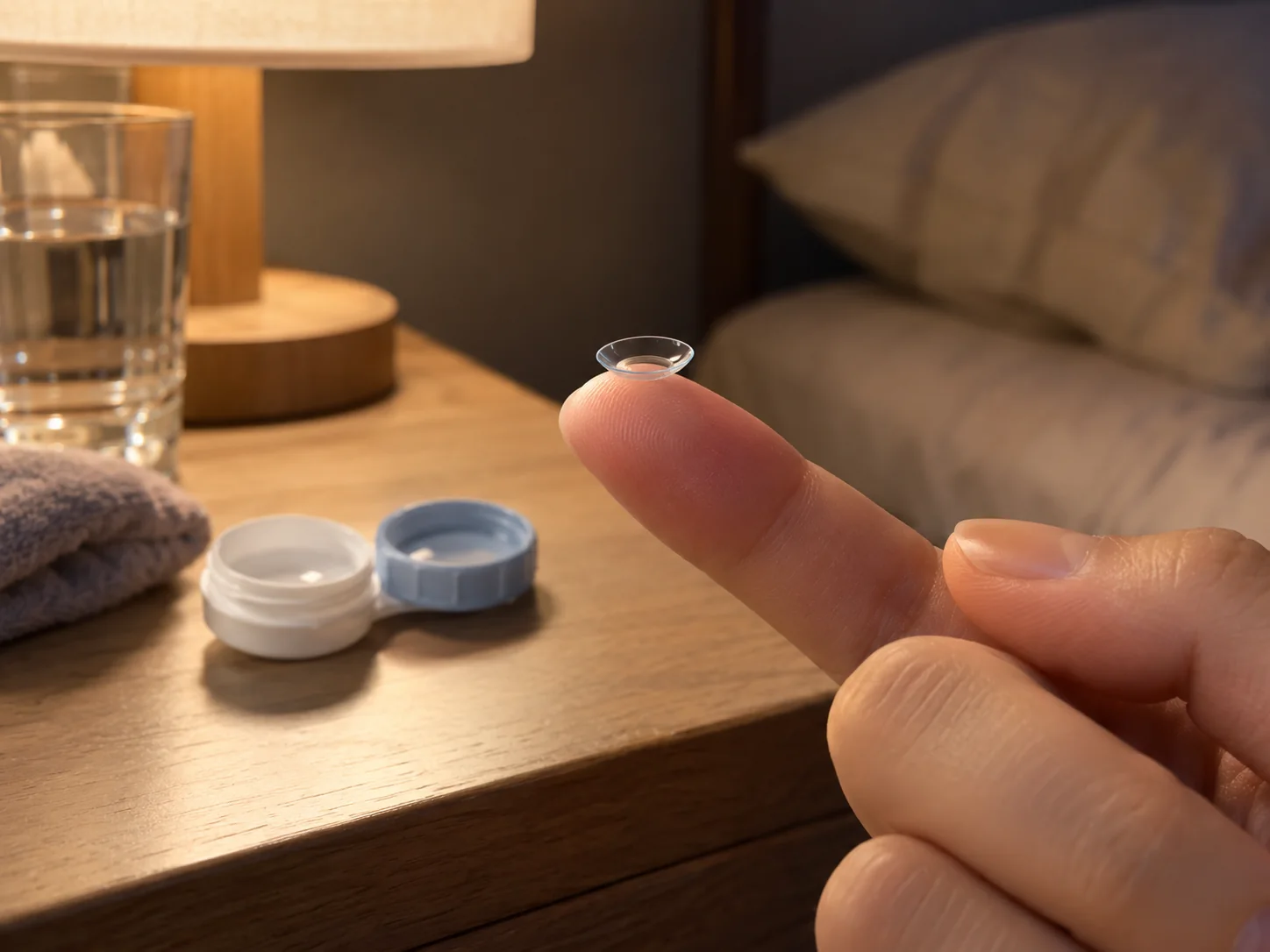
Families build the first Ortho-K night up in their heads. In practice: lenses go in at bedtime, your child sleeps, lenses come out in the morning — and we see you shortly after to confirm the eye is happy and the map is moving the right way.
- Before
- Training visit — insert, remove, clean
- The night
- Lenses in at bedtime, then sleep
- Next morning
- The first-morning check, critical
- After
- Routine nights, scheduled follow-ups
Hour by hour
From training chair to first morning.
- 01
The training visit
Your child practices insertion and removal with our optometrists in Los Angeles until it’s boring, and parents learn the backup moves and the cleaning routine.
- 02
Bedtime
Wash hands, fill, insert, lights out. Some awareness of the lenses early on is normal; most kids adapt quickly and sleep normally.
- 03
First morning
Lenses out, case cleaned, and into the office for the first-morning check, where we confirm the eye is healthy and the fit is doing its work.
- 04
The new normal
Nightly wear, periodic checks, and daytime vision that keeps surprising people. Call us whenever something feels off: pain, redness or light sensitivity means lenses out and a call to us right away, or an emergency room when we’re closed.
The special price covers the journey, not just the lenses: $1,500 total for Ortho-K includes the follow-up visits that make it safe.
House rules
Three rules we teach every family.
- Clean hands, clean case and fresh solution, every single night
- No tap water near lenses, ever
- Discomfort, redness or light sensitivity: lenses out, call 310-828-2010
First Ortho-K night near you
12222 Wilshire Blvd, on the Santa Monica border.
Also consider
The myopia estimator
What slowing it down looks like, on your child’s numbers.
Set the age, prescription and risk factors, then compare Ortho-K, atropine, multifocal contacts and Stellest against doing nothing.
Next step
Ready for night one?
The Ortho-K evaluation starts the clock: maps, candidacy, and a lens designed for your child’s eye.