
Medically reviewed by Dr. Brandon Cohenmehr, OD Last reviewed
The Eaglet Eye Surface Profiler
The map that makes a lens fit the eye — instead of the eye tolerating the lens.
Most scleral lenses are fit from stock curves and trial sets: a round lens, adjusted by eye, on a surface that is almost never round. The Eaglet Eye Surface Profiler (ESP) replaces that guesswork with a measured map — hundreds of thousands of elevation points across the cornea and sclera — and we design every scleral lens free-form from it. Very few offices in California carry this technology; it is the foundation of our fitting process.
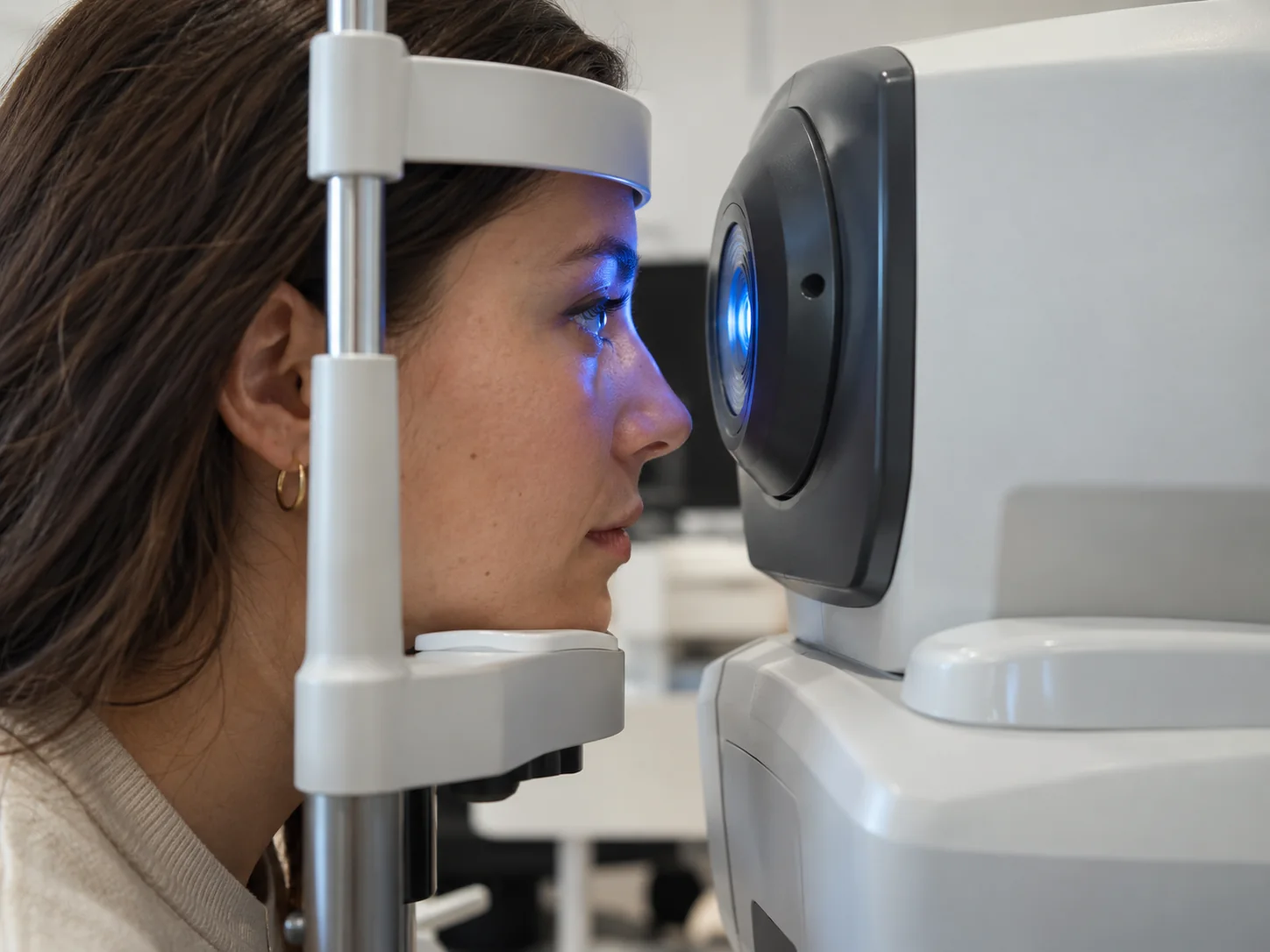
- The instrument
- Eaglet Eye Surface Profiler (ESP)
- The map
- Hundreds of thousands of points, cornea to sclera
- The lens
- Free-form — every scleral we fit
- Overseen by
- Dr. Brandon Cohenmehr, OD
The measurement
Five seconds. The whole landing zone.
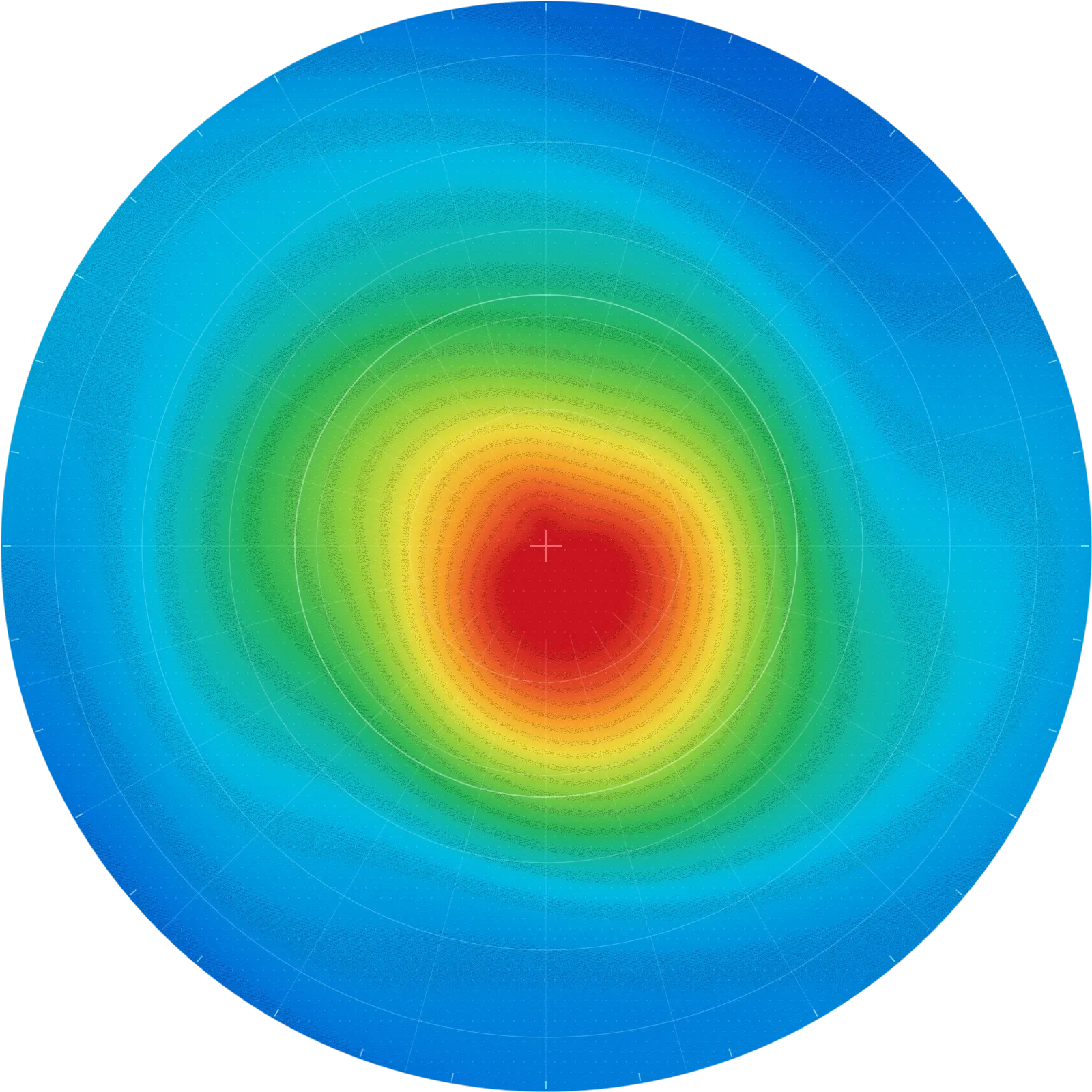
The sclera, mapped point by point
The ESP is a profilometer: it measures height, not just curvature. In a quick, no-contact scan it captures the true elevation of the ocular surface far beyond where corneal topographers stop — out across the sclera, where a scleral lens actually lands.
- Beyond the cornea
Standard topography maps the central cornea; the ESP maps the terrain a scleral lens rests on.
- Hundreds of thousands of points
Dense elevation data in every meridian: the asymmetry that trial lenses can only hint at, measured outright.
- No contact, no dye for the map itself
Chin in the rest, a few seconds per eye; the data does the rest.
- A digital model of your eye
The scan becomes the surface the lens is engineered against: your eye, not an average eye.
The design
Free-form: a lens with no stock curve anywhere.
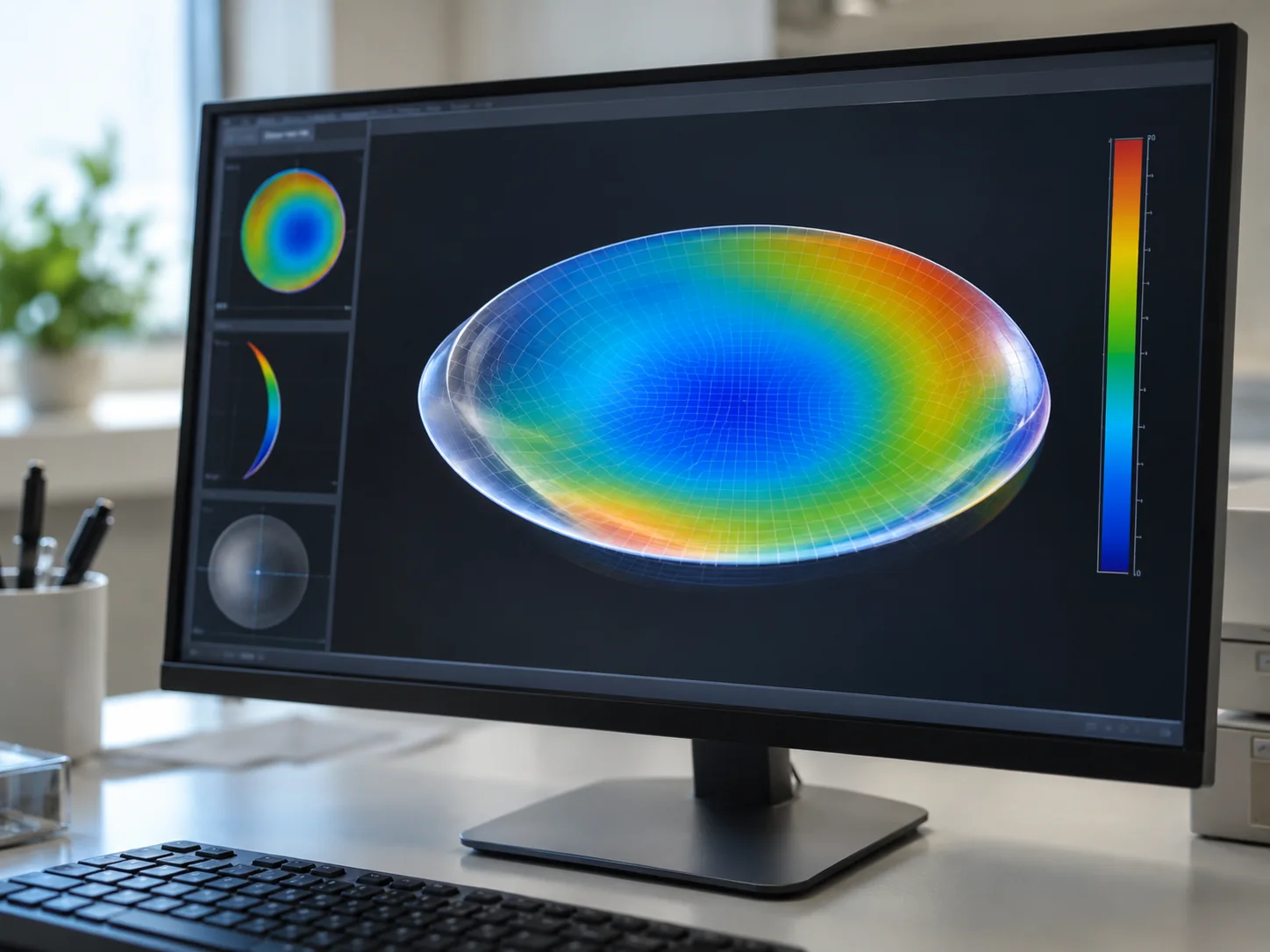
From the ESP map our optometrists in Los Angeles design free-form scleral lenses — including Visionary Optics Latitude — where the landing zone is shaped point by point to your sclera. Not “steeper at 3 o’clock”: a continuously custom haptic that follows your eye’s actual elevation in every direction.
- 01
Map
ESP scan of both eyes: elevation data across cornea and sclera.
- 02
Design
The lens is engineered on your digital eye: vault set over the cone or graft, landing aligned to the measured sclera, optics placed over your true visual axis.
- 03
Dispense and verify
On-eye evaluation confirms clearance and alignment; training covers insertion, removal and care.
- 04
Refine by data
Any adjustment is a design change made against the map. That means fewer remakes, fewer visits and a faster route to all-day wear.
This is why patients whose lenses failed elsewhere succeed here: the previous lens wasn’t wrong because scleral lenses don’t work; it was wrong because it was never designed for that eye.
Who it rescues
Built for the eyes stock lenses gave up on.
- Keratoconus with marked asymmetry or advanced cones
- Post-transplant and post-cross-linking corneas, where the landing must clear the graft
- Post-LASIK ectasia and pellucid marginal degeneration
- Severe dry eye and exposure cases that need a stable, sealed reservoir
- Previous scleral failures: midday fogging, edge redness, lenses that creep or tilt
Comfort depends on fit, and fit depends on alignment. When the haptic matches the sclera, pressure spreads evenly, the reservoir stays clear, and you stop noticing the lens.
This is the fitting for you if
- Your scleral or RGP lenses never got comfortable
- Lenses fog by midday or redden your eyes by evening
- You were told your eyes are “too irregular to fit”
- A graft, ectasia or high asymmetry defeated stock designs
- You’re traveling in for keratoconus care and need the fit right in fewer visits
Why round lenses fail
The sclera is not a sphere: it is asymmetric, usually flatter nasally, steeper temporally, and different in every meridian. A round lens on that terrain bears down somewhere, lifts somewhere else, and the eye pays in redness, fogging and shrinking wear time. The fix isn’t more trial and error; it’s a map.
The fitting standard
Every scleral lens here starts with the map.
- ESP profilometry on every scleral fitting, hard case or not
- Free-form designs only, including Visionary Optics Latitude
- Personally overseen by Dr. Brandon Cohenmehr, OD
- Traveling in? Fittings are clustered to make each trip count
Eaglet Surface Profiler near you
12222 Wilshire Blvd, on the Santa Monica border.
Also consider
Next step
Ready to be mapped, not guessed at?
Bring the lenses that failed. The ESP scan takes seconds, the map explains the failure, and the free-form design fixes it, personally overseen by Dr. Brandon Cohenmehr.