
Same-day urgent eye care
Mon 10–5 · Tue–Fri 8–5 310-828-2010 Book online Intake form
Cohenmehr Optometry — Vision · Dry Eye · Keratoconus Book appointment
Cohenmehr OptometryVision · Dry Eye · Keratoconus Center
Our Practice
Meet the Doctors TestimonialsShare FeedbackTraveling to See UsAreas We Serve Hours & Directions
Eye Care

Routine care

Comprehensive Eye CareContact Lens ExamsComputer Vision SyndromeGlasses and Contact LensesNeurolensAdvanced Diagnostics

Medical eye care

Glaucoma & Ocular DiseaseDiabetic Eye ExamsMacular Degeneration CareLow VisionStye & Chalazion TreatmentUrgent Care

Children’s vision

Pediatric Eye ExamsMyopia ManagementAtropineOrtho-KEssilor Stellest LensesVision Therapy

Surgery co-management

Surgical Co-ManagementLASIKPRKSMILEEVO ICLRefractive Lens ExchangeCataract SurgeryCorneal TransplantPterygium Surgery
Dry Eye
The Dry Eye CenterOptiLIFTIPL (Intense Pulsed Light)Punctal PlugsBlephExAmniotic MembranesPrescription DropsAutologous Serum DropsMeibomian Gland ProbingIPL for Rosacea

Understand

Types of Dry EyeThe Tear FilmDemodex BlepharitisDry Eye After LASIKMenopause & Dry EyeSjögren’s & Dry EyeContact Lens Discomfort

Cosmetics

Upneeq® · Buy OnlineUpneeq Intake Form
Myopia Control
The Myopia ProgramMyopia Estimator — free toolOrtho-K — $1,500 totalAtropineStellest LensesMultifocal ContactsMiSight 1 Day

For parents

Choosing a TreatmentWhy Myopia MattersOutdoor Time & ScreensFirst Ortho-K NightMeasuring Progression
Keratoconus
The Keratoconus CenterScleral Contact LensesSpecialty Contact LensesScleral Lens UsesEaglet Surface ProfilerScleral Lens Care

Go deeper

Eye Rubbing & KeratoconusKeratoconus in TeensCorneal HydropsTransplant Co-Management
Scleral Lenses

The lenses

Scleral Contact LensesEvery Use, at a GlanceEaglet Surface ProfilerScleral vs RGP vs HybridSpecialty Contact LensesSpecialty Soft & ProstheticLens Care & HandlingTraveling to See Us

Corneal conditions

KeratoconusPost-LASIK EctasiaPellucid Marginal DegenerationCorneal ScarringAfter Corneal TransplantAfter Radial Keratotomy (RK)Post-Surgical ComplicationsOcular Shingles Scarring

Surface disease & more

Severe Dry EyeSjögren’s SyndromeStevens-Johnson SyndromeGraft-vs-Host DiseaseBell’s Palsy & ExposureRare Tear DeficiencyPresbyopia & High RxSports & Active Wear
Library
Start With a SymptomEye Conditions A–ZArticlesFree ToolsFull Site Index

Patients

Patient Intake FormCommon QuestionsAccepted InsurancePaying for Care (FSA/HSA)
Call the office310-828-2010
Book appointment

Medically reviewed by Dr. Bijan Cohenmehr, OD Last reviewed

Punctal Plugs for Dry Eye in Los Angeles

Keep your own tears on the eye longer.

Punctal plugs are a simple way to help with aqueous-deficient dry eye — when your eyes don’t make enough tears. Tiny, soft dissolvable plugs sit at the corner of the eye where tears normally drain, so your natural tears stay on the surface longer instead of washing away too quickly.
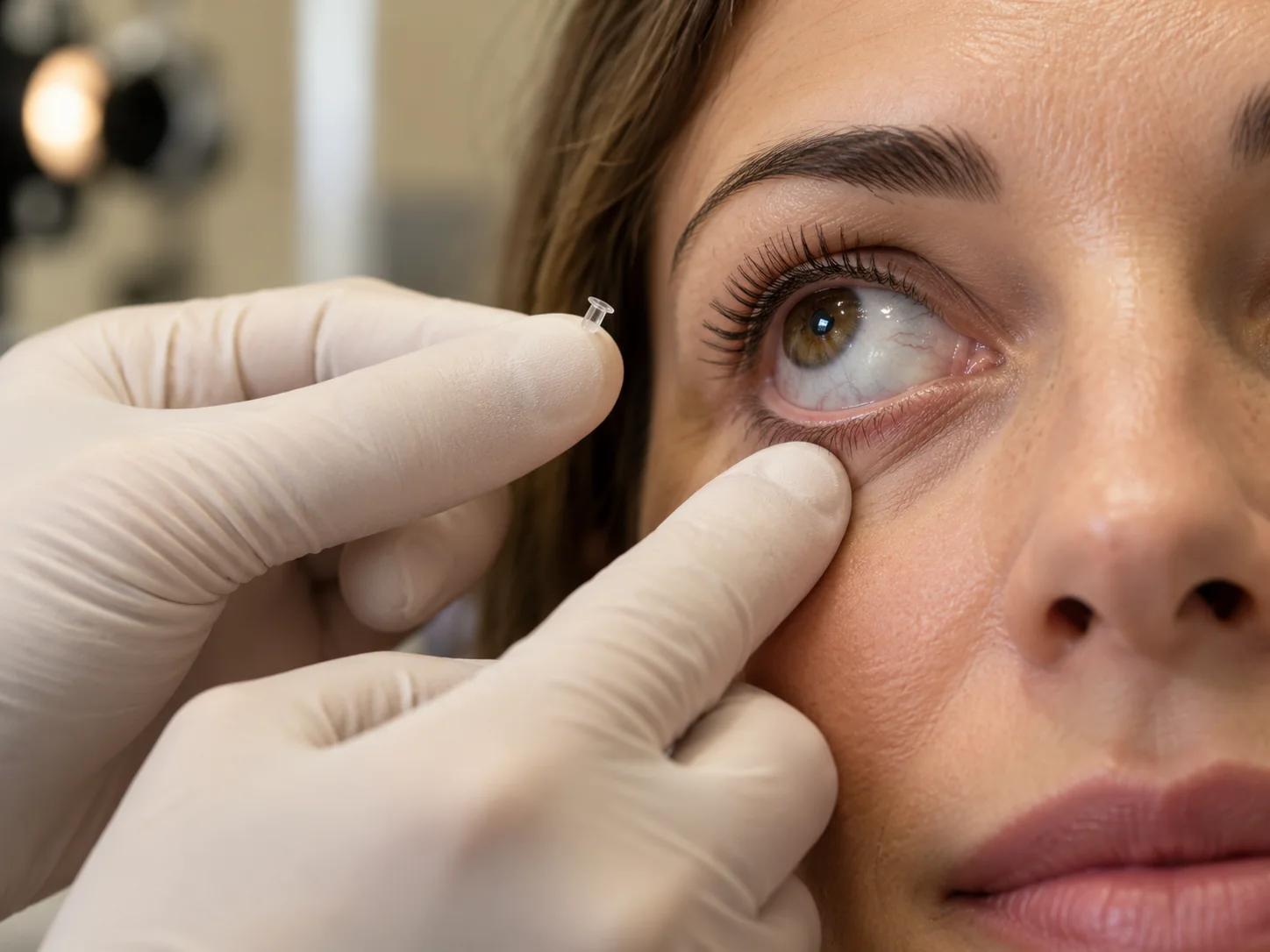
Placing a punctal plug at the slit lamp
Type
3- and 6-month dissolvable
For
Aqueous-deficient dry eye
Feels like
A drop at the corner of the eye
Coverage
Often medical insurance

Why we prefer dissolvable plugs

  • Lower risk of infection or blockage than permanent styles left in for years
  • Less irritation — soft and temporary, they do their job and disappear
  • Gentle on the natural tear drainage system
  • Repeatable as needed, without committing to a permanent implant

What it feels like

A quick, in-office treatment most patients describe as a little “drop at the corner of the eye,” and then it’s done. No surgery, no needles — and you don’t feel the plugs once they’re in.

Where they fit

One tool in a larger plan.

The tear drainage opening on the lower lid

Plugs rarely work alone. They hold your tears, and the rest of the plan improves the tears themselves.

Pairs well with
IPL, prescription dry eye drops, and eyelid therapies: plugs keep the tears those treatments improve on the eye longer.
One caution
If inflammation is uncontrolled, holding tears on the eye can hold inflammatory molecules there too, so we often treat inflammation first and then add plugs.
Sequenced
Dissolvable first (3-month, then 6-month), so we confirm plugs genuinely help your eyes before considering anything longer-lasting.

Often covered by medical insuranceWhen dry eye is properly diagnosed, plugs are typically a covered medical treatment — our team can check your coverage before your visit.

Call 310-828-2010

The program

Dry eye care, layer by layer.

Common questions

Punctal plugs, answered.

Anything else, call the office at 310-828-2010.

  • No. Most patients feel a brief touch at the corner of the eye, and nothing once the plug is in place.

  • We use 3-month and 6-month dissolvable plugs, repeated as needed to keep your eyes comfortable.

  • Often, by medical insurance, when dry eye is properly diagnosed. We can check your benefits before your visit.

  • Tears drain out of the eye through tiny openings (the puncta) at the inner corners of the lids. A plug sits in that opening so your own tears stay on the eye longer instead of draining away. It helps when the problem is too little tear volume; it does not add oil to the tear film, which is why gland treatment often runs alongside it in our dry eye program.

  • By your symptoms, because you don't feel the dissolvable plugs we use: dryness creeping back before the expected 3 or 6 months is the sign. Plugs can work loose and come out, and dissolvable ones are also absorbed on their own schedule, so returning dryness may just mean it is time for the next set. Call and we will check at the slit lamp.

  • Yes. The plug sits inside the drainage opening at the inner corner, not on the lid surface, so liner, mascara and shadow do not interfere with it. Keep the inner corner clean, avoid rubbing it, and remove makeup gently at the end of the day.

  • Yes. Lacrimal plugs, also called punctal plugs, are tiny plugs placed in the tear drain at the inner corner of the lid so your own tears stay on the eye longer. The ones we use sit in the punctum, the drain's opening, and dissolve on their own after 3 or 6 months.

  • Lacrifill is a gel made of crosslinked hyaluronic acid that is placed in the tear drain canal, where it slows tear drainage the way a plug does, so your own tears stay on the eye longer. In a randomized trial at five US sites, it did about as well as a standard canalicular plug, and improvements in dry eye signs and symptoms lasted through 6 months. We use it alongside the dissolvable plugs described on this page.

Also consider

Next step

Tears that stay put.

Book a dry eye evaluation with a Los Angeles eye doctor and find out whether tear retention is your missing layer.

Book a Dry Eye Evaluation Or call 310-828-2010