
Same-day urgent eye care
Mon 10–5 · Tue–Fri 8–5 310-828-2010 Book online Intake form
Cohenmehr Optometry — Vision · Dry Eye · Keratoconus Book appointment
Cohenmehr OptometryVision · Dry Eye · Keratoconus Center
Our Practice
Meet the Doctors TestimonialsShare FeedbackTraveling to See UsAreas We Serve Hours & Directions
Eye Care

Routine care

Comprehensive Eye CareContact Lens ExamsComputer Vision SyndromeGlasses and Contact LensesNeurolensAdvanced Diagnostics

Medical eye care

Glaucoma & Ocular DiseaseDiabetic Eye ExamsMacular Degeneration CareLow VisionStye & Chalazion TreatmentUrgent Care

Children’s vision

Pediatric Eye ExamsMyopia ManagementAtropineOrtho-KEssilor Stellest LensesVision Therapy

Surgery co-management

Surgical Co-ManagementLASIKPRKSMILEEVO ICLRefractive Lens ExchangeCataract SurgeryCorneal TransplantPterygium Surgery
Dry Eye
The Dry Eye CenterOptiLIFTIPL (Intense Pulsed Light)Punctal PlugsBlephExAmniotic MembranesPrescription DropsAutologous Serum DropsMeibomian Gland ProbingIPL for Rosacea

Understand

Types of Dry EyeThe Tear FilmDemodex BlepharitisDry Eye After LASIKMenopause & Dry EyeSjögren’s & Dry EyeContact Lens Discomfort

Cosmetics

Upneeq® · Buy OnlineUpneeq Intake Form
Myopia Control
The Myopia ProgramMyopia Estimator — free toolOrtho-K — $1,500 totalAtropineStellest LensesMultifocal ContactsMiSight 1 Day

For parents

Choosing a TreatmentWhy Myopia MattersOutdoor Time & ScreensFirst Ortho-K NightMeasuring Progression
Keratoconus
The Keratoconus CenterScleral Contact LensesSpecialty Contact LensesScleral Lens UsesEaglet Surface ProfilerScleral Lens Care

Go deeper

Eye Rubbing & KeratoconusKeratoconus in TeensCorneal HydropsTransplant Co-Management
Scleral Lenses

The lenses

Scleral Contact LensesEvery Use, at a GlanceEaglet Surface ProfilerScleral vs RGP vs HybridSpecialty Contact LensesSpecialty Soft & ProstheticLens Care & HandlingTraveling to See Us

Corneal conditions

KeratoconusPost-LASIK EctasiaPellucid Marginal DegenerationCorneal ScarringAfter Corneal TransplantAfter Radial Keratotomy (RK)Post-Surgical ComplicationsOcular Shingles Scarring

Surface disease & more

Severe Dry EyeSjögren’s SyndromeStevens-Johnson SyndromeGraft-vs-Host DiseaseBell’s Palsy & ExposureRare Tear DeficiencyPresbyopia & High RxSports & Active Wear
Library
Start With a SymptomEye Conditions A–ZArticlesFree ToolsFull Site Index

Patients

Patient Intake FormCommon QuestionsAccepted InsurancePaying for Care (FSA/HSA)
Call the office310-828-2010
Book appointment

Medically reviewed by Dr. Brandon Cohenmehr, OD Last reviewed

Scleral vs. RGP vs. Hybrid

Three ways to put smooth optics over a rough cornea.

Every rigid-optic lens solves keratoconus the same way — a smooth front surface and a tear layer that erases the cornea’s irregularity. Where they differ is everything else: landing zone, comfort curve, handling, and the eyes they suit. The honest comparison:
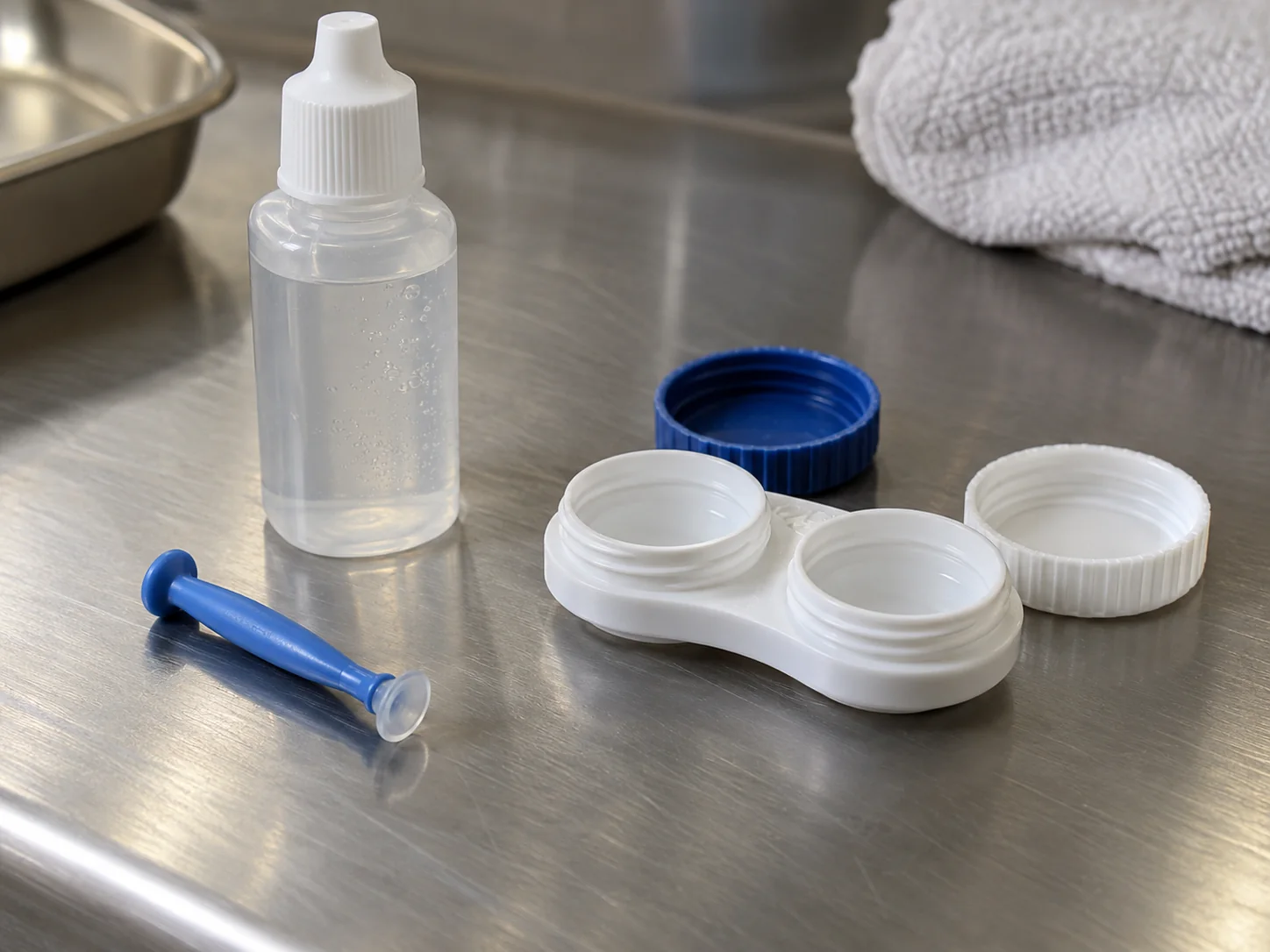
Three lens cases in a row on brushed steel
Scleral
Vaults the cornea entirely
RGP
Small, rides the cornea
Hybrid
Rigid center, soft skirt
Decider
Your map + your tolerance

The comparison

Same physics, three personalities.

Scleral — the comfort-first flagship

Lands on the white of the eye, never touches the cone, bathes it in saline all day. Most forgiving on sensitive and advanced corneas; our default for moderate-to-advanced keratoconus and dry, fragile surfaces. Asks: a fill-and-insert routine and the larger first-cost.

RGP — the crisp veteran

Small, simple to handle, inexpensive to replace, optically superb. The trade: lid-lens awareness that some adapt to and some never do, and a fit that advanced cones can destabilize. Right for experienced wearers and milder, centered cones.

Hybrid — the middle path

Rigid optics with a soft landing mean less lens awareness than an RGP, without the scleral routine. The trade: replacement schedules and less customization than a free-form scleral. Right when an RGP won’t sit still but a scleral feels like more than the eye needs.

What decides it

Your Eaglet ESP map, corneal sensitivity, dryness, dexterity and budget: we measure them first, then match the lens. Switching families later is normal, not failure.

Our default, stated plainly

We fit all three. We reach for sclerals most.

  • Free-form sclerals designed from hundreds of thousands of ESP map points
  • RGP and hybrid fits for the eyes they genuinely suit
  • Diagnostic lenses on-eye before any order
  • Honest switching when the first family isn’t the right one
Book a lens evaluation

Common questions

Scleral vs. RGP vs. hybrid, answered.

Anything else, call the office at 310-828-2010.

  • All three can reach excellent acuity on the right eye — the differences show in comfort, stability and wear time, which is why the map and a diagnostic fitting decide.

  • They are larger, fully custom devices with a more involved fitting — and for sensitive or advanced corneas, the comfort and stability are what make all-day wear possible at all.

  • Yes — diagnostic lenses go on-eye at the evaluation, so you experience the vision before any lens is ordered.

  • Rigid gas-permeable (RGP) lenses are small, firm lenses made of a plastic that lets oxygen through. Because they keep their own shape, tears fill the space between lens and cornea and smooth out an irregular surface, which gives very sharp vision. They are simple to handle and inexpensive to replace; the trade-offs are that some people never stop feeling the edge, and an advanced cone can keep them from sitting still.

  • Hard, in the sense that they keep their shape: they are made of rigid gas-permeable plastic that lets oxygen reach the eye. They feel much softer than that sounds, because they rest on the white of the eye, which is far less sensitive than the cornea, over a cushion of saline, and never touch the cornea itself.

Scleral vs. RGP vs. hybrid near you

12222 Wilshire Blvd, on the Santa Monica border.

West Los AngelesBrentwoodSanta MonicaWestwoodBeverly HillsCulver CityPacific PalisadesWest HollywoodMarina del ReyNewport Beach

Also consider

Next step

Want the match, not the menu?

One mapping visit with an optometrist in Los Angeles sorts the three families for your eyes — diagnostic lenses included.

Book an evaluation Or call 310-828-2010