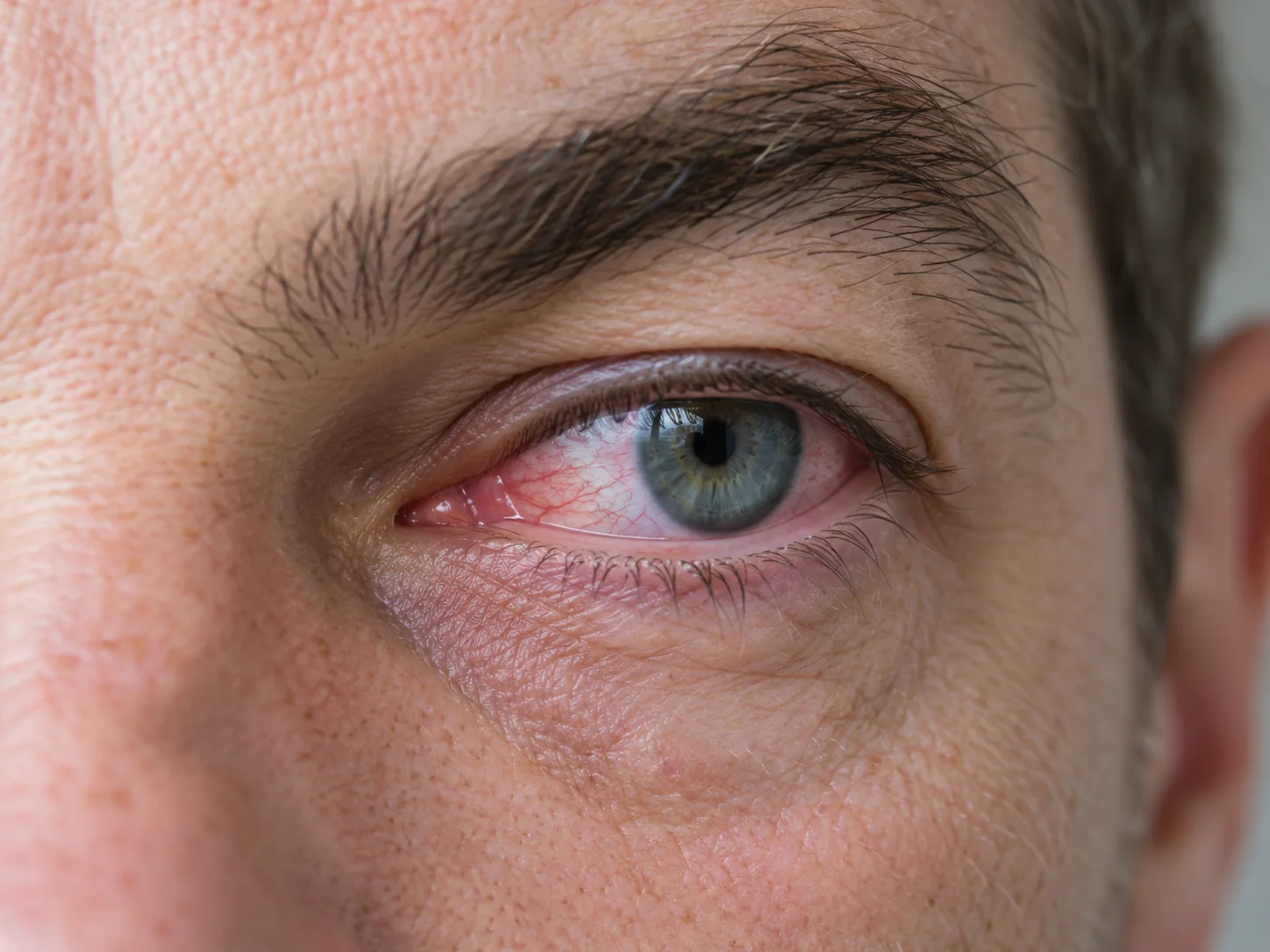
Eyes that stay red usually have an ongoing cause, and dry eye is a common one. Others include eye allergies, blepharitis (inflamed eyelid edges, sometimes from Demodex mites), contact lenses worn too long or slept in, and regular use of redness-relief drops, which can cause rebound redness. Smoke and too little sleep can make dry, red eyes worse. A red eye with pain, light sensitivity or blurred vision needs a same-day exam (an emergency room when we're closed). For severe pain with nausea, a headache or halos, call us immediately, or go to the emergency room when we're closed; sudden vision loss means calling 911. Our guide to eye symptoms sorts red eyes by urgency.
Key takeaways
- Redness that won't clear usually comes from something ongoing, such as dry eye, eye allergies, blepharitis (inflamed eyelid edges) or contact lens overwear.
- Regular use of redness-relief drops can cause rebound redness, so stop them and ask a doctor if redness lasts more than 72 hours.
- While you treat the cause, a humidifier, avoiding smoke and allergy triggers, and cool compresses and artificial tears in mild cases can bring some relief.
- A red eye with pain, light sensitivity or blurred vision needs a same-day exam, or an emergency room when we're closed.
01
What makes eyes look bloodshot?
Many things can redden the white of the eye. Red eyes are a symptom of dry eye, and pink eye, caused by a virus, bacteria, an allergy or an irritant such as air pollution, makes the white of the eye and the inside of the eyelid red and swollen.
For redness that lingers, dry eye is a likely suspect: it's a common and often long-lasting problem, especially in older adults.
02
What causes red eyes that don't go away?
Allergies, eyelid inflammation, contact lens habits, whitening drops, smoke and short nights can keep eyes red too, and each comes with its own clues.
| Cause | Other clues | What usually helps |
|---|---|---|
| Dry eye | A scratchy feeling, light sensitivity, blurry vision; worse after screen time | Artificial tears, screen breaks, a dry eye evaluation |
| Eye allergies | Itching, sometimes severe; watery discharge | Avoiding triggers, artificial tears, allergy drops |
| Blepharitis or Demodex mites | Red, itchy, swollen eyelids; crusty lids or lashes on waking | Daily lid cleaning, in-office lid treatment |
| Contact lens overwear | Discomfort while wearing lenses, especially after sleeping in them | Lenses out; a same-day exam if the eye hurts or light bothers it (an emergency room when we're closed); then replacement on schedule or a refit |
| Redness-relief drops | Redness that comes back or gets worse with regular use | Preservative-free artificial tears instead |
| Smoke or short nights | Stinging, burning eyes on smoky days; dryness after poor sleep | Avoiding smoke, a humidifier, 7 to 8 hours of sleep |
Dry eye
Dry eye can also bring a scratchy feeling, sensitivity to light and blurry vision. It's more likely if you're 50 or older, female, or wear contact lenses. Long screen sessions add to it, because you may blink less while looking at a screen.
Eye allergies
Eye allergies redden the eyes and make them water, and the itching can be severe. Triggers include pollen, dust mites, molds and pet dander.
Blepharitis and Demodex mites
Blepharitis makes the eyelids red, swollen, irritated and itchy, often with crusty lids or lashes when you wake up. Most of the time it comes from too much bacteria at the base of the eyelashes, and skin conditions such as rosacea can cause it too.
Demodex, microscopic mites that live in the lash follicles, are another cause we check for at the lash line. Our page on Demodex blepharitis explains how they're found and treated.
Contact lenses worn too long
Not wearing, cleaning and storing lenses as directed raises the risk of eye infection, and long-term lens wear can be a factor in dry eye. Sleeping in contact lenses raises the risk of a lens-related eye infection six- to eightfold.
The CDC advises following the replacement schedule your eye doctor recommends, avoiding sleeping in lenses unless your eye doctor says otherwise, and taking the lenses out and contacting your eye doctor if your eyes are uncomfortable. If lenses that used to feel fine now leave your eyes red, our page on contact lens discomfort explains the usual reasons.
Smoke and short nights
Smoke dries the eyes. Smoke, wind and dry climates make tears evaporate faster, and smoky air can irritate the eyes enough to cause pink eye. The National Eye Institute's dry eye advice includes avoiding smoke, wind and air conditioning and using a humidifier at home.
Sleep plays a part too: the National Eye Institute includes getting enough sleep, about 7 to 8 hours a night, in its dry eye self-care advice.
03
Can redness-relief drops make red eyes worse?
Yes, if you overuse them. The Drug Facts label on a common redness reliever, tetrahydrozoline, warns that overuse may cause more eye redness, and says to stop and ask a doctor if eye pain or vision changes start, or the redness lasts, gets worse or goes on for more than 72 hours.
The same label tells people with narrow-angle glaucoma to ask a doctor before using it, and warns that the drops can temporarily enlarge the pupils. An eye exam can tell you whether you have narrow angles. For dryness, the American Optometric Association recommends preservative-free artificial tears, which have fewer additives that can irritate the eyes.
04
Why are my eyes red when I wake up?
Blepharitis can show up first thing in the morning, with crusty eyelids or lashes and red, swollen lids, and dry eye can leave the eyes red too.
Eyelids that don't close all the way are another cause, because the uncovered part of the eye dries out: in Bell's palsy, for example, difficulty closing one eyelid causes eye dryness. When it happens during sleep it's called nocturnal lagophthalmos, and our article on waking up with crusty, irritated, blurry eyes explains how it's found and treated.
05
How do you get rid of bloodshot eyes?
Treat the cause, and use simple measures for relief in the meantime:
- Cool compresses and artificial tears, which sometimes relieve discomfort in mild cases
- Avoiding smoke, wind and air conditioning, and using a humidifier at home
- Avoiding or removing allergy triggers
- Washing your hands often and not rubbing your eyes, which helps keep pink eye from spreading
- Stopping redness-relief drops and asking a doctor if the redness lasts more than 72 hours, since overuse can make redness worse
For blepharitis, the National Eye Institute recommends cleaning the eyelids and removing crusts every day with water and a gentle cleanser, such as baby shampoo.
See an eye doctor if the redness gets worse or doesn't improve, or sooner for any of the warning signs below.
06
Which red eyes are urgent?
A red eye with pain, light sensitivity or blurred vision needs a same-day exam, or an emergency room when we're closed. Call your eye doctor today for:
- Eye pain or blurry vision
- Strong sensitivity to light. With pain, redness and blur it can be uveitis, inflammation inside the eye that can cause vision loss if it isn't treated
- Pain, marked redness or light sensitivity while wearing contact lenses. Take the lenses out and call; your eye doctor can check for keratitis, inflammation or infection of the cornea
- Something stuck in your eye. Don't rub it; call us and come straight in, because we remove these in the office, and go to the emergency room only when we're closed
A red eye with severe pain plus nausea, a headache or halos around lights can be a sign of acute angle-closure glaucoma, a medical emergency. During office hours, call us immediately or go straight to an emergency room; when we're closed, go to the emergency room.
If something has cut or pierced the eye, go to the emergency room: don't rinse it or try to remove anything, and protect the eye without pressing on it.
For a chemical splash, rinse first, right away. Run lots of room-temperature water gently into the eye for at least 15 to 20 minutes (adults may find a shower easiest) and take out contact lenses. Then call Poison Control at 1-800-222-1222, which gives free expert advice around the clock, and call us or go to an emergency room. If the symptoms are severe, go straight to the emergency room after rinsing.
Call 911 for sudden loss of vision in one or both eyes, even if it comes back; sudden double vision; double vision or a droopy eyelid with a pupil that looks different, eye pain or a severe headache; or any change in vision with face drooping, arm weakness or trouble speaking. These can be signs of a stroke or another brain or nerve emergency. Call 911 even if the symptoms go away.
During office hours, Monday 10 to 5 and Tuesday through Friday 8 to 5, call us at 310-828-2010 for a same-day urgent visit. Outside office hours, sight-threatening symptoms belong in an emergency room.
07
How we find the cause of red eyes at Cohenmehr Optometry
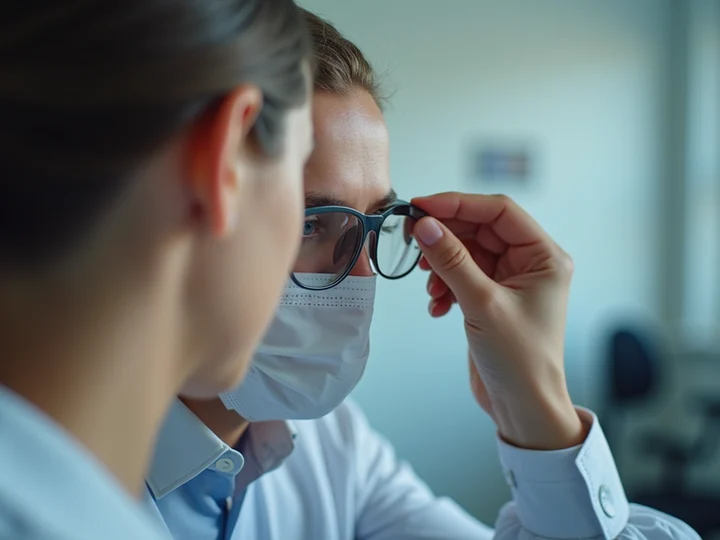
For redness that keeps coming back, a dry eye evaluation is a sensible place to start, since dry eye is common and redness is one of its symptoms. Our optometrists in Los Angeles image the meibomian glands, the oil glands along the eyelids, and evaluate tear film stability, gland structure and the health of the eye's surface.
Treatment follows what we find:
- Blepharitis and Demodex: in-office lid exfoliation such as BlephEx, with targeted therapy when mites are present
- Oil gland problems and ocular rosacea: IPL, which uses pulses of light to close the small, leaky blood vessels that feed lid inflammation, followed by gland expression
- Allergies: prescription-strength allergy drops and trigger control
- Contact lens redness: a review of the fit and the tear film, often with a refit into daily disposable lenses
A red eye that hurts or is sensitive to light is seen the same day. Call 310-828-2010, or go to an emergency room when we're closed.
08
Questions patients ask
Why is only one of my eyes red?
A broken blood vessel is a common reason: a bright red patch on the white of one eye that doesn't hurt and doesn't change your vision. One red eye that hurts, is sensitive to light or blurs your vision, especially if you wear contact lenses, needs a same-day exam, or an emergency room when we're closed, to rule out keratitis or uveitis. For severe pain with nausea, a headache or halos around lights, call us immediately, or go to the emergency room when we're closed.
Are red eyes contagious?
Only when an infection causes them. Pink eye caused by viruses or bacteria is very contagious, while pink eye from allergens or irritants such as smoke is not. Redness from dry eye, allergies, contact lens overwear or whitening drops can't be passed to anyone. If you might have infectious pink eye, wash your hands often and avoid touching your eyes.
Does smoking make your eyes red?
It can. Smoke makes tears evaporate faster, which leads to dry eye symptoms, and red eyes are one of them. Smoking also raises your risk of uveitis, inflammation inside the eye that can bring red eyes, eye pain and sensitivity to light.
Can the sun make your eyes red?
Yes. Too much UV light can cause photokeratitis, a sunburn of the eye that brings red eyes, a gritty feeling, strong sensitivity to light and heavy tearing; it's usually temporary. Over the years, sun exposure also raises the risk of pterygium (surfer's eye). The AOA advises a wide-brim hat and sunglasses that block UV whenever you're outdoors. Our pages on pinguecula and UV protection and sunglasses have more.
09
Sources
- National Eye Institute: Dry eye
- National Eye Institute: Pink eye
- American Optometric Association: Dry eye
- National Eye Institute: Causes of dry eye
- American Optometric Association: Conjunctivitis
- CDC: Pink eye causes and how it spreads
- National Eye Institute: Blepharitis
- CDC: Preventing eye infections when wearing contacts
- CDC (MMWR): Corneal infections associated with sleeping in contact lenses
- DailyMed: Tetrahydrozoline eye drops, Drug Facts label
- NINDS: Bell's palsy
- CDC: How to treat pink eye
- National Eye Institute: Uveitis
- American Stroke Association: Stroke symptoms and warning signs
- National Eye Institute: Types of glaucoma
- American Optometric Association: Glaucoma
- Poison Control: Splashed a poison in your eye?
- MedlinePlus: Eye injuries
- StatPearls: Subconjunctival hemorrhage
- American Optometric Association: UV protection

Written by
Dr. Bijan Cohenmehr, OD
Founder of Cohenmehr Optometry, in practice for over 40 years. He leads the practice’s dry eye care and myopia management. A graduate of SUNY College of Optometry.
About Dr. Bijan →