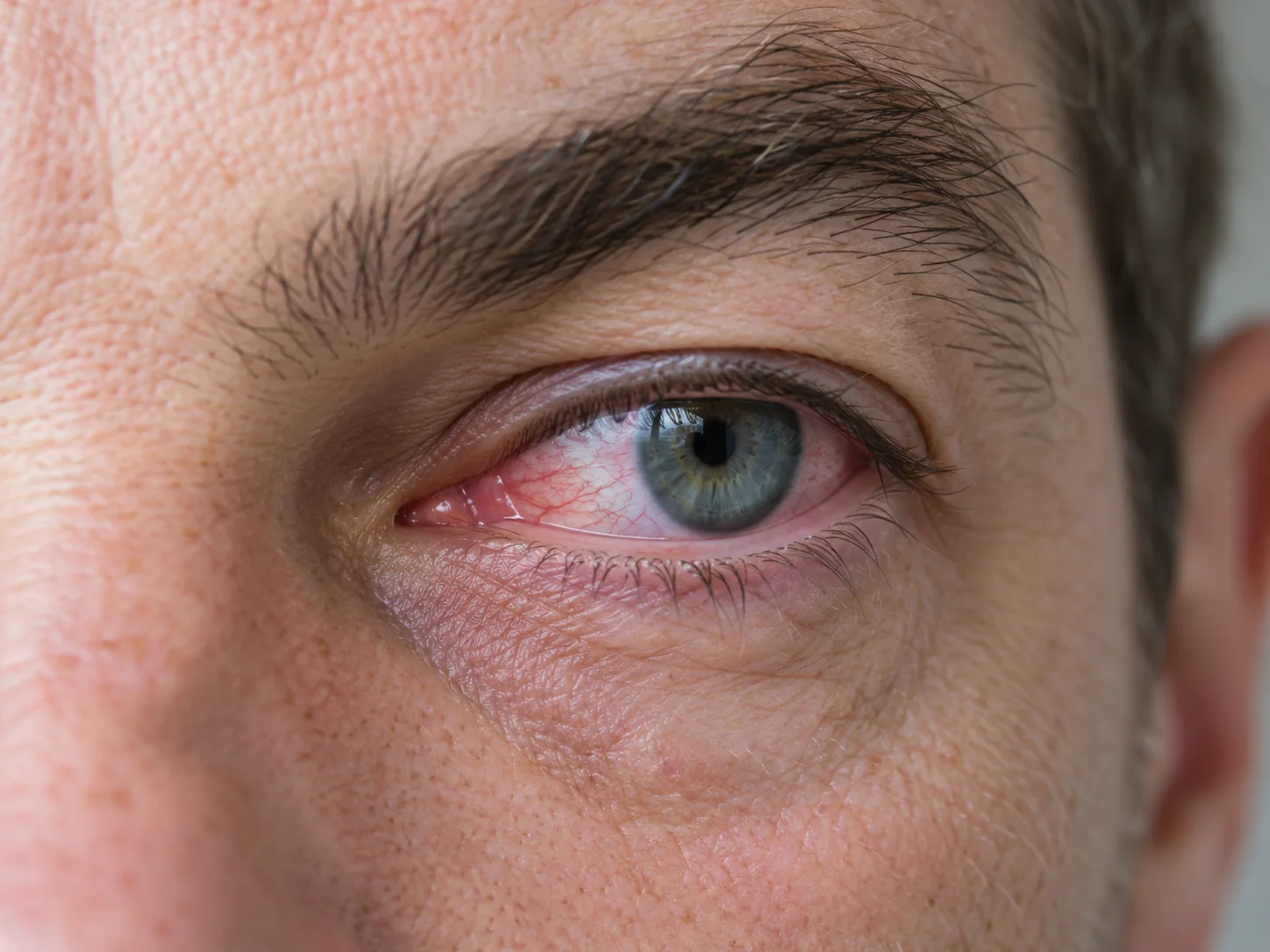
Uveitis is inflammation inside the eye. Unlike ordinary pink eye, it typically brings deep aching pain, marked light sensitivity and blur — and it can damage vision if it isn’t treated promptly. It is one of the reasons a painful red eye should never be self-diagnosed.
You have an autoimmune condition, or it’s happened before
Why speed matters
Untreated uveitis can scar internal structures, raise eye pressure and cost vision. It is diagnosed in minutes at the slit lamp — the key is coming in rather than waiting it out.
Our optometrists in Los Angeles diagnose and treat red eye related to uveitis among other causes, with same-day evaluation at the slit lamp and pressure checks. Treatment calms the inflammation; recurrent or unusual cases also get a conversation about underlying causes, since uveitis sometimes travels with systemic disease — and coordination with your physician or a specialist when the case calls for it.
Don’t wait
Painful + light-sensitive = today.
Eye pain and light sensitivity are same-day symptoms here
Accurate diagnosis separates uveitis from infection and injury
Pink eye is surface inflammation: discharge, grittiness, mild discomfort. Uveitis is internal: aching pain, light sensitivity, blur. Their treatments are entirely different.
It can. Recurrences deserve a workup for underlying causes with your physician.
No — they whiten the eye while the inflammation continues. Uveitis needs real treatment, promptly.
Often the cause is never found. Known triggers include autoimmune diseases (ankylosing spondylitis, lupus, rheumatoid arthritis, sarcoidosis, inflammatory bowel disease, psoriasis), infections such as shingles, herpes, toxoplasmosis or tuberculosis, and eye injury. Smoking raises the risk. Recurrent or unusual uveitis is a reason to look for a systemic cause with your physician.
No. Uveitis is inflammation inside the eye, not an infection of its surface, and it does not pass between people. When an infection elsewhere in the body is the trigger, that infection follows its own rules, but the eye inflammation itself is not catching.
Steroid eye drops to calm the inflammation, dilating drops to ease pain and keep the iris from scarring to the lens, and pressure checks, because both the disease and the steroids can raise eye pressure. Deeper or stubborn inflammation may need steroid injections, oral medicine or immune-modulating therapy through a specialist. Most cases respond within days once treatment starts, which is why a painful, light-sensitive eye is seen the same day at urgent eye care.
Also consider
Next step
This one is a phone call, not a search.
Call now — painful, light-sensitive eyes are seen the same day.