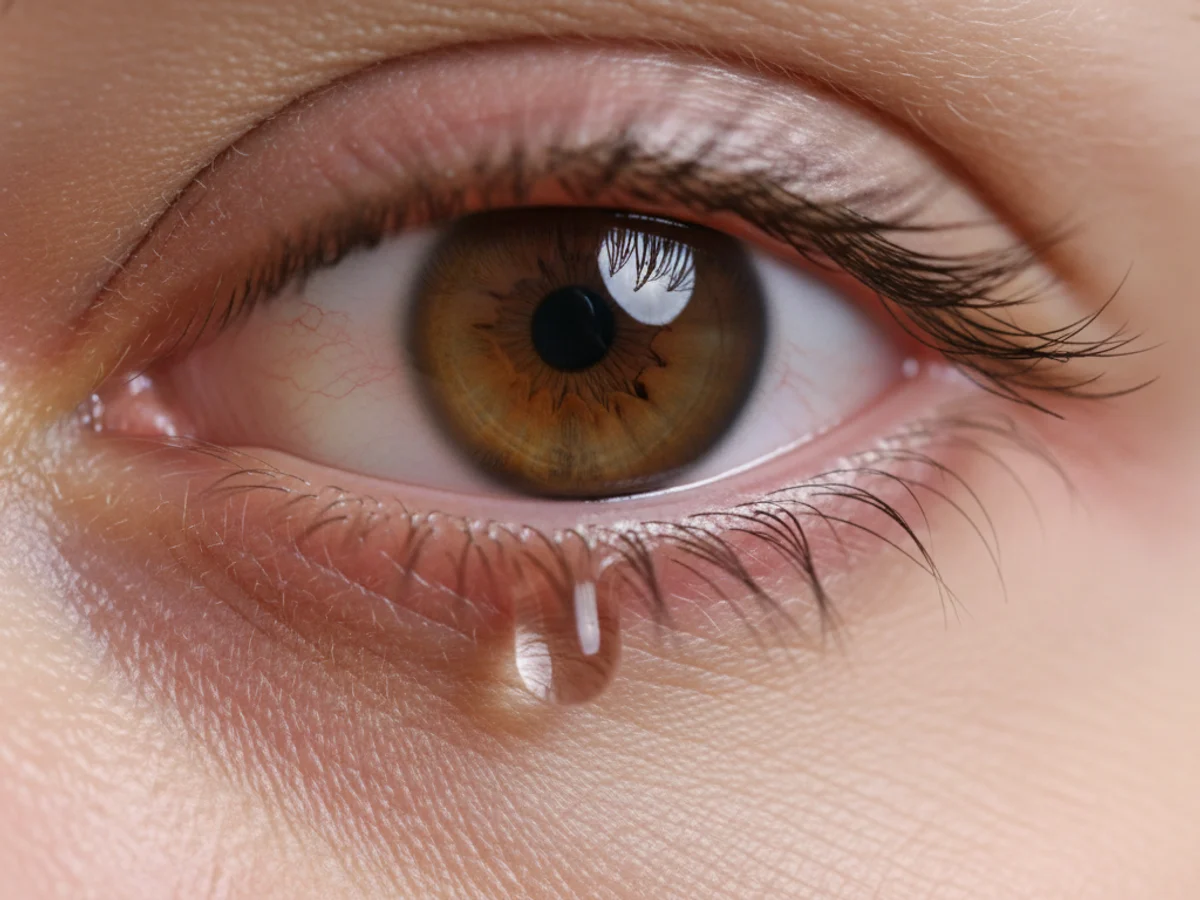
Eye pain can start on the eye's surface, in the eyelids, or deeper in or behind the eye. Surface pain, often worse when you blink, comes from dry eye, a speck of dirt, a scratched cornea (the clear front surface of the eye) or keratitis, an inflamed or infected cornea. A sore eyelid lump often points to a stye. Pain when you move your eyes can come from optic neuritis, inflammation of the optic nerve. Eye pain is a reason to call your eye care professional right away. Pain with redness or light sensitivity, after a scratch, or in a contact lens wearer calls for a same-day urgent eye visit (an emergency room when we're closed); a cut or pierced eye needs the emergency room. Severe pain with nausea, a headache or halos around lights means calling us right away, or the emergency room when we're closed.
Key takeaways
- Pain when you blink usually starts on the surface, from dry eye, a speck or a scratch, and a sore eyelid lump often points to a stye.
- Get a same-day visit, or an emergency room when we're closed, for pain with redness or light sensitivity, after a scratch, or while wearing contacts.
- Severe pain with nausea, a headache or halos around lights means calling us right away, or going to an emergency room when we're closed.
- Call 911 for sudden loss of vision in one or both eyes, even if it comes back, or for sudden double vision.
01
What kind of eye pain do you have?
The most useful clues are where the pain is, whether it came on suddenly, and what makes it worse: blinking, moving your eyes or bright light.
| What you notice | Possible causes | How soon to be seen |
|---|---|---|
| Scratchy or sharp, worse when you blink | Dry eye, a speck in the eye, a scratched cornea, keratitis | Call now if something is stuck or the pain is severe; same day for a scratch, light sensitivity or contact lens wear; emergency room for any of these if we're closed |
| A sore lump or swelling on the eyelid | A stye, blepharitis, an infection of the eyelid skin | Same day; right away if redness spreads to the cheek or face (emergency room if we're closed) |
| Aching when you move your eyes | Optic neuritis | Same day (emergency room if we're closed); call 911 for sudden vision loss or double vision |
| Severe pain with nausea, a headache or halos around lights | Acute angle-closure glaucoma | Call us now; emergency room if we're closed |
| Tired, sore eyes after screen time | Digital eye strain, dry eye | An exam if it keeps coming back |
02
Why does my eye hurt when I blink?
Pain when you blink usually starts on the surface of the eye, where the lid sweeps over a sore spot. The cornea has bare nerve endings, so injury or disease there hurts a lot, and a speck caught on the inside of the upper eyelid can scratch the cornea with every blink.
Dry eye
Dry eye can feel scratchy, as if something is in the eye, and it can sting, burn, redden the eye and make it sensitive to light. It can happen when you spend a lot of time looking at a computer, tablet or phone. A dry eye evaluation looks for the cause.
A scratched cornea
A corneal abrasion is a cut or scratch on the cornea. It brings pain, light sensitivity and tearing, with a chance of infection, and many come from fingernails, mascara brushes, tree branches and other everyday objects. Small scratches usually heal on their own, while deeper ones can scar the cornea and cause vision problems. Our corneal abrasion guide covers treatment.
Keratitis and corneal ulcers
Keratitis is inflammation and swelling of the cornea. An eye injury, a foreign body or contact lenses worn too long can cause it, and so can bacteria, viruses, fungi and parasites. It brings redness, pain, tearing, blurred vision and light sensitivity. Contact lenses raise the risk, especially if you sleep in them, and untreated or severe keratitis can permanently damage vision.
Contacts used the wrong way can also lead to corneal ulcers (sores) and infections. More on keratitis.
03
What causes eyelid pain?
A stye (hordeolum) is an infection of an oil gland at the edge of the eyelid, usually from staph bacteria. It looks like a pus-filled lump or pimple and causes pain, swelling and redness. Don't squeeze or drain it; treatment includes warm compresses and antibiotic eye drops or ointments. More on styes.
A chalazion is a blocked, swollen oil gland that is generally not an infection. It may start out red and tender, then within a few days turn into a painless, slow-growing lump about the size of a pea.
Blepharitis makes the eyelids red, swollen and itchy, with crusty flakes on the lashes, and the eyes can burn or sting. It usually doesn't go away completely, but regular lid cleaning keeps it in check. See blepharitis.
Some eyelid pain needs prompt care. Periorbital cellulitis is a bacterial infection of the eyelid and nearby skin; if it spreads behind the eye, it becomes orbital cellulitis and needs immediate medical care. With a stye, call your eye doctor right away, or go to an emergency room when the office is closed, if redness and swelling spread past the eyelid to the cheek or other parts of the face.
Early signs of shingles include burning or shooting pain and tingling or itching, usually on one side of the body or face, before a blistering rash appears. Vision loss can happen if shingles affects the eye, and antiviral medicine is most effective when it starts within 3 days of the rash. Shingles on the face, nose or eyes calls for a comprehensive eye exam, and for a rash near the eye, come in to us or see your doctor the same day; when offices are closed, see your doctor or an urgent care clinic the same day. See ocular shingles.
04
Why do my eyes hurt when I move them?
Optic neuritis, inflammation of the optic nerve, causes pain when you move the eye, along with vision loss.
The optic nerve carries visual messages from the back of the eye to the brain. Infections and immune-related illnesses such as multiple sclerosis can inflame it, and sometimes the cause is unknown.
Sudden loss of vision in one or both eyes, even if it comes back, or sudden double vision is a reason to call 911.
05
Can eye pain and a headache be connected?
Yes, and one combination is an emergency. In acute angle-closure glaucoma, the outer edge of the iris blocks fluid from draining out of the front of the eye, and pressure inside the eye rises quickly. It causes intense eye pain, nausea, a red eye and blurry vision, and without treatment it can cause blindness in just a few days. Some people also see halos or colored rings around lights. Call us immediately during office hours or go straight to an emergency room; when the office is closed, the emergency room is the place to go. If you have been told you have narrow angles, know these symptoms.
A headache that comes with pain in the eye needs medical help right away.
A sudden, severe headache with no known cause, or sudden trouble seeing in one or both eyes, can be a sign of stroke. Call 911 for that headache, or for sudden loss of vision or double vision. Sudden blur that doesn't clear needs an emergency room; if it clears right away, call us and come in for an exam.
Cluster headaches bring sudden, extremely painful attacks, often on one side of the head and often behind or around one eye. The eye on that side may turn red, swollen and teary, and attacks often wake people from sleep.
06
Why are my eyes sore and tired?
Sore, tired eyes after long stretches of screen work can be digital eye strain. Its most common symptoms are eyestrain, headaches, blurred vision, dry eyes, and neck and shoulder pain, and many of the visual symptoms are temporary, easing once you stop working at the screen.
Uncorrected vision problems, weak focusing or eye coordination, and presbyopia can all add to the strain, and glasses prescribed for general use may not suit computer work.
Blink often, follow the 20-20-20 rule (every 20 minutes, look at something 20 feet away for 20 seconds), and rest your eyes for 15 minutes after two hours of continuous screen work. If sore eyes keep coming back, an exam can check your focusing and eye alignment and look for dry eye; see computer vision syndrome.
07
Which eye pain needs same-day care or the emergency room?
Call 911 for:
- Sudden loss of vision in one or both eyes, even if it comes back: it can be a stroke or a transient ischemic attack (TIA), when blood flow to the brain is blocked for a short time, and a TIA puts you at much higher risk of a stroke
- Sudden double vision, or double vision or a drooping eyelid with eye pain, a severe headache or a pupil that looks different. Sudden double vision can be a sign of stroke, and a growing brain aneurysm that presses on nerves can cause pain above and behind the eye, a widened pupil and double vision
- Any change in vision with signs of a stroke: a face drooping on one side, one arm drifting down, or slurred or strange speech
Go to an emergency room for:
- A cut to the eye, or an object that has pierced it. Don't rinse it or remove anything, and protect the eye without pressing on it.
Call us immediately and come straight in, or go to an emergency room when the office is closed, for:
- Something stuck in the eye, or the feeling that something is still there after rinsing. Don't rub it or try to remove it yourself; our doctors remove these in the office.
- Severe eye pain with nausea, a headache or halos around lights. An emergency room is equally right.
- A dark curtain or shadow over part of your vision, new flashes of light, or a shower of new floaters, which can mean a retinal detachment
- A chemical splash, after you rinse with running water for at least 15 to 20 minutes and call Poison Control at 1-800-222-1222; if symptoms are severe, go straight to an emergency room after rinsing
Call us for a same-day visit for:
- Pain with redness and light sensitivity, which can be uveitis, inflammation inside the eye
- Eye pain or redness while you wear contact lenses: take the lenses out first, and call at once if you see a white spot on the cornea
- A scratch on the eye, or blurry vision that lasts after something is rinsed out of the eye
- A painful eyelid bump that keeps growing
- Pain when you move your eyes, with blurry vision; call 911 instead if your vision suddenly dims or goes dark
Same-day visits run during office hours, Monday 10 to 5 and Tuesday to Friday 8 to 5. When the office is closed, call 911 for sudden vision loss or sudden double vision, and go to an emergency room for something stuck in the eye, a chemical splash, severe pain, eye pain with redness, light sensitivity or blurry or changed vision, eye pain or redness while you wear contact lenses, a scratch on the eye or blur that lasts after rinsing, a white spot on the cornea, eyelid redness and swelling spreading to the cheek or face, a curtain or shadow over your vision, or new flashes or floaters; for a shingles rash near the eye, see your doctor or an urgent care clinic the same day, and for anything else, call us first thing in the morning.
08
How we find the cause of eye pain at Cohenmehr Optometry
Call 310-828-2010 and describe what you feel. A person answers, triages the call and holds a same-day slot for urgent problems (an emergency room when we're closed).
The urgent work-up starts at the slit lamp, along with eye pressure testing and a close look at the cornea and the front of the eye. Fluorescein dye makes scratches on the cornea easier to see. Dilation and imaging, including OCT on site, are added when the symptoms call for them.
Our Los Angeles optometrists treat most urgent problems on the spot. When a surgeon or retina specialist is needed, the referral and records go out the same day.
09
Questions patients ask
How can I stop eye pain immediately?
It depends on the cause. For something in the eye, blink several times, rinse with clean water or saline (salt) solution, or pull your upper eyelid down over the lower one, and don't rub: rubbing can scratch the cornea. If something is stuck, don't try to remove it; call us and come straight in, or go to an emergency room when we're closed. Intense pain or a change in vision needs an eye doctor or an emergency room right away. Call 911 for sudden vision loss, even if it comes back.
What is uveitis?
Uveitis is inflammation inside the eye, in the uvea, the middle layer between the white of the eye and the retina. Symptoms usually start suddenly: eye pain, red eyes, light sensitivity, blurry vision and floaters. Autoimmune diseases and infections can cause it, though doctors don't always find the reason. Untreated uveitis can cause vision loss, so see an eye doctor right away, or go to an emergency room when the office is closed; prescription steroid eye drops are the most common treatment. More on uveitis.
Does glaucoma cause blindness?
It can. Glaucoma is a group of eye disorders that progressively damage the optic nerve, and left untreated it can lead to significant vision loss in both eyes and even blindness. The most common form, primary open-angle glaucoma, develops slowly and usually without symptoms, so many people don't know they have it until they have lost significant vision. Diagnosed and treated early, it can usually be controlled. We check eye pressure at every comprehensive exam; see glaucoma testing.
What does MS eye pain feel like?
In multiple sclerosis, eye pain often comes with optic neuritis, inflammation of the optic nerve, which hurts when you move the eye and causes vision loss. Other MS eye symptoms include blurred or grayed vision, temporary blindness in one eye, loss of normal color vision and double vision. These problems are common in MS but rarely lead to permanent blindness. Sudden loss of vision or sudden double vision, even if it comes back, still calls for 911, because either can be a sign of stroke.
10
Sources
- MedlinePlus: Eye diseases
- American Optometric Association: Corneal abrasion
- National Eye Institute: Dry eye
- National Eye Institute: Corneal conditions
- American Optometric Association: Keratitis
- National Eye Institute: Contact lenses
- American Optometric Association: Hordeolum (stye)
- American Optometric Association: Chalazion
- National Eye Institute: Blepharitis
- MedlinePlus: Eyelid disorders
- MedlinePlus: Shingles
- National Eye Institute: Other types of corneal disease
- National Institute of Neurological Disorders and Stroke: Multiple sclerosis
- MedlinePlus: Optic nerve disorders
- American Stroke Association: Stroke symptoms
- National Eye Institute: Types of glaucoma
- American Optometric Association: Glaucoma
- MedlinePlus: Headache
- MedlinePlus: Stroke
- National Institute of Neurological Disorders and Stroke: Headache
- American Optometric Association: Computer vision syndrome
- National Institute of Neurological Disorders and Stroke: Cerebral aneurysms
- National Eye Institute: Retinal detachment
- Poison Control: Splashed a poison in your eye?
- National Eye Institute: Uveitis

Written by
Dr. Kevin Cohenmehr, OD
Medical eye care: glaucoma, diabetic eye exams, macular degeneration and eye infections, plus vision therapy for children. A graduate of UCLA and SUNY College of Optometry.
About Dr. Kevin →