You can move your scleral lens care to a new eye doctor at any time, and the switch goes smoothly when you bring three things: your current lenses, your lens records and your insurance card. People switch when a clinic stops billing their plan, when they move, or when a fit never felt right. At Cohenmehr Optometry we bill scleral lenses to VSP and EyeMed, and to medical plans such as PPOs that come with a vision add-on, and every lens is designed from a map of your eye. Here is how to make the change without going without lenses.
Key takeaways
- You can switch eye doctors for scleral lens care at any time, and your lenses, records and insurance card make the move faster.
- After a fitting, your prescriber has to give you your contact lens prescription whether you ask for it or not, at no extra charge.
- Your doctor normally has up to 30 days to send copies of your records, so ask for them when you book.
- Pain, redness, blurred vision, light sensitivity or a white spot on the cornea means lens out and a same day exam, or an emergency room when the office is closed.
01
Can you switch eye doctors in the middle of scleral lens care?
Yes. Scleral lens care goes on for years, with checks and replacement lenses along the way, and you can move it to a new practice whenever your needs change: a new insurance plan, a clinic that stops billing your plan, a move across town, or a fit that never felt right.
The new office examines your eyes and checks your current lenses on your eye before it orders anything. That first visit is easier, and often shorter, when you arrive with your lenses and your records.
02
What records should you bring?
Bring as much of this as you have:
- Your current scleral lenses, in their case.
- The lens specifications: the brand and design, the diameter, the sagittal depth (how tall the lens vaults), the power and any toric or custom edge. Your contact lens prescription lists most of these.
- Recent corneal maps or scans, and the date of your last exam.
- Notes on how the lenses have worked: how many hours you wear them, and any fogging, redness at the edge or blur.
- Your insurance card, and the denial letter if your plan turned down a claim.
You have a right to your contact lens prescription. Under the FTC's Contact Lens Rule, after a fitting your prescriber has to give it to you whether you ask for it or not, and at no extra charge.
You can also ask for copies of your records, such as your corneal maps. The HHS guide to patients' records says you have the right to see and get copies of your health information, and that your doctor normally has up to 30 days to provide you a copy of it, so ask when you book. The office can, however, charge you a reasonable fee for the copies.
03
Will your insurance cover the switch?
Often, when the lenses are medically necessary, meaning glasses can't correct your vision well enough. We bill scleral lenses to VSP and EyeMed, and to medical plans such as PPOs that come with a vision add-on. Our page on scleral lenses covered by insurance explains what the plans look at.
Timing matters. VSP plan wording says medically necessary lenses are in lieu of all benefits for that eligibility time period, so if your old clinic already billed this period's lenses, a new pair may have to wait for the next period. Call 310-828-2010 with your insurance card and we check your benefit dates before your first visit.
If a plan has denied your lenses, bring the letter. Our office handles appeals, answering the plan's stated reason with the measurements from your exam.
04
What happens at your first visit with us?
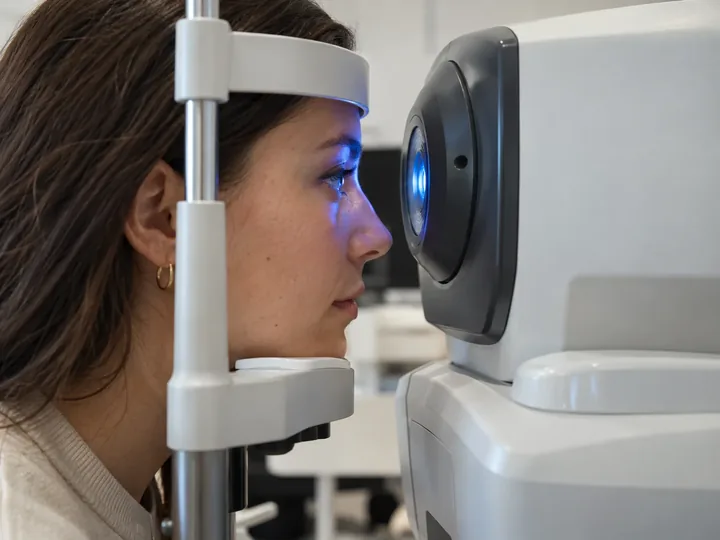
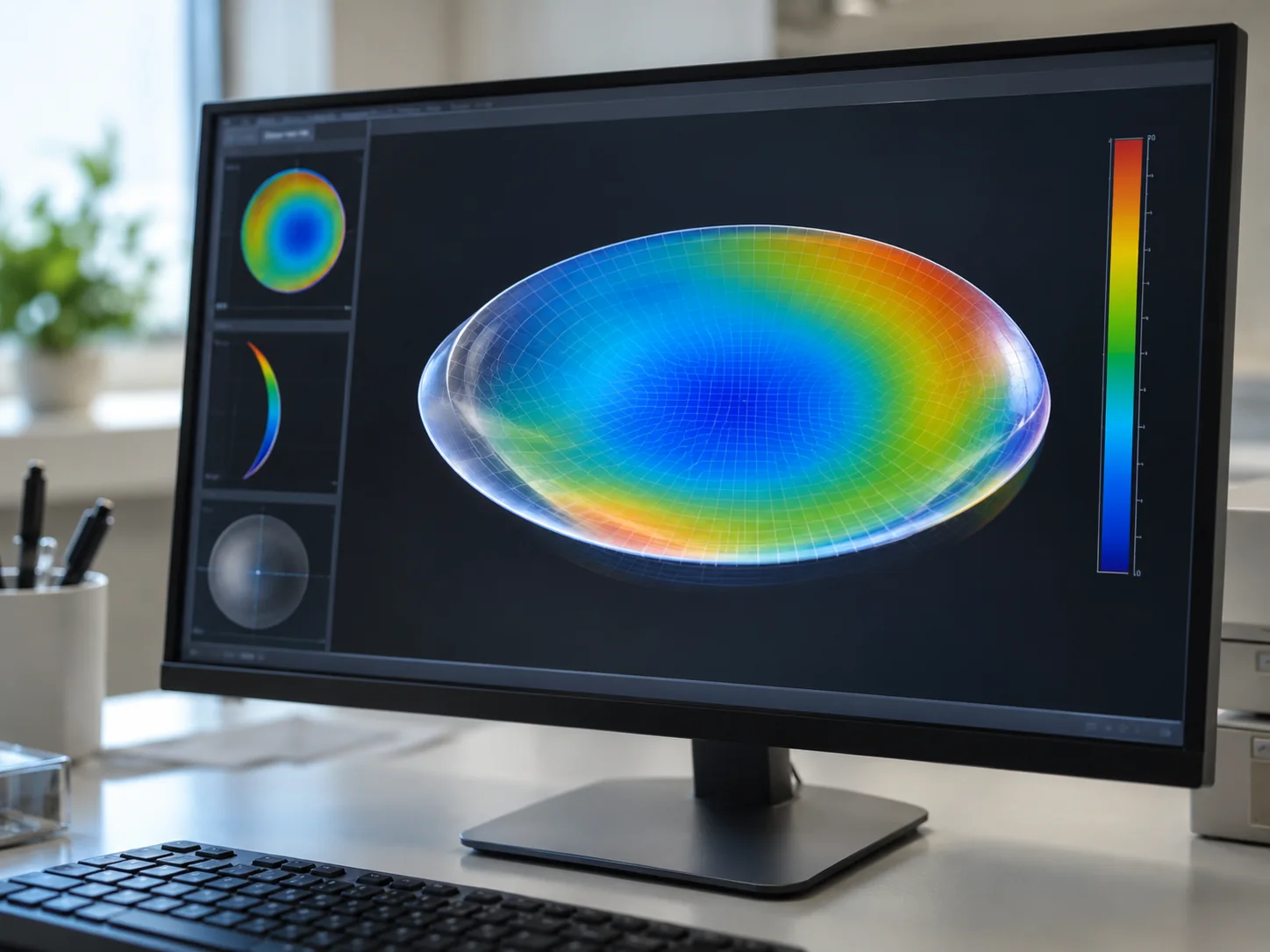
An exam, a map and a decision. We check your vision with your current lenses and with glasses, look at how your lenses sit on your eye and map the eye with the Eaglet Eye Surface Profiler, which measures hundreds of thousands of points across the cornea and the white of the eye.
Then we decide with you. If your lenses work well, we keep the design and reorder it. If they fog, leave a red ring on the eye or limit how long you can wear them, we design a new free-form lens from the map, which gives us something exact to change. Our scleral lens page walks through the fitting itself.
05
What if your scleral lenses never felt right?
A switch is also a chance to fix a fit. Fogging by midday, a red ring where the edge sits, a lens that creeps off center or tilts when you blink, and a wearing time you can never stretch past a few hours are common reasons people give up on scleral lenses. They are also signs that the lens and the shape of your eye don’t match.
A design made from an Eaglet map starts from the measured height of your eye’s surface in every direction, so the edge of the lens can follow your sclera instead of an average round eye. When a lens has been uncomfortable or foggy, that landing zone is the first part of the design we look at. Tell us what went wrong before, since it points straight at what the next design needs.
06
How do you avoid going without lenses?
Keep wearing the lenses you have, as long as they are comfortable, until the new lenses arrive. Book your first visit before the old lenses wear out, especially if they are more than a year old, since a new design takes time to order and check.
Keep your glasses up to date as well. The CDC advises you to carry backup glasses with current prescription in case you have to take out your contact lenses. Glasses may not correct an irregular cornea as well as your lenses, but they get you through a day without them.
07
When should you get care right away?
Don't wait for the switch if your eye hurts. Take the lens out and call 310-828-2010 right away for a same-day exam if you have pain, redness, blurred vision, light sensitivity or a white spot on the cornea. When the office is closed, go to an emergency room. The CDC's advice for these symptoms is to remove your contact lenses (if you wear them) and call your eye doctor immediately.
08
Questions patients ask
Do I need a new fitting if I switch eye doctors?
Usually a new evaluation, and not always a new lens. The new office examines your eyes and checks your lenses on the eye before ordering anything. If your current design still fits and your vision is good, it can often be reordered. If your eye has changed since the last fitting, the design changes with it.
Can my new eye doctor get my records from my old clinic?
Yes, with your written permission, and you can also request copies yourself. HHS notes that your doctor normally has up to 30 days to provide you a copy of your information, though many offices send records sooner. Start the request when you book your first visit, so the records arrive before you do.
Will my old scleral lens prescription work at a new office?
It is a starting point. A scleral lens prescription lists the design and its measurements, which tells the new doctor what you wear now. The new office still checks the fit on your eye before ordering, because a cornea can change between fittings, and a lens that fit last year may not fit the same way today.
Can I switch eye doctors in the middle of my benefit year?
Yes, and your plan's benefits go with you, less anything already used. VSP plan wording says medically necessary lenses are in lieu of all benefits for that eligibility time period, so check whether your old clinic already billed lenses this period. We look that up for you before we order.
09
Sources
- FTC: Contact Lens Rule updates, what they mean for you
- HHS: Your right to access your health information
- University of California: VSP plan booklet
- CDC: Preventing eye infections when wearing contacts
- CDC: What causes contact lens-related eye infections

Written by
Dr. Kevin Cohenmehr, OD
Medical eye care: glaucoma, diabetic eye exams, macular degeneration and eye infections, plus vision therapy for children. A graduate of UCLA and SUNY College of Optometry.
About Dr. Kevin →