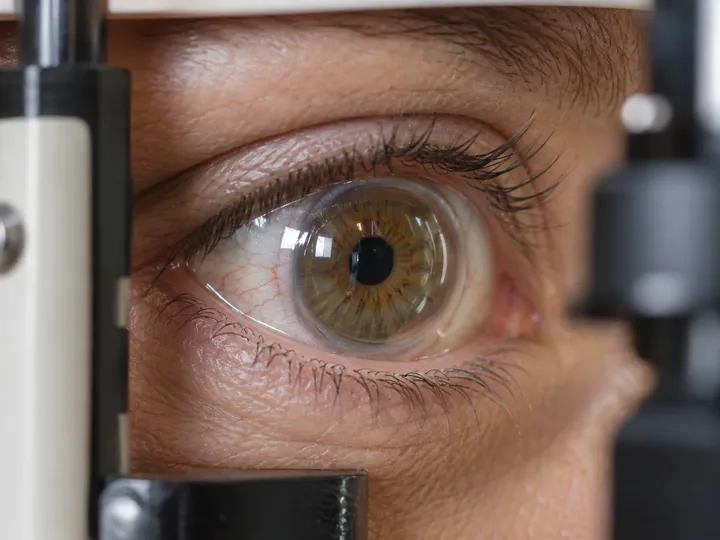
Medically necessary contact lenses are contacts prescribed because glasses can't give you clear enough vision, for example with keratoconus, a very strong prescription or a large difference between your two eyes. Vision plans cover them under their own rules. EyeMed lists keratoconus when vision is not correctable to 20/25 in either or both eyes using standard spectacle lenses among its qualifying conditions, and VSP plan booklets say medically necessary contact lenses may be prescribed by a VSP network doctor for certain conditions. The lenses are usually specialty designs such as scleral lenses. At Cohenmehr Optometry, we fit these lenses, document the medical need and file the claims with VSP and EyeMed.
Key takeaways
- Medically necessary contact lenses are prescribed when glasses can't correct vision well enough, as with keratoconus, very strong prescriptions or very different eyes.
- EyeMed qualifies keratoconus when glasses can't correct vision to 20/25, a 3-diopter difference between the eyes, or a prescription beyond 10 diopters.
- VSP plans cover them for certain conditions with prior approval, and the benefit replaces that period's other eyewear benefits.
- Medicare doesn't usually cover contact lenses, except one set after each cataract surgery that implants an intraocular lens.
01
What makes a contact lens medically necessary?
A contact lens is medically necessary when glasses can't correct your vision well enough and the lens can. Most people wear contacts by choice, in place of glasses that would work as well, and plans call those elective contact lenses. VSP's plan booklets draw the same line, describing a determination of necessary versus elective contact lenses.
Keratoconus is one example. In this condition, the cornea thins and bulges outward, eventually resembling a cone shape. Early on, eyeglasses or soft contact lenses may be used to correct the mild nearsightedness and astigmatism, but as the disorder progresses and cornea continues to thin and change shape, rigid gas permeable contact lenses can be prescribed to correct vision adequately.
Eye surgery can leave the same problem behind. After a corneal transplant, radial keratotomy (RK) or LASIK followed by ectasia, the cornea can heal with an irregular surface that no glasses prescription fully corrects. Our post-surgical scleral lens page explains why.
02
Which conditions qualify for medically necessary contacts?
Each plan sets its own list. EyeMed publishes its criteria in a glossary for members, and its qualifying conditions are:
- Keratoconus, when vision is not correctable to 20/25 in either or both eyes using standard spectacle lenses.
- A large difference between the prescriptions of the two eyes, called anisometropia. EyeMed's threshold is anisometropia of 3D in meridian powers, meaning 3 diopters or more.
- A very strong prescription, which EyeMed calls high ametropia: beyond 10 diopters of nearsightedness or farsightedness.
- Other conditions where contacts give clearly better vision than glasses: vision that can be corrected two lines of improvement on the visual acuity chart beyond what glasses achieve.
A diopter is the unit of lens power, the number on your prescription. VSP plans don't publish a single list; their booklets refer to certain conditions and leave the case to the network doctor and the plan.
Because these rules are written in terms of measured vision, the exam records how well you see with glasses and how well you see with the lenses. Those numbers are what the plan reviews.
03
Which lenses are used?
Usually specialty contact lenses, chosen for the shape of your eye. The designs we fit include:
- Scleral lenses: large lenses that rest on the white of the eye and vault over the cornea on a layer of saline. A review in Clinical Ophthalmology describes them as fitted to not touch the cornea. They are our most common choice for moderate to advanced keratoconus.
- Rigid gas permeable (RGP) lenses: small rigid lenses whose tear layer smooths out the cornea's optics.
- Hybrid lenses: a rigid center with a soft skirt, for sharp optics with soft-lens comfort.
- Custom soft lenses: thicker, specially profiled soft lenses for mild irregularity, high astigmatism and early cones.
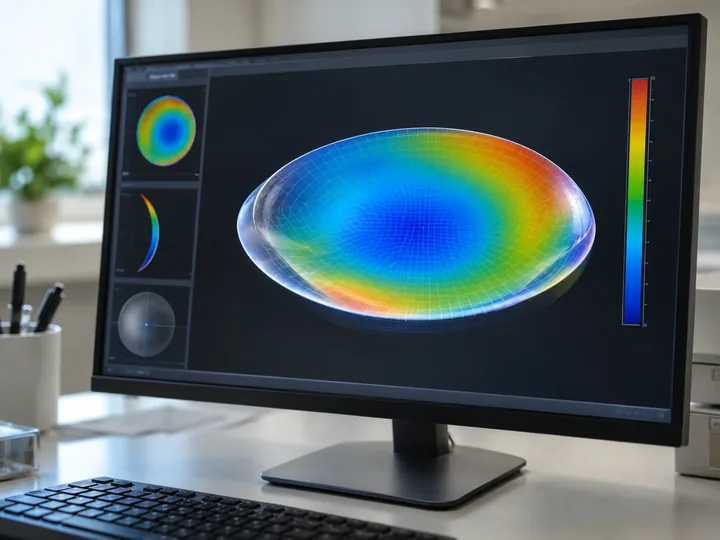
Scleral lenses have uses beyond keratoconus. The same review lists corneal ectatic diseases such as keratoconus and ocular surface conditions, including dry eyes. We design every scleral lens from an Eaglet Eye Surface Profiler map, which measures hundreds of thousands of points across the eye, including the sclera. Our scleral lens page walks through the fitting.
04
How do VSP and EyeMed cover medically necessary contacts?
Through the plan's contact lens benefit, under the stricter rules above. Two details in VSP's plan wording matter before you start. Medically necessary lenses are in lieu of all benefits for that eligibility time period, so choosing them uses that period's eyewear benefit in place of glasses or elective contacts. And a VSP network doctor receives prior approval for such cases, so the approval comes first.
We are in network with VSP and EyeMed, and plans often cover part or all of medically necessary lenses. The amount depends on your plan, so we check your benefits before you commit. For scleral lenses, we also bill medical plans such as PPOs that come with a vision add-on, as our page on scleral lenses covered by insurance explains.
05
Does medical insurance or Medicare cover them?
Sometimes. For keratoconus, severe dry eye and eyes after surgery, medical insurance may also apply. Medical plans set their own rules, so we verify benefits before the fitting. If your medical plan includes a vision add-on, we bill scleral lenses to it.
Medicare is narrower. Medicare doesn't usually cover eyeglasses or contact lenses. Its exception is cataract surgery: Part B covers one pair of eyeglasses with standard frames (or one set of contact lenses) after each cataract surgery that implants an intraocular lens. Even then, Medicare will only pay for contact lenses or eyeglasses from a supplier that participates in Medicare.
06
How do you get medically necessary contacts covered?
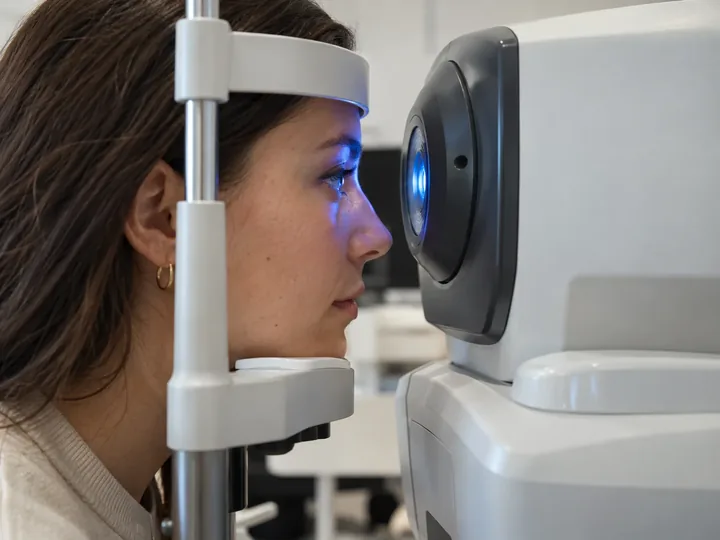
- Book a specialty contact lens evaluation. The exam checks the cornea and the eye's surface, measures how well you see with glasses and maps the shape of the eye.
- We document the medical need: the diagnosis, the measurements and your vision with glasses compared with the lenses.
- We check your benefits and, with VSP, get the plan's approval first.
- The fitting follows. A specialty lens can take more than one visit, and with scleral lenses you learn to fill the lens with preservative-free saline, insert it without bubbles, remove it safely and clean it.
Call 310-828-2010 with your plan card handy and we will check your coverage before you come in. Our accepted insurance page lists the plans we take.
07
What if the plan denies the lenses?
Read the denial for the reason and the deadline to appeal, then call us. Our office handles appeals when a plan denies a lens, using the measurements from your exam to show how your case meets the plan's criteria.
While the appeal is open, watch for warning signs. A contact lens wearer with pain, redness, blurred vision, light sensitivity or a white spot on the cornea should take the lens out and call the office right away for a same-day exam, or go to an emergency room when the office is closed.
08
Questions patients ask
What is the difference between elective and medically necessary contact lenses?
Elective contacts are a choice: you could see as well in glasses. Medically necessary contacts are prescribed because glasses can't correct your vision well enough, as with keratoconus. Plans treat the two differently, and VSP's booklets describe a determination of necessary versus elective contact lenses.
Can I get glasses and medically necessary contacts in the same year?
Not always on the same benefit. In the University of California's VSP plan, medically necessary lenses are in lieu of all benefits for that eligibility time period, so the plan doesn't also pay for glasses in that period. Other plans differ, so check yours or ask us to.
Does Medicare cover contact lenses for keratoconus?
Usually not. Medicare doesn't usually cover eyeglasses or contact lenses, and the exception it states is one set of contact lenses after each cataract surgery that implants an intraocular lens. Exams and medical care for keratoconus are a separate matter, billed as medical care.
Who decides whether my contacts are medically necessary?
Your eye doctor documents the need and your plan decides, under its own rules. VSP's booklets say medically necessary contact lenses may be prescribed by a VSP network doctor for certain conditions, and EyeMed's glossary tells members to ask their eye doctor for more information.
09
Sources
- EyeMed: Member FAQ and glossary (medically necessary contact lenses)
- University of California: 2023 VSP plan booklet
- American Optometric Association: Keratoconus
- MedlinePlus Genetics: Keratoconus
- Rathi VM et al. Scleral lens for keratoconus: technology update. Clinical Ophthalmology, 2015
- Medicare: Cataract surgery
- Medicare: Eyeglasses and contact lenses
Written by
Dr. Brandon Cohenmehr, OD
Specialty contact lenses, with a focus on Ortho-K, scleral lenses, and co-managing patients with keratoconus and other corneal disease. A graduate of SUNY College of Optometry.
About Dr. Brandon →