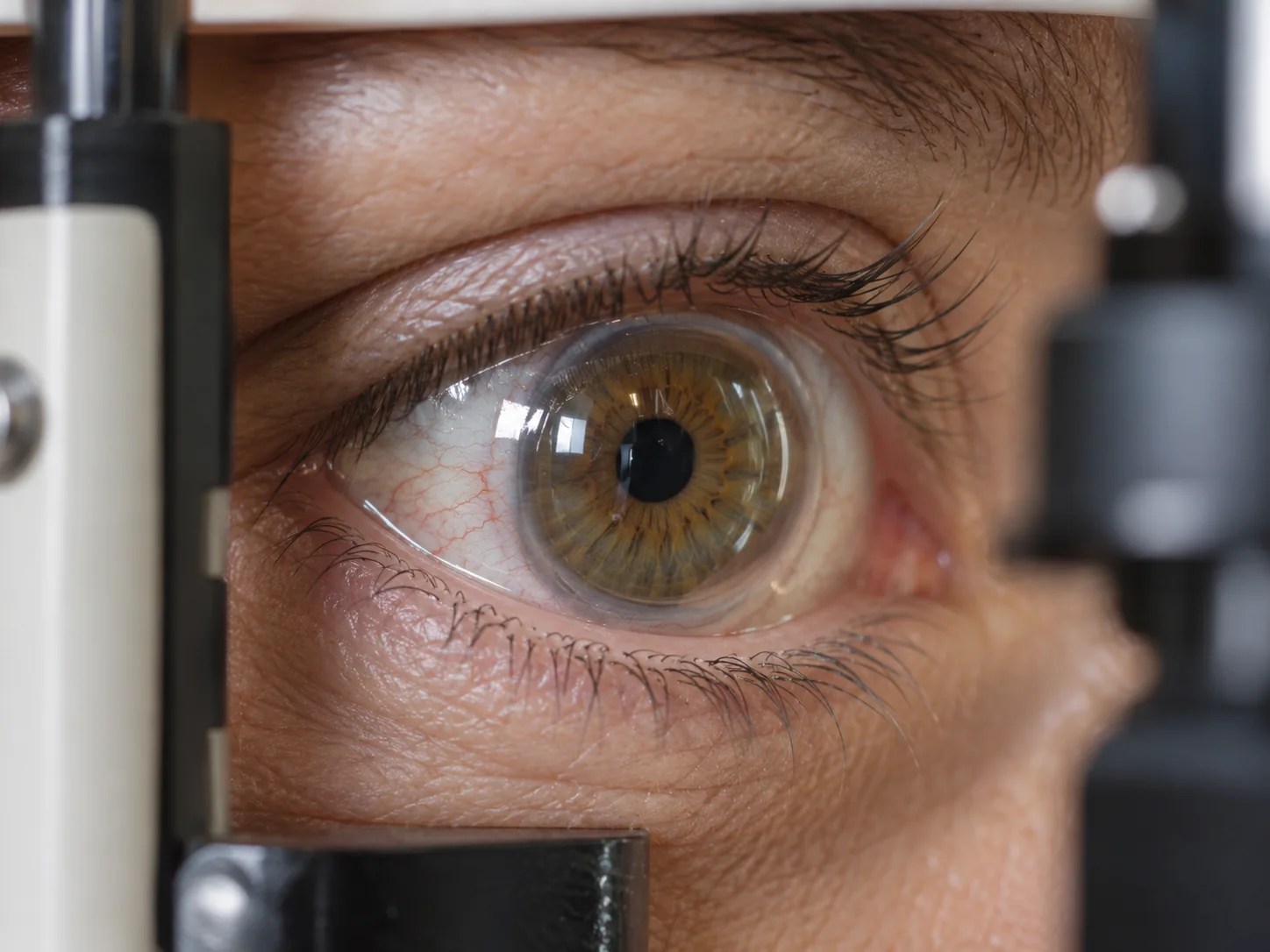
In our practice, a scleral lens usually lasts one to two years with good care, and sometimes longer, before scratches, deposits or a change in your eye call for a new one. A scleral lens is a large rigid contact lens that rests on the white of the eye and vaults over the cornea. Because each lens is designed for your eye, we check it at every follow-up and replace it when your vision or the fit drifts, not on a fixed date. Scleral lens fittings at Cohenmehr Optometry start from a map of your eye, and each replacement starts from that map too.
Key takeaways
- Scleral lenses usually last one to two years with good care before scratches, deposits or a change in the eye call for a new pair.
- Haze that stays after cleaning, fogging that returns sooner and new scratchiness are signs a lens needs checking.
- Only sterile saline goes in the lens bowl, tap water never touches the lens, and the case is replaced at least every 3 months.
- Pain, redness, blurred vision, light sensitivity or a white spot on the cornea means lens out and a same day exam, or an emergency room when the office is closed.
01
How long does a scleral lens last?
Most scleral lenses last one to two years in our practice, and some last longer. The lens material holds up well. What changes is the surface, which collects fine scratches and deposits over months of daily handling, and the eye underneath, which can change shape or prescription.
When either happens, the lens still goes in, but vision or comfort slips. A new lens made from your current measurements brings both back.
Your vision plan's benefit period can set the timing as well. VSP plan wording says medically necessary lenses are in lieu of all benefits for that eligibility time period, so a replacement before the next period may not be covered.
02
What wears out a scleral lens?
Four things, usually slowly:
- Scratches from handling, cleaning and the odd drop onto a counter. A few fine ones don't matter, but enough of them scatter light and soften your vision.
- Deposits. Protein and oils from your tears build up on the surface, and a lens that no longer wets evenly can blur and feel dry.
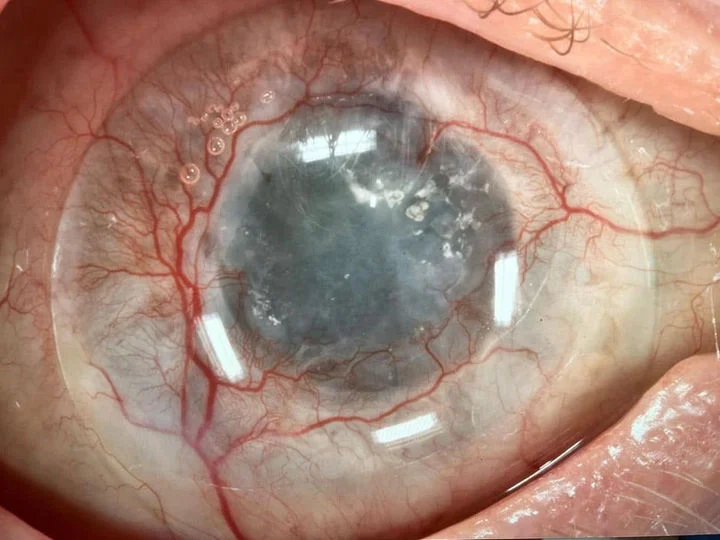
- A change in your eye. As the disorder progresses and cornea continues to thin and change shape, a keratoconus lens that fit last year can sit differently now. Corneas also change after cross-linking or a transplant.
- A change in your prescription, which a new lens corrects.
How you care for the lens decides how fast the first two happen. The last two depend on your eye, which is why we look at both at every visit.
03
What are the signs a scleral lens needs replacing?
Vision that stays hazy after you clean and refill the lens is the most common sign. Others are fogging that comes back sooner than it used to, a lens that starts to feel scratchy, redness at the edge of the lens by the end of the day, and scratches or a chip you can see.
Bring the lens to your visit. We look at it under magnification and on your eye, check how much space it leaves over the cornea and how its edge sits on the white of the eye, and compare your vision with your last check.
Slow wear is easy to miss, because your eyes adjust to it a little each week. Many patients notice how much a lens had faded only when the new one goes in, so a yearly check catches what daily wear hides.
Stop wearing a lens with a chip or a crack, and call us. A damaged edge can scratch the eye.
04
What happens when we replace a scleral lens?
A replacement visit looks like a short fitting. We examine your eye, check your vision with the lens you have now and look at the lens itself. If your cornea or prescription has changed, we map the eye again with the Eaglet Eye Surface Profiler, which measures hundreds of thousands of points across the cornea and the white of the eye, and change the design against that new map.
When the new lens arrives, we check it on your eye: the space it leaves over the cornea, how its edge lands on the white of the eye, your vision and your comfort. For a lens that repeats your old design, that check is quick. When the design changed, we may ask to see you again after you have worn it for a few days.
05
How do you make scleral lenses last longer?
Good daily habits protect your eyes first, and the lens with them:
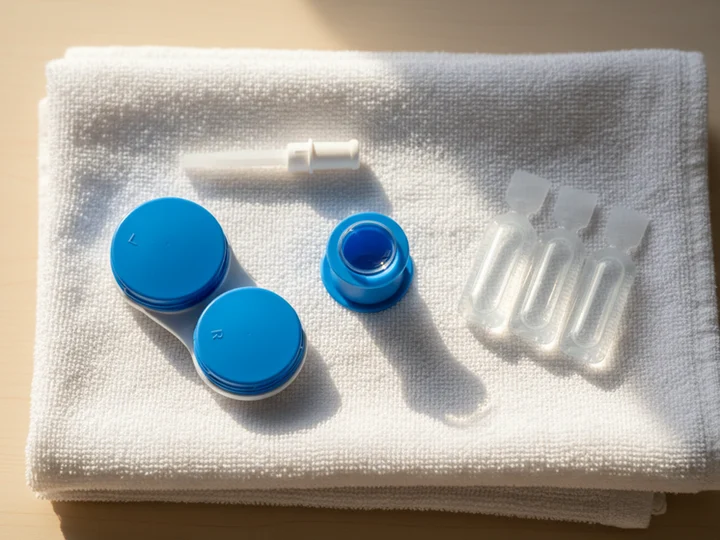
- Fill the lens with sterile, preservative-free saline only. The FDA says to never use non-sterile water (distilled water, tap water or any homemade saline solution).
- Clean and disinfect the lens with the system we prescribed. Saline is for rinsing and filling: the FDA's wording is only use sterile saline solutions for rinsing.
- Keep water away from the lens and the case. The AOA says you should never use tap water in any area of your lens care, including rinsing the lenses and the case.
- Replace the lens case at least every 3 months. The FDA advises you to replace your contact lens storage case every 3 months or as your eye care professional directs.
- Insert and remove the lens over a clean towel, and use the plunger the way we showed you. Our scleral lens insertion and removal guide walks through each step.
Our scleral lens care guide has the full daily routine, from the morning fill to the evening clean.
06
Does insurance pay for a new pair of scleral lenses?
Often, when the lenses are medically necessary and your benefit period allows it. We bill scleral lenses to VSP and EyeMed, and to medical plans such as PPOs that come with a vision add-on. Our page on scleral lenses covered by insurance explains how that works.
Call 310-828-2010 with your insurance card before your replacement visit. We check what your plan allows and when your next benefit period starts, and we tell you before we order.
07
When should you see us right away?
Take the lens out and call 310-828-2010 right away for a same-day exam if you have pain, redness, blurred vision, light sensitivity or a white spot on the cornea. When the office is closed, go to an emergency room. The CDC's advice for these symptoms is to remove your contact lenses (if you wear them) and call your eye doctor immediately.
Don't throw the lens away. The FDA says to store them in your case and take them to your eye care professional, who may use them to find the cause.
08
Questions patients ask
Can I keep wearing a scratched scleral lens?
Usually yes, if your vision and comfort are still good. Fine scratches are common after months of handling, and they matter only when they blur your vision or the lens starts to feel scratchy. Stop wearing a lens with a chip or crack at the edge, since a damaged edge can scratch the eye, and bring it in so we can check it.
Why does my scleral lens fog more than it used to?
Deposits on the lens or a fit that has shifted are the usual reasons. If the fluid behind the lens clouds after many hours, taking the lens out, rinsing it and refilling it with fresh saline usually clears your vision. When fogging keeps coming back sooner than it used to, have us check both the lens surface and how the lens sits on your eye.
Can my scleral lens be remade from the same design?
Often, yes. When your eye and prescription are stable, a replacement can repeat the design you already wear. We check your vision and the fit first, because a cornea that has changed since the last lens needs a new design, and we make any change against the map of your eye.
Do I need backup glasses if I wear scleral lenses?
Yes. The CDC advises you to carry backup glasses with current prescription in case you have to take out your contact lenses. Glasses may not correct an irregular cornea as well as your lenses do, but they get you home or through a day if a lens breaks or your eye needs a rest.
09
Sources
- FDA: Contact lens risks
- FDA: Contact lens solutions and products
- AOA: Contact lens care
- AOA: Keratoconus
- CDC: What causes contact lens-related eye infections
- CDC: Preventing eye infections when wearing contacts
- University of California: VSP plan booklet

Written by
Dr. Brandon Cohenmehr, OD
Specialty contact lenses, with a focus on Ortho-K, scleral lenses, and co-managing patients with keratoconus and other corneal disease. A graduate of SUNY College of Optometry.
About Dr. Brandon →