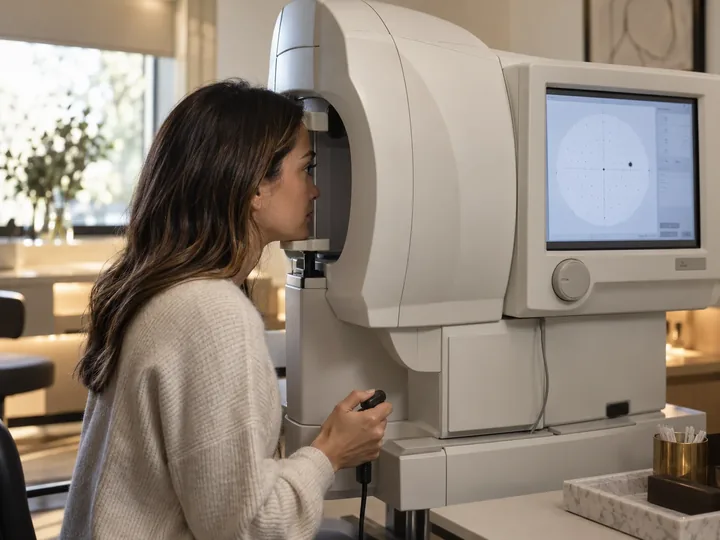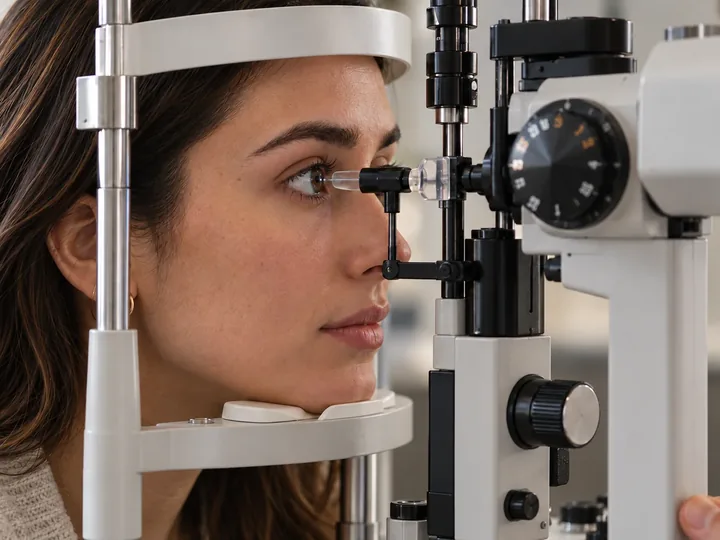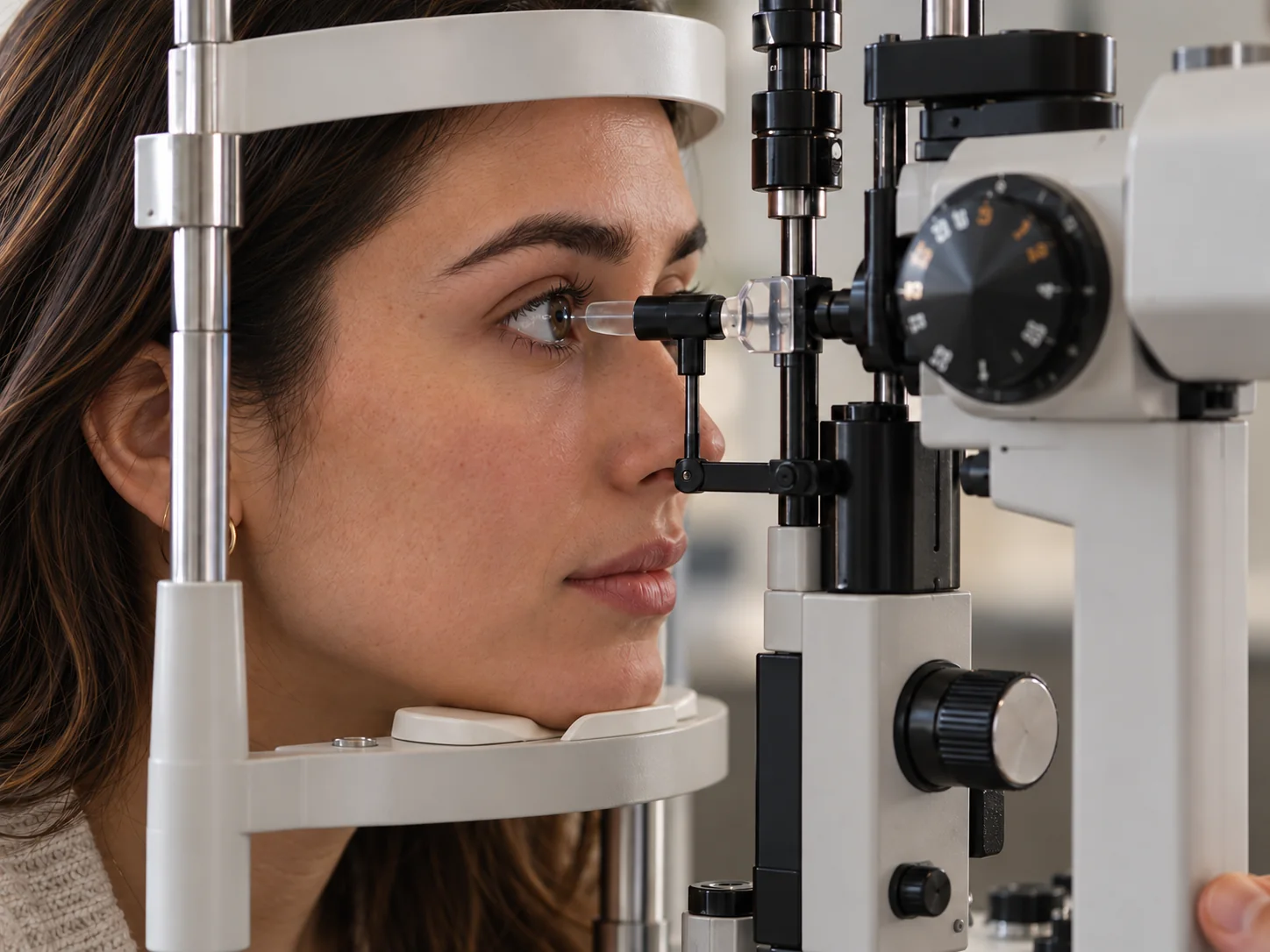
Normal eye pressure is usually between 10 and 21 mmHg (millimeters of mercury), the range previous studies have defined as normal. It isn't one number for everyone: the National Eye Institute notes that normal eye pressure varies by person, so a reading that's fine for one person could be high for another. Eye doctors measure it with tonometry, using a puff of air or a light touch of a small probe on the front of the eye. Not everyone with high eye pressure will develop glaucoma, and some people with normal eye pressure will, so the number is read together with your optic nerve and side vision. Our eye doctors in Los Angeles check eye pressure at every comprehensive eye exam.
Key takeaways
- Normal eye pressure is usually between 10 and 21 mmHg, but what counts as normal varies from person to person.
- Eye pressure is measured with tonometry, and a thin or thick cornea can make a reading look lower or higher than it is.
- High eye pressure raises the risk of glaucoma without meaning you have it, and 9.5 percent of untreated people in a large study developed glaucoma within five years.
- Severe eye pain with headache, nausea or halos needs a same-day exam right away, or the emergency room when the office is closed.
01
What is a normal eye pressure range?
For most adults, a normal eye pressure reading is between 10 and 21 mmHg. A 2022 study of 284,937 adults in China notes that previous studies have defined a normal range of 10 to 21 mmHg for intraocular pressure (IOP, the medical term for eye pressure), and it measured an average of 15.4 mmHg in men and 14.9 mmHg in women.
The number reflects the fluid inside the front of your eye. As the National Eye Institute explained when it reported a major glaucoma trial, elevated eye pressure results when the fluid that flows in and out of the eye drains too slowly.
Treat the range as a guide. Normal eye pressure varies by person, and the amount of pressure your optic nerve can handle is different for each person. One type of glaucoma, normal-tension glaucoma, happens in people with normal eye pressure.
02
How is eye pressure measured?
Eye pressure is measured with an instrument called a tonometer, in a test called tonometry. The American Optometric Association explains that a doctor of optometry can check the pressure in the eyes with an instrument called a tonometer, and the National Eye Institute describes the glaucoma exam it belongs to as simple and painless. You're likely to meet one of three kinds:
| Test | How it works | Touches the eye? | Numbing drops? |
|---|---|---|---|
| Air puff (non-contact) tonometry | A pulse of air flattens the cornea | No | No |
| Goldmann applanation tonometry | A small tip touches the center of the numbed cornea | Yes | Yes, plus a yellow dye |
| Rebound tonometry | A light probe taps the cornea and bounces back | Yes, briefly | No |
Goldmann applanation is the gold standard technique in measuring IOP, the method other tonometers are judged against. The air puff test uses a pulse of air to flatten the cornea without the need for touching the eye, and those tonometers do not require anesthesia or fluorescein drops. Rebound tonometers need no numbing drops either: a light probe impacts onto the cornea and then rebounds from the eye.
03
Why can one eye pressure reading be misleading?
A single reading can run high or low because of the thickness of your cornea and the time of day it was taken.
Tonometers measure the pressure through the cornea, the clear front of the eye, so its thickness matters. A review of tonometers explains that thin corneas can give rise to an underestimation of the IOP and vice versa: a thin cornea can make the pressure look lower than it is, and a thick one can make it look higher. That's why the AOA lists pachymetry to measure corneal thickness among the glaucoma tests. Thickness matters for risk as well: the Ocular Hypertension Treatment Study named thinness of the cornea among the eye risk factors for developing glaucoma.
Pressure also changes over the day and night. In many people with glaucoma, undetected elevated IOP spikes tend to occur during the night, and IOP readings during clinical office hours fail to detect these peaks in more than 50% of cases. So eye doctors compare readings across visits and look at the optic nerve itself, not only the number.
Our OHTS glaucoma risk calculator shows how eye pressure and corneal thickness combine with age and optic nerve measurements in a published risk estimate.
04
Does normal eye pressure change with age?
Only a little. In the 2022 study of adults in China, eye pressure showed a general trend of decline with age for both men and women. For men, the study's normal range went from 11.0-23.5 mmHg at ages 18 to 24 to 10.5-20.5 mmHg at 70 and older. The same study found pressure varied across geographical locations, so treat any eye pressure by age chart as a rough guide.
Age matters more for your risk than for the number. The AOA notes that ocular hypertension can occur in people of all ages, but it occurs more frequently in African Americans, people over age 40, and that it is also more common in people who are very nearsighted or who have diabetes. For glaucoma itself, the National Eye Institute puts people over age 60, especially if you're Hispanic/Latino, and African Americans over 40 among those at higher risk.
05
What does high eye pressure mean?
A reading above the normal range raises your risk of glaucoma, but it doesn't mean you have it. When the pressure is high and the optic nerve is still healthy, eye doctors call it ocular hypertension, and it has no noticeable signs or symptoms.
Much of what eye doctors know about it comes from the Ocular Hypertension Treatment Study, which examined 1636 people 40-80 years of age who had elevated eye pressure but no signs of glaucoma. Within five years, 9.5 percent of the study participants who did not receive the eye drops developed glaucoma, compared with 4.4 percent of those who received the eye drops. The drops reduced eye pressure by approximately 20 percent.
Read the other way, about 9 in 10 of the untreated people did not develop glaucoma in those five years. When the results came out, the National Eye Institute wrote that eye care professionals should not prescribe eye drops for all people who have elevated eye pressure with no sign of glaucoma. The decision rests on more than the pressure reading, and the AOA notes that with careful monitoring and treatment, when necessary, you can decrease the risk of damage to your eyes.
Some medicines raise eye pressure, so tell your eye doctor about them. Steroids may raise eye pressure as a side effect, and the AOA lists using corticosteroids (including cortisone, hydrocortisone, and prednisone) for prolonged periods as a glaucoma risk factor.
06
What eye pressure is dangerously high?
No single number marks the danger point for everyone, because normal eye pressure varies by person. The emergency to know is a sudden, steep rise from angle-closure glaucoma, which the National Eye Institute calls a medical emergency. Unlike pressure that builds slowly, it causes symptoms: severe eye pain, nausea, redness in the eye, seeing halos or colored rings around lights and blurred vision.
If you have severe eye pain with headache, nausea or halos, call us at 310-828-2010 right away for a same-day exam during office hours, or go to an emergency room when we're closed. Sudden loss of vision in one or both eyes, even if it comes back, needs a 911 call.
Some eyes have a naturally narrow drainage angle, which is usually harmless. Our page on narrow angles explains how we find it and when it matters.
07
How often should you have your eye pressure checked?
Eye pressure is part of a comprehensive eye exam, so it follows your exam schedule. If you're at higher risk for glaucoma, the National Eye Institute says you need to get a comprehensive dilated eye exam every 1 to 2 years, and the AOA recommends an annual dilated eye examination for people at risk for glaucoma.
Higher risk includes being over age 60, especially if you're Hispanic/Latino, being African American and over 40, and having a family history of glaucoma. If you already have ocular hypertension, the AOA says it is essential to have regular comprehensive eye examinations, on a schedule your doctor sets from your readings. Medicare Part B covers glaucoma screenings once every 12 months for people at high risk, and our article on whether Medicare covers eye exams has the details.
08
How we check eye pressure at Cohenmehr Optometry
Dr. Kevin Cohenmehr leads glaucoma and pressure monitoring here. Every comprehensive eye exam includes eye pressure and an optic nerve check, with OCT imaging and visual fields when indicated.
When a reading is high, we build a baseline: pressure at different visits, corneal thickness with pachymetry, OCT of the nerve fiber layer and visual fields, all under one roof. Each visit is compared with that baseline, and real change in the nerve or the field is what starts treatment. Our glaucoma care page describes each test.
Bring your last reading if you have it, along with a list of your medicines, including any steroids.
09
Questions patients ask
Is an eye pressure of 22 or 25 bad?
Not by itself. Both readings are above the usual 10 to 21 mmHg range, which calls for a closer look, but not everyone with high eye pressure will develop glaucoma. In the Ocular Hypertension Treatment Study, 9.5 percent of the participants who did not receive the eye drops developed glaucoma within five years. Your eye doctor repeats the reading, measures corneal thickness and checks the optic nerve before deciding on drops.
Can you drive after a glaucoma test?
Plan on a driver if your pupils are dilated, which is part of a full glaucoma exam: the doctor will give you some eye drops to dilate (widen) your pupil. The National Eye Institute says for a few hours after a dilated eye exam, your vision may be blurry and you may be sensitive to light, and it suggests you ask a friend or family member to drive you home. Our guide to the dilated eye exam covers what to expect.
Can you check your eye pressure at home?
Not by how your eyes feel, because ocular hypertension has no noticeable signs or symptoms. A home version of the rebound tonometer has recently been introduced for at-home auto-tonometry. Ask your eye doctor whether home readings would help in your case, and keep your regular exams either way.
What is pachymetry?
Pachymetry measures the thickness of your cornea, the clear front of the eye. The AOA lists pachymetry to measure corneal thickness among the glaucoma tests. Thickness matters because thin corneas can give rise to an underestimation of the IOP, and thinness of the cornea was among the risk factors in the Ocular Hypertension Treatment Study. Our OHTS risk calculator shows how the number is used.
10
Sources
- National Eye Institute: Glaucoma
- National Eye Institute: Types of glaucoma
- National Eye Institute: Eye drops delay onset of glaucoma in people at higher risk (2002)
- National Eye Institute: Get a dilated eye exam
- American Optometric Association: Ocular hypertension
- American Optometric Association: Glaucoma
- MedlinePlus: Glaucoma
- Journal of Clinical Medicine, 2021
- Frontiers in Endocrinology, 2022
- Medicare: Glaucoma screenings

Written by
Dr. Kevin Cohenmehr, OD
Medical eye care: glaucoma, diabetic eye exams, macular degeneration and eye infections, plus vision therapy for children. A graduate of UCLA and SUNY College of Optometry.
About Dr. Kevin →