
Same-day urgent eye care
Mon 10–5 · Tue–Fri 8–5 310-828-2010 Book online Intake form
Cohenmehr Optometry — Vision · Dry Eye · Keratoconus Book appointment
Cohenmehr OptometryVision · Dry Eye · Keratoconus Center
Our Practice
Meet the Doctors TestimonialsShare FeedbackTraveling to See UsAreas We Serve Hours & Directions
Eye Care

Routine care

Comprehensive Eye CareContact Lens ExamsComputer Vision SyndromeGlasses and Contact LensesNeurolensAdvanced Diagnostics

Medical eye care

Glaucoma & Ocular DiseaseDiabetic Eye ExamsMacular Degeneration CareLow VisionStye & Chalazion TreatmentUrgent Care

Children’s vision

Pediatric Eye ExamsMyopia ManagementAtropineOrtho-KEssilor Stellest LensesVision Therapy

Surgery co-management

Surgical Co-ManagementLASIKPRKSMILEEVO ICLRefractive Lens ExchangeCataract SurgeryCorneal TransplantPterygium Surgery
Dry Eye
The Dry Eye CenterOptiLIFTIPL (Intense Pulsed Light)Punctal PlugsBlephExAmniotic MembranesPrescription DropsAutologous Serum DropsMeibomian Gland ProbingIPL for Rosacea

Understand

Types of Dry EyeThe Tear FilmDemodex BlepharitisDry Eye After LASIKMenopause & Dry EyeSjögren’s & Dry EyeContact Lens Discomfort

Cosmetics

Upneeq® · Buy OnlineUpneeq Intake Form
Myopia Control
The Myopia ProgramMyopia Estimator — free toolOrtho-K — $1,500 totalAtropineStellest LensesMultifocal ContactsMiSight 1 Day

For parents

Choosing a TreatmentWhy Myopia MattersOutdoor Time & ScreensFirst Ortho-K NightMeasuring Progression
Keratoconus
The Keratoconus CenterScleral Contact LensesSpecialty Contact LensesScleral Lens UsesEaglet Surface ProfilerScleral Lens Care

Go deeper

Eye Rubbing & KeratoconusKeratoconus in TeensCorneal HydropsTransplant Co-Management
Scleral Lenses

The lenses

Scleral Contact LensesEvery Use, at a GlanceEaglet Surface ProfilerScleral vs RGP vs HybridSpecialty Contact LensesSpecialty Soft & ProstheticLens Care & HandlingTraveling to See Us

Corneal conditions

KeratoconusPost-LASIK EctasiaPellucid Marginal DegenerationCorneal ScarringAfter Corneal TransplantAfter Radial Keratotomy (RK)Post-Surgical ComplicationsOcular Shingles Scarring

Surface disease & more

Severe Dry EyeSjögren’s SyndromeStevens-Johnson SyndromeGraft-vs-Host DiseaseBell’s Palsy & ExposureRare Tear DeficiencyPresbyopia & High RxSports & Active Wear
Library
Start With a SymptomEye Conditions A–ZArticlesFree ToolsFull Site Index

Patients

Patient Intake FormCommon QuestionsAccepted InsurancePaying for Care (FSA/HSA)
Call the office310-828-2010
Book appointment

Medically reviewed by Dr. Kevin Cohenmehr, OD Last reviewed

Ocular Hypertension: Symptoms, Causes & Treatment

High pressure, healthy nerve — a watchlist, not a diagnosis of loss.

Ocular hypertension means the pressure inside the eye runs high while the optic nerve still looks and tests healthy. It is glaucoma’s waiting room: most people in it never develop damage, and the job is making sure you are not the exception.
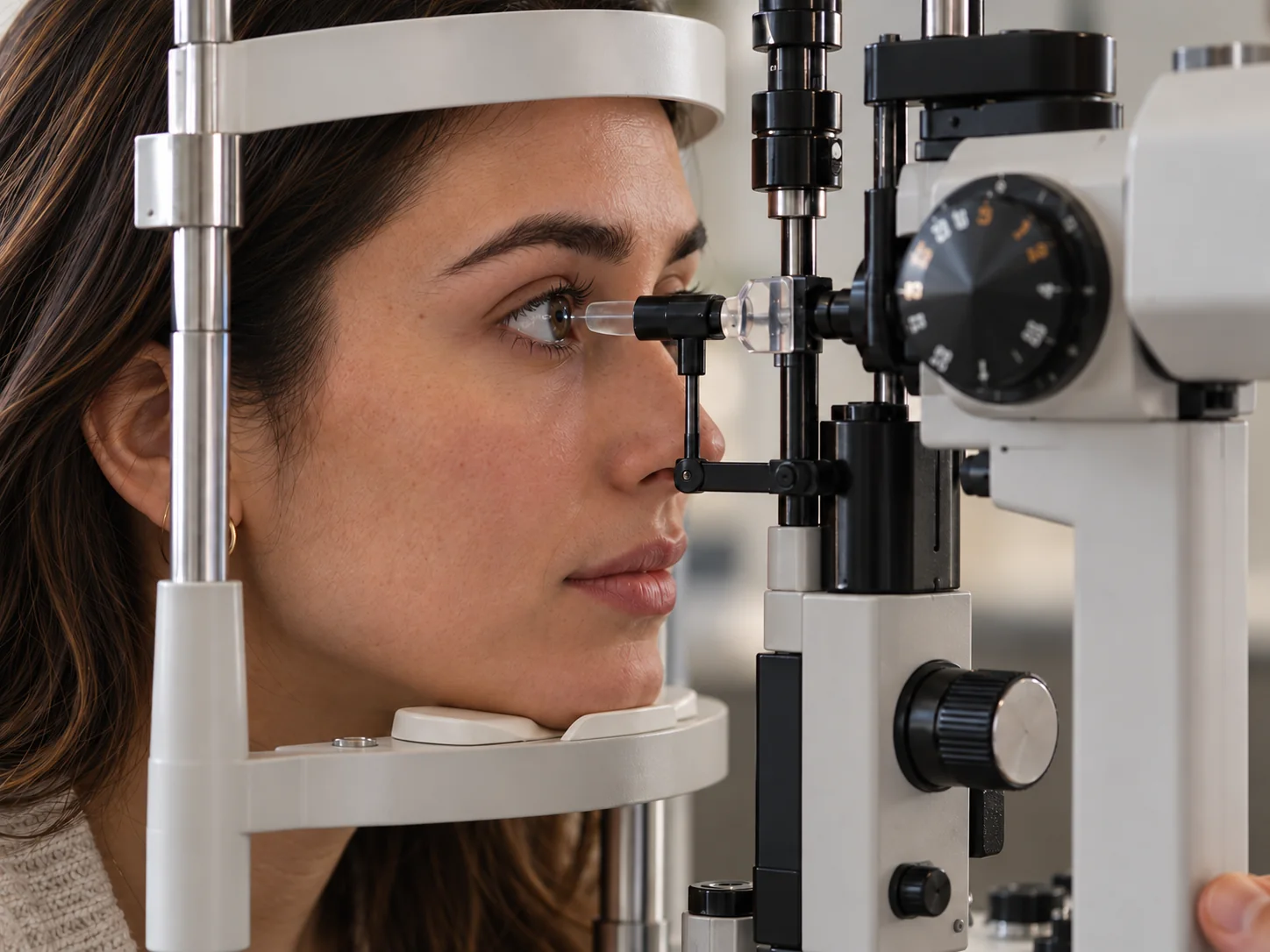
A pressure check in progress
The finding
Pressure above the typical range
The nerve
Healthy — that is the distinction
The risk
A head start toward glaucoma
The response
Structured monitoring, sometimes drops

The watch

Monitoring that would catch the turn early.

Baseline everything

Pressure at different visits, corneal thickness (it calibrates the pressure reading), OCT of the nerve fiber layer, and visual fields.

Compare, not guess

Each visit stacks against baseline; genuine change in nerve structure or field is the signal that treatment starts.

Treat selectively

When risk stacks up (pressures, thin corneas, family history), pressure-lowering drops begin before damage does, co-managed with specialists when warranted.

Why it matters here

Glaucoma is quiet. The watchlist is how you beat quiet.

  • Dr. Kevin Cohenmehr leads glaucoma and pressure monitoring
  • OCT, fields, pachymetry and photography under one roof
  • Family history? Say so; it changes the cadence
Glaucoma care

Common questions

Ocular hypertension, answered.

Anything else, call the office at 310-828-2010.

  • No. Glaucoma means the nerve is being damaged; ocular hypertension means pressure is high while the nerve remains healthy. The monitoring exists to keep it that way.

  • Only some patients need drops at all; the decision follows measured risk, and it is revisited as your data accumulates.

  • Typically a steady cadence through the year, tightened or relaxed by how your pressures and scans behave.

  • Eye pressure above the normal range (for most people, above 21 mmHg) in an eye with no detectable damage to the optic nerve or vision. It is not glaucoma, but it raises the risk of glaucoma, so people with ocular hypertension need regular eye exams. It has no symptoms; it is found by measuring the pressure.

  • The eye makes a clear fluid (aqueous humor) that drains out through spongy tissue, the trabecular meshwork, where the iris and cornea meet. When drainage slows or the eye makes too much fluid, pressure rises. Risk is higher with age over 40, African ancestry, a family history of ocular hypertension or glaucoma, high nearsightedness, diabetes, past eye injury and steroid medicines.

  • The pressure can be lowered, with drops or laser, but the tendency usually stays, so monitoring continues. Lowering it works: in the Ocular Hypertension Treatment Study, pressure-lowering drops roughly halved the five-year risk of developing glaucoma, from about 9.5% to 4.4%. Not everyone needs treatment; our OHTS risk calculator shows how your numbers add up.

Ocular hypertension near you

12222 Wilshire Blvd, on the Santa Monica border.

West Los AngelesBrentwoodSanta MonicaWestwoodBeverly HillsCulver CityPacific PalisadesWest HollywoodMarina del ReyNewport Beach

Also consider

Next step

Been told your pressure runs high?

Bring the old numbers if you have them — the baseline visit with an eye doctor in Los Angeles turns a worry into a plan.

Book a pressure work-up Or call 310-828-2010