Eyelash mites, also called eye mites, are Demodex mites: tiny parasites that live in the hair follicles and oil glands of the face and eyelids. Most people carry some without knowing it, and a 2024 review reports them in 84% of people at age 60 and in everyone over 70. They cause trouble when their numbers grow and inflame the edge of the eyelid, a condition called Demodex blepharitis, with itchy lids that are often worst in the morning and crusty collars of debris at the base of the lashes. Daily lid cleaning keeps the count down. An eye exam can confirm mites and start treatment, including a prescription eye drop the FDA approved in 2023 for Demodex blepharitis.
Key takeaways
- Eyelash mites are Demodex mites that live in lash follicles and oil glands, and most people over 60 carry them, usually without symptoms.
- When their numbers grow, they inflame the eyelid edge, causing itching that is often worst in the morning and crusty collars at the lash base.
- Daily lid cleaning keeps them in check, and an established overgrowth usually needs in-office lid cleaning or a prescription drop used twice a day for six weeks.
- A painful or light-sensitive eye, a change in vision or spreading redness needs a same-day exam, or an emergency room when we're closed.
01
What are eyelash mites?
Eyelash mites are microscopic mites called Demodex. Two species live in human skin, mostly on the cheeks, nose and eyelids: Demodex folliculorum and Demodex brevis.
Demodex folliculorum is 0.3 to 0.5 mm long and lives mainly in hair follicles, lashes included, where it gathers in clusters around the lash root and lash follicle. Demodex brevis is shorter, more solitary, and prefers sebaceous glands, the oil glands of the skin and eyelids, and it has been implicated in meibomian gland disease. Our page on meibomian gland dysfunction explains those eyelid oil glands.
A mite's full life cycle runs about 14 to 23 days. As the mites live and die in the follicle, debris collects at the base of the lashes in collarettes, waxy collars made of undigested material, dead skin cells, dead or living mites and their eggs.
02
Does everyone have eyelash mites?
Most older adults have mites in their eyelashes. A 2024 review reports them in 84% of people at age 60 and in 100% of people over 70, and most people who carry them never develop symptoms.
The eyelid inflammation they cause when they overgrow is common as well: Demodex blepharitis affects approximately 25 million Americans, by one estimate. What matters for your eyes is how many mites there are and whether they are inflaming your lids, which an eye exam can show.
03
How do you get eyelash mites?
From other people, through skin contact. Demodex transmission occurs through direct or close contact with infested skin, and newborns can pick the mites up through direct physical contact after birth.
Carrying a few mites is normal; symptoms come when the population grows. A 2023 review lists blepharitis, rosacea, diabetes and increasing age as risk factors for Demodex blepharitis. Another notes that Demodex problems can be significantly influenced by a weakened immune system, whether the cause is an illness or treatment such as corticosteroid and cytostatic therapy.
If you have rosacea, our guide to ocular rosacea explains how it affects the eyelids and eyes.
04
What are the symptoms of eyelash mites?
Itching leads the list. Ocular itching is the symptom most commonly associated with Demodex blepharitis, and it may be more likely to occur at night or early morning, after the mites have been active. A review counts redness, dryness, discomfort, foreign body sensation, lash anomalies, and itching among the hallmarks of the condition. In everyday terms:
- Itchy eyelids, often worst when you wake up
- Red, irritated eyelid edges
- Dry, uncomfortable eyes
- A feeling that something is in your eye
- Lash changes: lashes that grow in the wrong direction are common, and eyelash loss occurs in more advanced cases
The sign that points to mites is the collarettes at the base of the lashes. The presence of collarettes is pathognomonic for Demodex blepharitis, meaning they point to this condition specifically, which is why an eye doctor looks for them first.
Other kinds of blepharitis share many of these symptoms, such as crusty eyelids or eyelashes when you wake up. Our guide to itchy eyelids goes through the other causes, and our blepharitis page explains the wider condition.
05
How do you get rid of eyelash mites?
Bring the mite population down, then keep it down. For an established overgrowth, that usually means care in the office and a prescription drop, followed by daily lid cleaning at home.
- In-office lid cleaning: an eye doctor clears the collarettes, crusts and debris along the lash line, where the mites feed and breed. Our eyelid exfoliation page shows how it's done.
- Lotilaner eye drops, sold as Xdemvy: XDEMVY is indicated for the treatment of Demodex blepharitis, and the dose is one drop in each eye twice a day, about 12 hours apart, for 6 weeks. In the two studies behind its approval, no mites were found on the lashes checked at day 43 in 68% and 50% of treated patients, against 17% and 14% of those using the same drop without lotilaner. The most common side effect was stinging and burning, reported in 10% of patients. Our article on Xdemvy eye drops covers how to use it.
- Daily lid care afterward: warm compresses and lid cleaning keep the numbers down, because blepharitis seldom disappears completely.
06
Can you get rid of eyelash mites naturally at home?
Home care supports treatment and keeps the mite count down. On its own, it rarely clears an established overgrowth, which is why lid symptoms that keep coming back deserve an exam. The steps:
- Warm compresses: press a warm, wet cloth against your closed eye for a few minutes to loosen crusts.
- Lid cleaning: clean along the lash line every day with water and a gentle cleanser like baby shampoo, or with eyelid wipes. Our guide on how to clean your eyelids shows the steps.
- Face washing: a 2024 review advises washing the face twice daily and avoiding greasy makeup and oil-based cleansers.
- Bedding: regular washing of bedding, especially at elevated temperatures, helps clear the mites, the same review says.
- Old makeup: patients with Demodex are advised to discard their make-up and start fresh.
Tea tree oil is a common natural remedy for eyelash mites. Research shows it lowers Demodex infestation, but the National Center for Complementary and Integrative Health calls its effectiveness uncertain for Demodex eyelid inflammation, and a 2023 review says its efficacy for mite eradication remains uncertain.
Concentrations of 50% or more work better but are not considered safe for home use, and tea tree products can cause contact dermatitis, ocular irritation, and allergic reactions. Use only products made for the eyelids, and ask your eye doctor first.
07
When should you see an eye doctor?
Book an exam if itchy, red or crusty lids keep coming back, or a few weeks of daily lid cleaning hasn't settled them. During office hours (Monday 10 to 5, Tuesday through Friday 8 to 5), call 310-828-2010 for a same-day visit if the eye is painful or sensitive to light, your vision changes, or redness around the eye is spreading; if you wear contact lenses, take them out first. When we're closed, evenings and weekends, go to an emergency room for any of these instead.
If a swollen eyelid comes with a fever, a bulging eye, pain when you move your eye or a change in your vision, call us at 310-828-2010 and come straight in, or see another eye doctor; when we're closed, go to an emergency room. These signs can mean the infection has spread behind the eye. Our urgent eye care page explains how same-day visits work.
08
How we treat Demodex at Cohenmehr Optometry
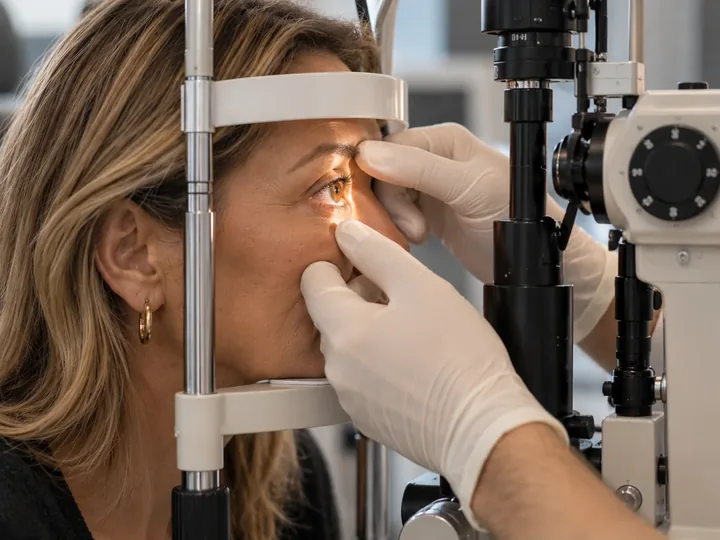
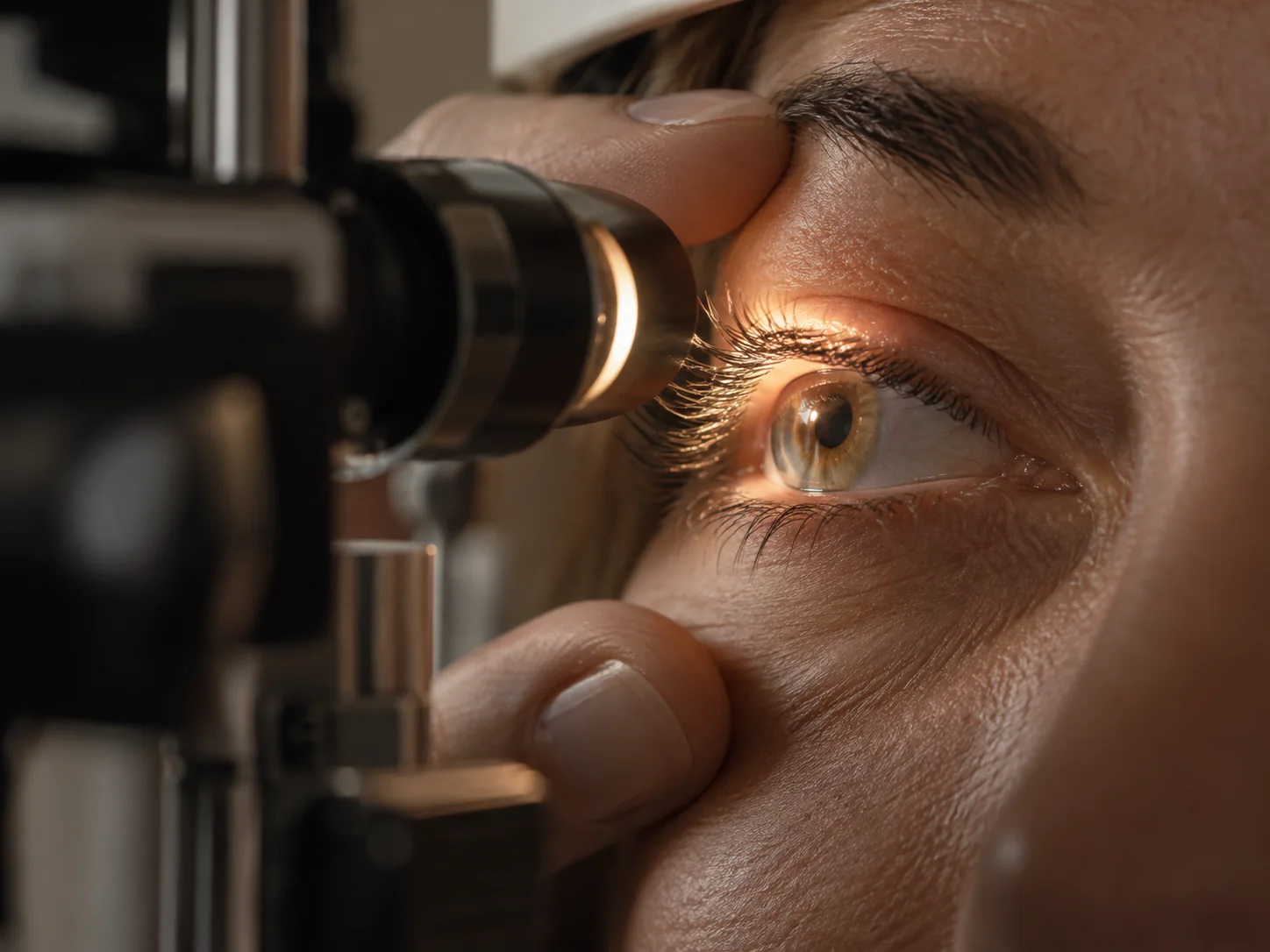
Our eye doctors in Los Angeles look for collarettes at the slit lamp, a microscope with a bright light, and grade how heavy the mite load is before treating. The check takes a few minutes.
Treatment follows what we find: in-office eyelid exfoliation with BlephEx or ABMax to clear crusting and debris from the lash line, targeted therapy for the mites, including lotilaner drops when they fit, and a lid-care routine to keep the count down. We recheck your lids and symptoms afterward. Our Demodex blepharitis page explains each step.
09
Questions patients ask
Can you see eyelash mites?
Not with the naked eye. Demodex folliculorum is only 0.3 to 0.5 mm long and lives down in the follicle, and under a microscope this mite is visible as a partially transparent organism. What you can see is the debris they leave: collarettes, crusty collars around the base of the lashes. An eye doctor checks for them at the slit lamp, which magnifies the lash line, in a few minutes.
Are eyelash mites contagious?
They can pass between people: Demodex transmission occurs through direct or close contact with infested skin. Because most older adults already carry some, catching them is rarely the real issue; symptoms come when the population on your own lids grows. If a partner has the same itchy, crusty lids, it makes sense for both of you to be checked.
Are eyelash mites harmful?
Usually not. Most individuals serve as carriers of Demodex mites without progressing to clinical symptoms. An overgrowth inflames the eyelid edge, and blepharitis can lead to more severe symptoms, such as blurred vision, missing or misdirected eyelashes, and inflammation of the cornea, the clear front of the eye. Lid symptoms that keep coming back deserve an exam, so the mites can be treated early.
What kills eyelash mites?
Lotilaner, the active ingredient in Xdemvy eye drops, is a chloride channel inhibitor selective for mites: blocking those channels paralyzes the mites, and they die. Tea tree oil lowers mite numbers in studies, but its efficacy for mite eradication remains uncertain. Lid cleaning removes the debris the mites live in and helps keep their numbers down.
10
Sources
- Eye & Contact Lens, 2023: Demodex blepharitis review
- Clinical Ophthalmology, 2024: Understanding Demodex
- DailyMed: Xdemvy prescribing information
- FDA: Novel drug approvals for 2023
- NCCIH: Tea tree oil
- National Eye Institute: Blepharitis
- American Optometric Association: Blepharitis
- StatPearls: Orbital cellulitis

Written by
Dr. Bijan Cohenmehr, OD
Founder of Cohenmehr Optometry, in practice for over 40 years. He leads the practice’s dry eye care and myopia management. A graduate of SUNY College of Optometry.
About Dr. Bijan →