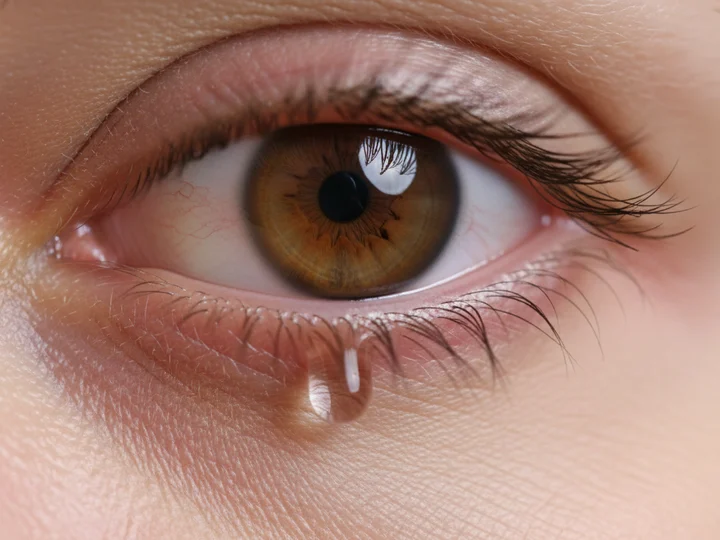
Xdemvy (lotilaner ophthalmic solution 0.25%) is a prescription eye drop for Demodex blepharitis, the eyelid inflammation caused by Demodex mites, also called eyelash mites. The FDA approved it in July 2023. Lotilaner paralyzes and kills the mites, and the course lasts six weeks, with drops twice a day. In the two studies behind its approval, collarettes (dandruff-like crust at the base of the lashes) on the upper lid dropped to two or fewer in 44% and 55% of people using Xdemvy, compared with 7% and 12% using the same drop without lotilaner. Stinging and burning, in 10% of people, was the most common side effect. Because blepharitis has other causes, we confirm the mites at the slit lamp first; our page on Demodex blepharitis explains the exam.
Key takeaways
- Xdemvy is a prescription drop whose active ingredient, lotilaner, paralyzes and kills the eyelash mites that cause Demodex blepharitis, an eyelid inflammation.
- In two studies, 44% and 55% of Xdemvy users had two or fewer collarettes (dandruff-like lash crusts) left on the upper lid, against 7% and 12% without lotilaner.
- Use it twice a day for six weeks and keep up daily lid cleaning during and after the course, since lid hygiene helps keep the mite population down.
- Pain, redness or blurred vision during treatment needs a same-day exam, or an emergency room when we're closed.
01
What are eyelash mites?
Demodex mites are tiny parasites that can infest the eyelashes. They're also called eyelash mites, and when they inflame the eyelids the condition is known as Demodex blepharitis.
Mites are one of several causes of blepharitis. The American Optometric Association lists a mite infestation of the eyelashes among the less common causes of blepharitis at the base of the lashes. Because the symptoms overlap, the diagnosis depends on what the lashes look like under magnification.
Demodex blepharitis shares its symptoms with other kinds of blepharitis. The National Eye Institute's list includes itchy eyes, red and swollen eyelids, crusty eyelids or eyelashes when you wake up and a feeling that something is in your eye; more serious cases can cause eyelashes that fall out or grow in the wrong direction.
When we look for Demodex mites in the eyelashes, the sign we check is collarettes, crusty collars of debris around the base of the lashes. Collarettes were also the main measure in the Xdemvy studies.
We also suspect Demodex when the lids itch most on waking, when blepharitis keeps coming back after wipes and scrubs, when lashes thin out or fall, or when rosacea keeps the lid margins red.
02
What is Xdemvy, and how does it work?
Xdemvy is lotilaner ophthalmic solution 0.25%. The FDA approved it in July 2023 to treat Demodex blepharitis and describes it as an ectoparasiticide, a drug that kills parasites living on the outside of the body.
Lotilaner blocks GABA-gated chloride channels, and its label describes it as selective for mites. Blocking these channels paralyzes the mite, which leads to its death. In laboratory tests, the label adds, lotilaner did not block the matching channels in mammals at the concentrations tested.
Xdemvy comes in a multiple-dose bottle, preserved with potassium sorbate.
03
How well does Xdemvy work?
Two six-week studies, Saturn-1 and Saturn-2, compared Xdemvy with its vehicle (the same drop without lotilaner) in 833 people with Demodex blepharitis at 37 sites in the United States and Mexico. Of those, 415 used Xdemvy. Most participants were 65 or older (62%), and 53% were women.
The main result was a cure of collarettes on the upper lid at day 43, which the label defines as no more than two collarettes left. The studies also counted how many people had no mites at all on the lashes examined, and how many had no redness of the lid margin.
| Result at day 43 | Saturn-1: Xdemvy | Saturn-1: vehicle | Saturn-2: Xdemvy | Saturn-2: vehicle |
|---|---|---|---|---|
| Collarettes cured | 44% | 7% | 55% | 12% |
| No mites found | 68% | 17% | 50% | 14% |
| Lid redness cleared | 19% | 7% | 30% | 9% |
The figures come from Xdemvy's label, which gives them as whole percentages. Lid redness cleared completely in fewer people than collarettes did.
These are group results after six weeks of treatment. They can't predict how any one person will respond, and because the reported results stop at day 43, they don't show how long the effect lasts after the course.
04
How do you use Xdemvy?
Use it exactly as prescribed. The course on the label is twice a day, about 12 hours apart, for six weeks.
- If you miss a dose, continue with the next scheduled dose.
- Take out contact lenses before each dose and wait 15 minutes before putting them back in. The preservative, potassium sorbate, may discolor soft contact lenses.
- If you use other eye drops, space them at least five minutes apart.
- Keep the bottle tip from touching your eye, the skin around it, your fingers or any other surface. Using contaminated drops may cause serious damage to the eye and loss of vision.
Use it for the full six weeks of the course, and keep up daily lid cleaning during and after it: the drops bring the mite population down, and lid hygiene helps keep it down, as our page on Demodex blepharitis explains.
05
What are the side effects of Xdemvy?
Stinging and burning where the drop goes in was the most common side effect, reported by 10% of people in the studies.
Fewer than 2% had a chalazion or a hordeolum (a stye), which are bumps on the eyelid, or punctate keratitis (small spots of irritation on the cornea, the clear front of the eye).
Its safety and effectiveness haven't been established in people under 18, and there are no available data on its use in pregnancy. Tell us if you're pregnant or breastfeeding before you start.
If your eyes become painful, very red or blurry during treatment, or you have an eye injury or infection, need eye surgery, or notice any reaction in your eyes or eyelids, call us right away to ask whether to keep using Xdemvy. Pain, redness or blurred vision needs a same-day exam through our urgent eye care, or an emergency room when we're closed. Sudden loss of vision in one or both eyes, even if it comes back, is an emergency at any hour: call 911.
06
How we treat Demodex blepharitis at Cohenmehr Optometry
Our eye doctors in Los Angeles start with the exam. At the slit lamp, a microscope used in eye exams, collarettes at the base of the lashes are the tell, and we grade how heavy the mite load looks before treating. From there, the plan usually has four parts:
- In-office eyelid exfoliation with ABMax clears the biofilm and debris that the mites feed and breed in.
- Targeted mite treatment, such as a six-week course of Xdemvy when it fits your case, brings the population down.
- A daily lid hygiene routine keeps it down.
- We recheck the lash line and your symptoms, then fold maintenance into your dry eye plan.
When the oil glands are involved too, we may combine exfoliation with IPL and gland expression. If you wear lash extensions or eye makeup, our page on makeup, lashes and dry eye covers habits that keep the lash line clean.
07
Questions patients ask
How do you cure blepharitis fast?
There usually isn't a quick cure. Blepharitis seldom disappears completely and can come back even after successful treatment, so the aim is to keep it under control. The core of treatment is keeping the lids clean and free of crusts. Warm compresses loosen the crusts, and an antibiotic may be prescribed when there's a bacterial infection. When mites are the cause, the prescription drop Xdemvy is used twice a day for six weeks.
Why are my upper eyelids itchy, with eyelash clusters?
Itchy lid edges with lashes clumped together by crust are typical of blepharitis, which makes the eyelids red, swollen, irritated and itchy and can leave crusty, dandruff-like flakes on the lashes. Allergies that affect the eyelashes can cause it too. When the crust forms collars around the base of each lash, Demodex mites are the first thing we check for, and a five-minute lash-line exam usually settles it.
Does tea tree oil kill Demodex mites?
It isn't clear. Several studies have tested tea tree oil on the eyelids for inflammation caused by Demodex mites, and the National Center for Complementary and Integrative Health, part of the NIH, rates its effectiveness as uncertain. Some people get redness or irritation from tea tree oil products on the skin, and it should not be swallowed. Our BlephEx page describes a trial that paired an in-office lid cleaning with tea tree oil lid scrubs. Ask us before using any essential oil near your eyes.
What is ocular rosacea?
It's rosacea that affects the eyes and eyelids. Rosacea is a skin condition that causes redness and bumps, usually on the face, and it can also cause eye problems. With ocular rosacea, the eyes may become sore, red, itchy, watery or dry and feel gritty; the eyelids may swell and redden at the base of the lashes, and styes may develop. Our page on ocular rosacea explains how we treat it.
08
Sources
- DailyMed: Xdemvy prescribing information
- FDA: Drug Trials Snapshot: Xdemvy
- FDA: Novel drug approvals for 2023
- NCCIH: Tea tree oil
- National Eye Institute: Blepharitis
- American Optometric Association: Blepharitis
- National Eye Institute: Testing for dry eye
- NIAMS: Rosacea
- American Stroke Association: Stroke symptoms

Written by
Dr. Bijan Cohenmehr, OD
Founder of Cohenmehr Optometry, in practice for over 40 years. He leads the practice’s dry eye care and myopia management. A graduate of SUNY College of Optometry.
About Dr. Bijan →