A broken blood vessel in the eye, called a subconjunctival hemorrhage, is bleeding under the conjunctiva, the clear membrane over the white of the eye. It's a bright red patch that looks alarming but is usually harmless. It doesn't hurt or affect your vision, and it clears on its own, most often within 7 to 14 days. A hard cough or sneeze, straining or rubbing the eye can set one off, and high blood pressure, diabetes and blood thinners make them more likely. Get it checked the same day if the eye hurts, your vision blurs or it followed a blow to the eye (an emergency room if we're closed), and soon if it keeps coming back or you bleed or bruise easily. Call 911 for sudden vision loss; a cut to the eye needs the emergency room. Our urgent eye care team sees red eyes the same day.
Key takeaways
- A red patch on the white of the eye from a broken blood vessel, or subconjunctival hemorrhage, is usually harmless and doesn't hurt or affect vision.
- Most spots clear without treatment within 7 to 14 days, though bigger ones take longer, and any spot lasting beyond 3 weeks should be checked again.
- While it heals, artificial tears can ease irritation, and you should avoid rubbing the eye and keep taking aspirin or blood thinners unless your doctor says otherwise.
- Pain, blurry vision or a blow to the eye needs a same-day exam (an emergency room when the office is closed), and sudden vision loss means calling 911.
01
What does a broken blood vessel in the eye look like?
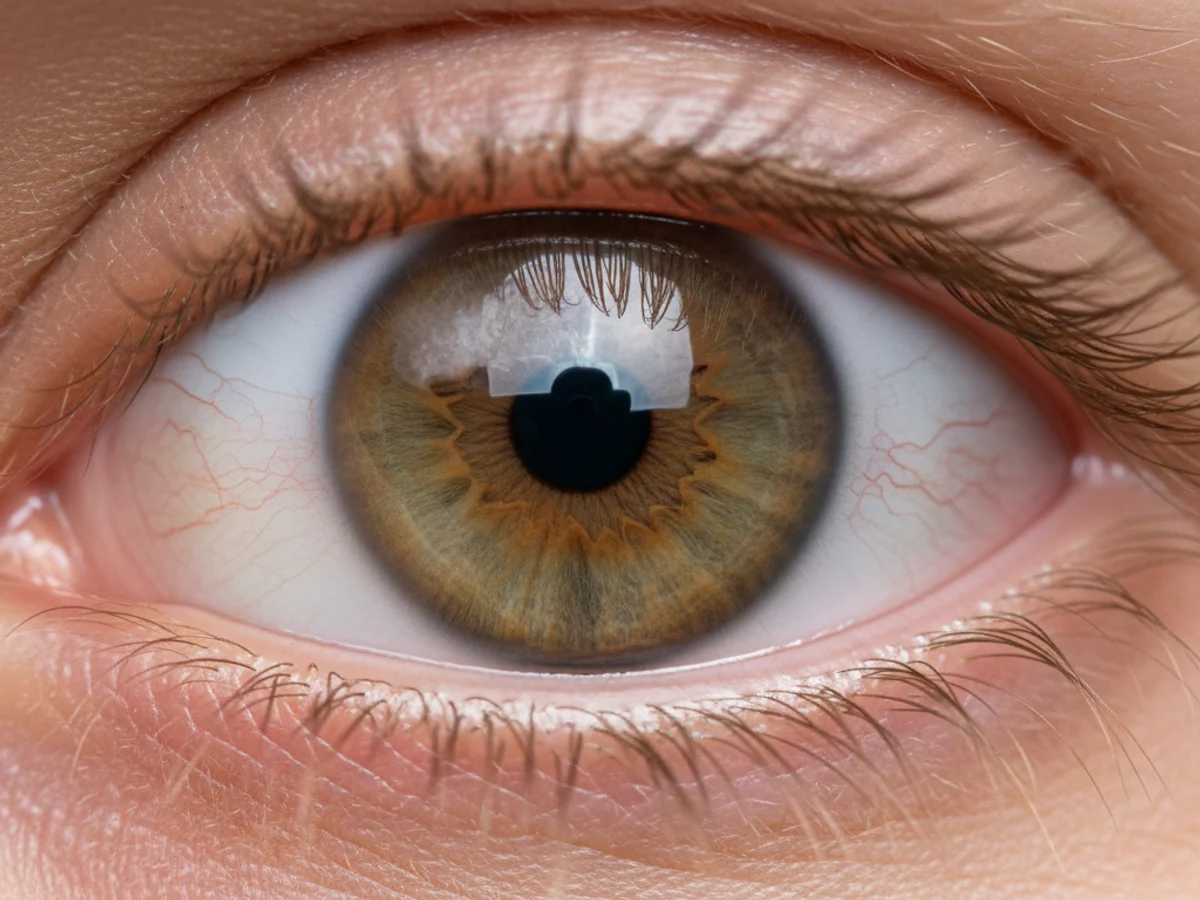
It looks like a bright red spot or patch on the white of the eye, sometimes small, sometimes large: a sharp-edged patch of blood under the clear surface of the eye.
The red spot is usually the only symptom, though the eye may feel mildly irritated. On its own, a subconjunctival hemorrhage does not cause pain, light sensitivity or blurred vision.
It's also common. In general eye practice it accounts for about 3% of emergency and outpatient eye visits.
02
What causes a broken blood vessel in the eye?
Coughing, sneezing and straining are well-known triggers. They briefly raise the pressure in your veins, and a short spike like that can break one of the tiny blood vessels in the conjunctiva.
Other triggers and risk factors named by StatPearls, a clinical reference, include:
- Vomiting, heavy lifting and straining with constipation
- Rubbing your eyes too hard
- An eye injury, something in the eye, or improper contact lens use
- Aspirin, clopidogrel and blood thinners such as warfarin
- High blood pressure and diabetes
- Rarely, a bleeding disorder, especially when spots keep coming back
Sometimes there's no obvious trigger at all. Cases rise in childhood and the teens, mostly after injuries, and rise again, more steeply, between ages 60 and 69, when most appear without an obvious trigger.
03
How long does a burst blood vessel in the eye last?
Most clear within 7 to 14 days without any treatment. Bigger spots take longer, and so can spots in older people and people who take blood thinners; one that lasts beyond 3 weeks should be checked again.
The color changes as the blood is absorbed: the patch starts bright red, darkens to a deeper red and then takes on a yellow-green tint. It fades the way a bruise does.
04
What should you do while it heals?
Usually, you just wait: no specific treatment is required, and the spot clears on its own. The clinical guidance in StatPearls adds a few practical points:
- Use artificial tears if the eye feels irritated. They ease the scratchy feeling but don't change how fast the blood clears.
- Avoid rubbing the eye, strenuous activity and straining, which can make the bleeding worse or bring it back.
- Keep taking aspirin or a blood thinner unless your doctor tells you otherwise. For a single spot these medicines can generally be continued, since the risk to the eye is small next to their benefits, and any change is made with your primary care doctor or cardiologist.
- If you take warfarin, an INR blood test can confirm your level is where it should be.
If spots keep coming back or don't clear, or you notice bruising elsewhere, especially while you take aspirin or a blood thinner, see your primary care doctor or cardiologist, who may arrange further tests.
05
Is it a broken blood vessel or something else?
A few other red eyes can look similar at first. Where the red sits, whether it hurts and whether your vision changes are the clues.
| Condition | What you notice | What to do |
|---|---|---|
| Broken blood vessel (subconjunctival hemorrhage) | A bright red patch on the white of the eye; no pain, normal vision | Call your eye doctor; it usually heals on its own |
| Pink eye (conjunctivitis) | Pink or red white of the eye with watering, itching, burning or discharge, in one or both eyes | See your eye doctor; viral and bacterial pink eye are very contagious |
| Hyphema (blood inside the front of the eye) | Blood collected inside the front of the eye, most often after a blow to the eye; vision may be reduced and light can hurt | Call us right away for a same-day exam; the emergency room when we're closed |
| Acute angle-closure glaucoma (a sudden rise in eye pressure) | Red eye with severe pain, nausea, blurred vision and halos or colored rings around lights | Call us immediately for a same-day exam; the emergency room when we're closed |
A broken blood vessel sits on the surface and leaves your vision alone. Blurred or dim vision, or redness after a blow to the eye, can mean something deeper: bleeding inside the front of the eye calls for an eye consultation in the emergency room, and so does an injury that may have reached the inside of the eye or the retina.
06
Should I go to the ER for a broken blood vessel in my eye?
Not for a painless red patch with normal vision. Call your eye doctor instead: for a simple spot, care is reassurance and a check for anything that may have caused it.
Get a same-day exam (an emergency room when we're closed) for pain, light sensitivity or blurry vision, which a broken blood vessel alone doesn't cause, and after any blow to the eye, which needs a check for deeper damage. If a blow leaves your vision blurred or dim, call us right away for a same-day exam, or go to an emergency room when we're closed: an injury that may have reached the inside of the eye or the retina needs emergency eye care. Sudden loss of vision is a 911 call (see below).
Book an exam soon if spots keep coming back, show up in both eyes or come with bruising elsewhere on your body, or if you take a blood thinner. StatPearls lists these as red flags that call for a closer look, which can include blood pressure and blood tests.
Call us immediately for a dark curtain or shadow over part of your vision, new flashes of light or a sudden shower of new floaters. These can be signs of retinal detachment, which the National Eye Institute calls a medical emergency; its advice is to go to your eye doctor or the emergency room right away. During office hours we see these the same day; when we're closed, go to the emergency room.
Severe eye pain with nausea, a headache or halos around lights can mean acute angle-closure glaucoma, a medical emergency. During office hours, call us immediately or go straight to an emergency room; when we're closed, go to the emergency room.
If something is stuck in your eye, don't rub it. Call us and come straight in, because we remove these in the office; go to the emergency room only when we're closed.
If something has cut or pierced the eye, go to the emergency room: don't rinse it or try to remove anything, and protect the eye without pressing on it.
For a chemical splash, rinse first, right away. Run lots of room-temperature water gently into the eye for at least 15 to 20 minutes (adults may find a shower easiest) and take out contact lenses. Then call Poison Control at 1-800-222-1222, which gives free expert advice around the clock, and call us or go to an emergency room. If the symptoms are severe, go straight to the emergency room after rinsing.
Call 911 for sudden loss of vision in one or both eyes, even if it comes back; sudden double vision; double vision or a droopy eyelid with a pupil that looks different, eye pain or a severe headache; or any change in vision with face drooping, arm weakness or trouble speaking. These can be signs of a stroke or another brain or nerve emergency. Call 911 even if the symptoms go away.
During office hours, Monday 10 to 5 and Tuesday through Friday 8 to 5, call us at 310-828-2010 for a same-day urgent visit. Outside those hours, sight-threatening symptoms belong in an emergency room.
07
How we check a broken blood vessel at Cohenmehr Optometry
Subconjunctival hemorrhage is one of the red-eye problems we see the same day. Call first: a person answers, asks what you're noticing and holds a slot for you.
Our optometrists in Los Angeles examine the eye at the slit lamp, a microscope for the front of the eye, and measure your eye pressure. When something points deeper, such as an injury or blurred vision, the evaluation may include a dilated retinal exam, retinal photography and OCT imaging.
We identify the cause and guide the next steps. When a retina specialist or ophthalmologist is needed, we coordinate the referral and send your records the same day.
08
Questions patients ask
Can a broken blood vessel cause pressure in the eye?
It shouldn't. A broken blood vessel on the surface of the eye is painless and doesn't change your vision, so a feeling of pressure or an ache probably has another cause and is worth having checked. Severe eye pain with nausea, a headache or halos around lights needs care right away: call us immediately, or go to the emergency room when we're closed. Eye pressure in the medical sense, the fluid pressure inside the eye that runs high in ocular hypertension, is measured with a quick test at an eye exam.
Can high blood pressure cause a broken blood vessel in the eye?
It can contribute. High blood pressure is the body-wide risk factor most consistently linked to subconjunctival hemorrhage, and treating it may make repeat bleeds less likely. That is why a blood pressure check belongs in the workup for any spot that appears without an obvious trigger, and for spots that keep coming back.
Is a broken blood vessel in the eye a sign of diabetes?
Not by itself. Diabetes is one of several things that make these spots more likely, along with high blood pressure and blood thinners. Diabetic retinopathy, the diabetes complication that can cost vision, affects the blood vessels of the retina inside the eye, and its early stages usually have no symptoms, so a red patch on the surface tells you little about it. If you have diabetes, get a comprehensive dilated eye exam at least once a year, such as our diabetic eye exam.
Why did I wake up with a broken blood vessel in my eye?
You may simply have noticed it then. A subconjunctival hemorrhage doesn't hurt, so many people don't know it's there until they see it in a mirror or someone points it out. A hard cough, a sneeze or straining the evening before is easy to forget. If it appeared with no trigger at all, have your blood pressure checked.
09
Sources
- StatPearls: Subconjunctival hemorrhage
- StatPearls: Hyphema
- CDC: About pink eye
- National Eye Institute: Types of glaucoma
- American Optometric Association: Glaucoma
- National Eye Institute: Retinal detachment
- American Stroke Association: Stroke symptoms and warning signs
- Poison Control: Splashed a poison in your eye?
- MedlinePlus: Eye injuries
- National Eye Institute: Diabetic retinopathy

Written by
Dr. Kevin Cohenmehr, OD
Medical eye care: glaucoma, diabetic eye exams, macular degeneration and eye infections, plus vision therapy for children. A graduate of UCLA and SUNY College of Optometry.
About Dr. Kevin →