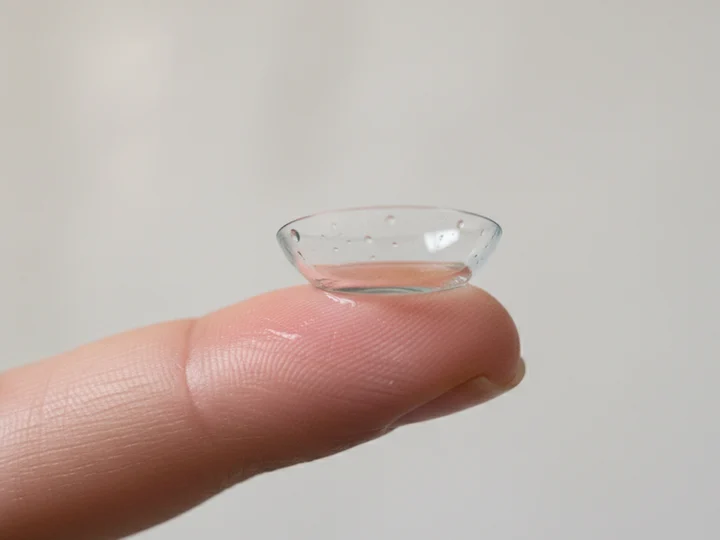
Recovery from standard (epi-off) corneal cross-linking comes in stages. The surgeon removes the cornea's thin surface layer, so the eye wears a bandage lens while it heals and may be light-sensitive and feel as if something is in it. In the trials the FDA reviewed, most side effects cleared within the first month; some, such as eye pain and reduced vision, took up to 6 months, and corneal haze up to 12 months. Don't rub the eye for the first five days. Sudden loss of vision in the treated eye: call your surgeon right away, or 911 if you can't reach the surgeon; in the other eye or both eyes, call 911. For severe pain or a sudden drop in vision, call your surgeon's office or us at 310-828-2010 right away, or go to an emergency room if neither is open. A corneal surgeon performs cross-linking; your follow-up happens here.
Key takeaways
- Healing after standard cross-linking takes months: in the trials, most side effects were gone within a month, others within 6 months, and corneal haze within 12 months.
- Don't rub the eye for five days, and if the bandage lens falls out, leave it out, call your surgeon or us right away, or an emergency room after hours.
- Your glasses or lens prescription waits until the eye settles, and most of our patients then use specialty lenses, usually scleral lenses designed from new corneal maps.
- Call your surgeon right away for sudden vision loss in the treated eye, or 911 if you can't reach them, and 911 for the other eye or both.
01
What happens on the day of cross-linking?
The surgeon numbs the eye with drops and removes the epithelium, the cornea's thin outer layer, over a circle about 9 mm across. Riboflavin (vitamin B2) drops are then applied, and the cornea is treated with ultraviolet A light. Afterward, a bandage contact lens goes on to protect the eye.
Removing that surface layer is why epi-off recovery takes time. The eye has to grow the layer back, and the FDA labeling tells the treating doctor to watch the eye until the defect in the surface has closed.
Epithelium-on cross-linking works differently. Epioxa, an epi-on treatment, is done without removing the epithelium, and the procedure still ends with a bandage contact lens. In its trials the most common side effect was eye redness, in 31% of treated eyes, and corneal haze, light sensitivity, eye pain and surface defects were among the side effects reported in 5% to 25%. Those trials compared Epioxa with a sham treatment, not with epi-off cross-linking. Our cross-linking page explains how we co-manage both.
02
What does recovery feel like in the first few days?
The eye may be uncomfortable while the surface heals. The FDA labeling notes that you may be sensitive to light and have a foreign body sensation, the feeling that something is in your eye, and in the trials 17% of treated eyes had eye pain and 16% had blurred vision.
The labeling gives two instructions for the first days:
- Don't rub your eyes for the first five days.
- If the bandage contact lens falls out or slips out of place, don't put it back in; call your surgeon's office or us right away, or go to an emergency room if neither office is open.
Keep your hands away after day five, too. Cross-linking strengthens the cornea, but hard rubbing still works against a thin cornea, and our page on eye rubbing and keratoconus has ways to calm an itch without touching the eye.
Use any eye drops your surgeon prescribes exactly as directed; keeping track of the drop schedule is part of the after-care we share with your surgeon. Your surgeon will tell you when it's safe to drive and when to go back to work, school or exercise.
03
How long does it take to recover from cross-linking?
Most side effects settle within about a month, but some last longer, and corneal haze can take up to a year to clear. In the trials reviewed for the FDA approval, the majority of reported side effects resolved during the first month.
A defect in the surface layer, fine lines in the cornea (striae), tiny spots of irritation on the surface (punctate keratitis), light sensitivity, dry eye, eye pain and reduced sharpness of vision took up to 6 months to resolve, and corneal haze, a faint clouding of the cornea, took up to 12 months.
| Side effect in the trials | Treated eyes | Took up to |
|---|---|---|
| Corneal haze (faint clouding of the cornea) | 64% | 12 months |
| Punctate keratitis (tiny spots of irritation on the surface) | 25% | 6 months |
| Corneal striae (fine lines in the cornea) | 24% | 6 months |
| Corneal epithelium defect (surface not yet healed) | 24% | 6 months |
| Eye pain | 17% | 6 months |
| Reduced visual acuity (less sharp vision) | 10% | 6 months |
The percentages are for the 102 eyes with progressive keratoconus treated in those trials, counting side effects reported in the first 3 months. Your own recovery may be quicker or slower, and your follow-up visits track it.
04
When will my vision be clear after cross-linking?
It can take months. In the trials, reduced sharpness of vision took up to 6 months to resolve, and haze took up to 12 months.
The aim of cross-linking is to keep the cornea from getting steeper; the AOA says it halts or slows progression. In the trials, treated corneas flattened on average by month 12: maximum corneal curvature (Kmax) fell by an average of 1.4 diopters in one study and 1.7 in the other. The comparison eyes had a sham treatment, riboflavin drops without removing the surface layer or using UV light, and most went on to have cross-linking by month 6, so the trials don't show how much an untreated cornea steepens over a full year.
Most of our patients still use specialty lenses afterward for their sharpest vision, usually scleral lenses designed from new maps of the healed cornea.
05
When is pain after cross-linking an emergency?
Severe pain or a sudden change in vision needs a call right away. The FDA labeling tells patients to contact their physician immediately for severe eye pain or any sudden decrease in vision, and it warns that ulcerative keratitis, an open sore on the cornea, can occur.
- Sudden loss of vision in the treated eye (it goes dark or disappears), even if it comes back: call your surgeon right away; if you can't reach the surgeon, call 911.
- Sudden loss of vision in the other eye or both eyes, even if it comes back, sudden double vision, or any change in vision with face drooping, arm weakness or trouble speaking: call 911 right away.
- Severe eye pain, a sudden drop in vision in the treated eye, or a bandage lens that falls out or slips: call your surgeon's office or us at 310-828-2010 right away. If neither office is open, go to an emergency room.
- Don't rub the eye, and don't put a loose bandage lens back in yourself.
We offer same-day urgent visits during office hours, Monday 10 to 5 and Tuesday to Friday 8 to 5. On evenings and weekends, when we're closed, call your surgeon's office or go to an emergency room.
06
How we co-manage cross-linking at Cohenmehr Optometry
We don't perform cross-linking in our office. We track the cornea with topography and tomography, decide with you when it's time, refer you to a corneal surgeon, and send complete imaging and clinical data before and after the procedure.
After treatment, you come back here for follow-up visits and imaging to check that the cornea stays stable over time. The visits follow your surgeon's schedule, with healing, pressure and vision checks, so you keep one familiar office for everything except the procedure itself. Once the eye has healed enough, we work on your vision, usually with scleral lenses or other specialty contact lenses.
Our office is an Epioxa Keratoconus Certified Detection Center, and we counsel patients on epi-on versus epi-off treatment as part of the referral. Dr. Brandon Cohenmehr, one of our Los Angeles optometrists, oversees keratoconus care here.
07
Questions patients ask
How long does the cross-linking procedure take?
For standard epi-off cross-linking, the treatment steps take at least an hour. After the surface layer is removed, riboflavin drops go on every 2 minutes for 30 minutes; the doctor then checks that the drops have soaked in, adding more if needed, and the eye is treated with ultraviolet A light for 30 continuous minutes while the drops continue. Numbing the eye and placing the bandage lens add a little time, and your surgeon's office will tell you how long to plan for on the day.
When can you wear scleral lenses after cross-linking?
When the surface has healed and your surgeon clears the eye. For lenses after eye surgery, that timing varies by procedure, from a few weeks to several months, and we coordinate it with your surgeon. Plan on a fresh fitting: in the trials, treated corneas kept flattening on average from month 3 through month 12, so we map the eye again and adjust the lens design to the new shape.
Should I wear sunglasses after cross-linking?
They can help. The FDA labeling for epi-off cross-linking says sunglasses may help with light sensitivity, and in the trials light sensitivity took up to 6 months to clear. The Epioxa label gives the same advice after epi-on treatment. If the eye becomes severely painful or your vision drops suddenly, call your surgeon's office or us at 310-828-2010 right away, or go to an emergency room if neither office is open. Sudden loss of vision in the treated eye: call your surgeon right away, or 911 if you can't reach the surgeon. Sudden loss in the other eye or both eyes is a 911 call.
Will my glasses prescription change after cross-linking?
It can, so the final glasses or contact lens prescription waits until the eye settles. In the trials, treated corneas kept flattening on average from month 3 through month 12, and reduced sharpness of vision took up to 6 months to clear. In the meantime, we check healing and vision on your surgeon's schedule.
08
Sources
- DailyMed: Photrexa cross-linking label
- FDA summary review: Photrexa, 2016
- DailyMed: Epioxa cross-linking label
- American Optometric Association: Keratoconus

Written by
Dr. Brandon Cohenmehr, OD
Specialty contact lenses, with a focus on Ortho-K, scleral lenses, and co-managing patients with keratoconus and other corneal disease. A graduate of SUNY College of Optometry.
About Dr. Brandon →