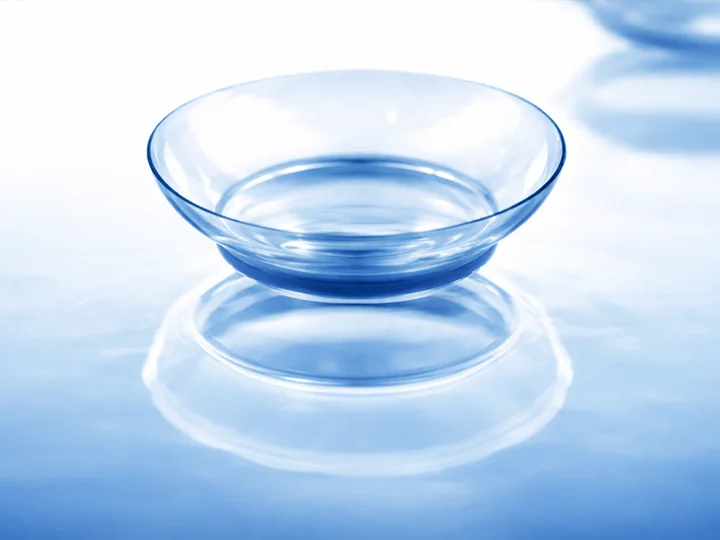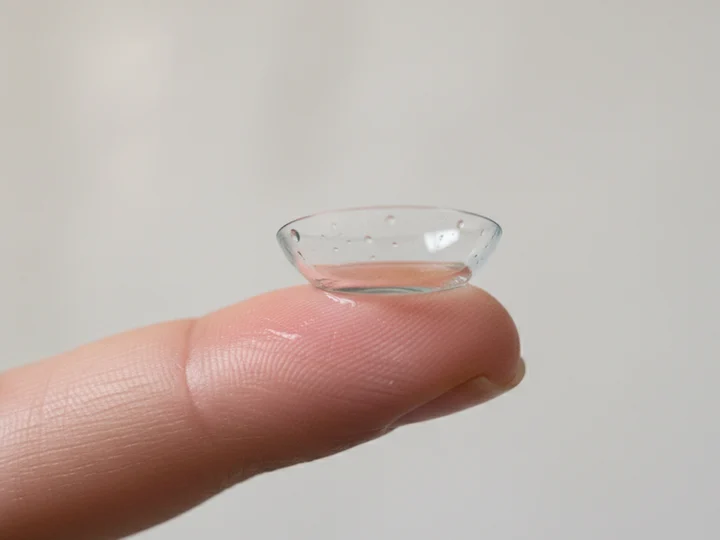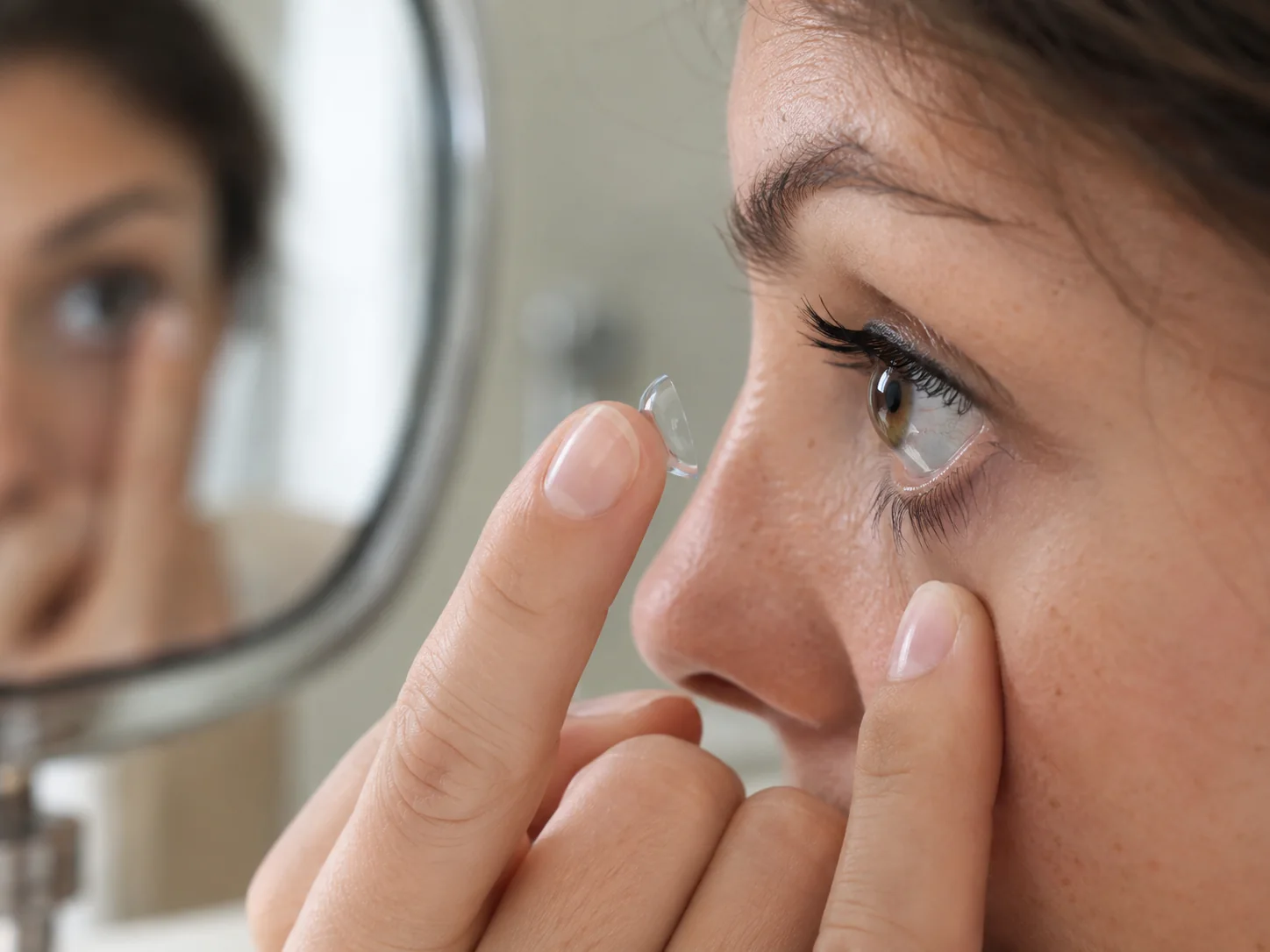
Toric contact lenses are lenses made to correct astigmatism, a common eye problem in which the cornea or the lens inside the eye has a different shape than normal, so vision looks blurry or distorted. Standard soft lenses may not correct astigmatism, but toric soft lenses can correct many types of it, and rigid gas permeable lenses are another option. Torics come as daily disposables and as reusable lenses. Each one has to settle at the right angle on your eye to work, so a toric lens needs a proper fitting at a contact lens exam.
Key takeaways
- Toric lenses carry the same kind of astigmatism correction as glasses, and because it has a direction, each lens must settle at the right angle on your eye.
- Soft torics can correct many types of astigmatism, and rigid gas permeable lenses, which keep their shape on the eye, can compensate for an irregular cornea.
- Daily disposable and reusable torics are both available, and people who wear dailies have fewer complications, such as infections, than those on other schedules.
- If your eye becomes red, painful or unusually sensitive to light, take the lens out and call us right away, or go to an emergency room when we're closed.
01
What are toric contact lenses?
A toric lens is a contact lens built to correct astigmatism. Glasses correct astigmatism with a cylindrical prescription that adds power in specific parts of the lens, and a toric contact lens carries the same kind of correction on the eye. On a glasses prescription, the cylinder is the astigmatism part; our guide to what the numbers on your prescription mean explains the sphere and how astigmatism adds to the blur.
Because that correction has a direction, the lens has to sit at the right angle. Current toric designs are built to turn back into position within a blink or two and hold it through the day, and that is what we watch for on your eye during a toric fitting.
A contact lens prescription also says more than a glasses prescription. Along with the power, it lists the lens material or manufacturer, the base curve and, when needed, the diameter. The two prescriptions may look similar, but they are not interchangeable.
02
Can you wear contacts with astigmatism?
Yes. Toric soft lenses can correct many types of astigmatism, and rigid gas permeable (RGP) lenses keep their regular shape on the cornea, which lets them compensate for an irregularly shaped cornea. Some people see better in contacts than in glasses and may get a wider field of view, though lenses that sit on the eye need regular care.
If your astigmatism is mild, you may not need it corrected at all. If you were told years ago that yours was too much for contacts, ask again. Soft torics now reach higher amounts of astigmatism, and custom lenses go further.
Orthokeratology (Ortho-K) is another route. These rigid lenses are worn for limited periods, such as overnight, to reshape the cornea, and people with moderate astigmatism may then see clearly without lenses for most of the day. The effect is temporary. Our astigmatism guide lays out which correction suits which eyes.
03
Do toric contacts come as daily disposables?
Yes. Toric lenses are made as daily disposables and as reusable lenses, and we fit both, including toric designs from Precision1, MyDay, DAILIES, Biofinity, ACUVUE OASYS and ULTRA.
With a true daily disposable schedule, a brand new pair goes in each day. Reusable torics are cleaned and stored each night and replaced on a planned schedule, most often every two weeks, monthly or quarterly.
Which one suits you depends on how often you wear lenses and how your eyes handle them. Dailies have become our default recommendation: daily disposable wearers have fewer contact lens complications, such as infections, than people on other replacement schedules.
Presbyopia, the loss of close focus that usually becomes noticeable in the early to mid-40s, can complicate astigmatism. Toric multifocal lenses correct both in one lens, and we fit those too.
04
Why is my vision blurry with toric contacts?
Blur in a toric lens can come from the fit, from dryness or from a change in your prescription. Blur that comes with pain, redness or light sensitivity is different: take the lens out and call us right away, or go to an emergency room when we're closed.
- The fit. A toric lens has to settle at the right angle. If your vision comes and goes, or seems to shift after you blink, tell us so we can recheck how the lens sits.
- Dryness. Contact lens wearers may be more likely to have dry eye, and dry eye can blur vision. If your lenses also feel dry by late afternoon, our page on contact lens discomfort explains what we check.
- A prescription change. Astigmatism can decrease or increase over time. If you still have blurry vision, eye strain or headaches while wearing your lenses, you might need a new prescription.
Astigmatism can also come from keratoconus, a relatively rare condition in which the cornea becomes progressively thinner and cone-shaped. When astigmatism keeps increasing, we image the cornea before changing the prescription.
05
What if a toric lens isn't enough?
Some astigmatism is too high or too irregular for a standard soft toric. Irregular astigmatism comes from a cornea with an uneven shape, as in keratoconus, after scarring or after some eye surgeries. Rigid gas permeable lenses hold their shape on the eye, so they can compensate for that irregular cornea.
For those eyes we fit specialty contact lenses: thicker custom soft designs for high astigmatism, rigid gas permeable and hybrid lenses, and scleral lenses, large lenses that vault the cornea on a cushion of saline and are designed from a map of the eye's surface. If glasses have never made your vision fully crisp, mention it when you book.
06
How we fit toric lenses at Cohenmehr Optometry
A contact lens exam measures things a glasses exam doesn't. Our optometrists in Los Angeles measure the curvature and diameter of your cornea, check the tear film the lens will float on, and convert the power for a lens that sits on the eye. Corneal curvature is particularly important for a proper contact lens fit. Then we look at a trial lens on your eye with a slit lamp microscope, checking how it centers, moves and covers the cornea, before the prescription is final.
We keep thousands of trial lenses in the office, toric designs included, and with a valid prescription we can usually send you home with trial lenses the same day. Book a contact lens exam and bring your current lenses or their box if you have them.
Whatever lens you wear, take it out, don't put it back in, and call us right away if your eye becomes red, painful or unusually sensitive to light, your vision blurs, or you see a white spot on the cornea. We see urgent eye problems the same day during office hours; when we're closed, go to an emergency room.
07
Questions patients ask
What does astigmatism look like?
Astigmatism makes vision blurry or distorted. The most common symptoms are blurry vision, needing to squint to see clearly, headaches, eye strain and trouble seeing at night. Mild astigmatism may cause no symptoms you notice, especially in children, who may not realize their vision isn't normal, so regular eye exams matter. Our astigmatism guide explains why lights can streak at night.
Can astigmatism be corrected?
Yes. The most common treatments are eyeglasses and contact lenses, prescribed to help you see as clearly as possible. Surgery can also treat astigmatism by changing the shape of the cornea so it focuses light correctly, and if your astigmatism is mild, you may not need treatment at all. For laser surgery, we check whether your corneas and prescription suit surgery, refer you to a surgeon and manage your recovery through LASIK co-management.
What contact lenses are used for keratoconus?
Glasses or soft lenses may correct the mild nearsightedness and astigmatism of early keratoconus, and as the cornea keeps thinning and changing shape, rigid gas permeable lenses can be prescribed to correct vision adequately. They must be carefully fitted, and frequent checkups and lens changes may be needed. Here, custom scleral lenses, which vault the cornea on a cushion of saline, are the most common choice for moderate to advanced keratoconus, with custom soft, RGP, hybrid and piggyback designs chosen from your corneal map.
Does PRK fix astigmatism?
Yes. PRK (photorefractive keratectomy) can correct astigmatism by reshaping the cornea, and so can LASIK. PRK removes tissue from the superficial and inner layers of the cornea, while LASIK removes tissue only from the inner layer. The cornea is mapped first: the FDA lists keratoconus as a precaution for refractive surgery, and a cornea that is too thin can lead to blinding complications. As part of our PRK co-management, we do that work-up and the checks afterward, and the surgeon performs the laser treatment.
08
Sources
- National Eye Institute: Astigmatism
- American Optometric Association: Astigmatism
- FDA: Contact lens prescription
- American Optometric Association: Healthy vision and contact lenses
- FDA: Types of contact lenses
- American Optometric Association: Types of contact lenses
- National Eye Institute: Dry eye
- National Eye Institute: Refractive errors
- FDA: Contact lens risks
- American Optometric Association: Keratoconus
- American Optometric Association: Contact lens care
- American Optometric Association: Presbyopia
- FDA: When is LASIK not for me?

Written by
Dr. Brandon Cohenmehr, OD
Specialty contact lenses, with a focus on Ortho-K, scleral lenses, and co-managing patients with keratoconus and other corneal disease. A graduate of SUNY College of Optometry.
About Dr. Brandon →