
Medically reviewed by Dr. Brandon Cohenmehr, OD Last reviewed
Multifocal Contact Lenses in Los Angeles
The lenses other offices gave up on — fitted until they work.
Reading glasses over contacts, or “you’re just not a multifocal candidate” — many patients hear one or the other after a single rushed trial. Most of those eyes can succeed. Multifocal optics are unforgiving of shortcuts: they reward measurement, tear film preparation and patient, design-by-design refinement. That is exactly how we fit them.

- For
- Presbyopia — distance and near in one lens
- Fitted from
- Topography, pupil size, tear film
- Designs
- Soft, custom soft, hybrid, scleral multifocals
- The difference
- Refinement visits until it works
The diagnosis
Multifocals don’t fail. Unmeasured fits do.
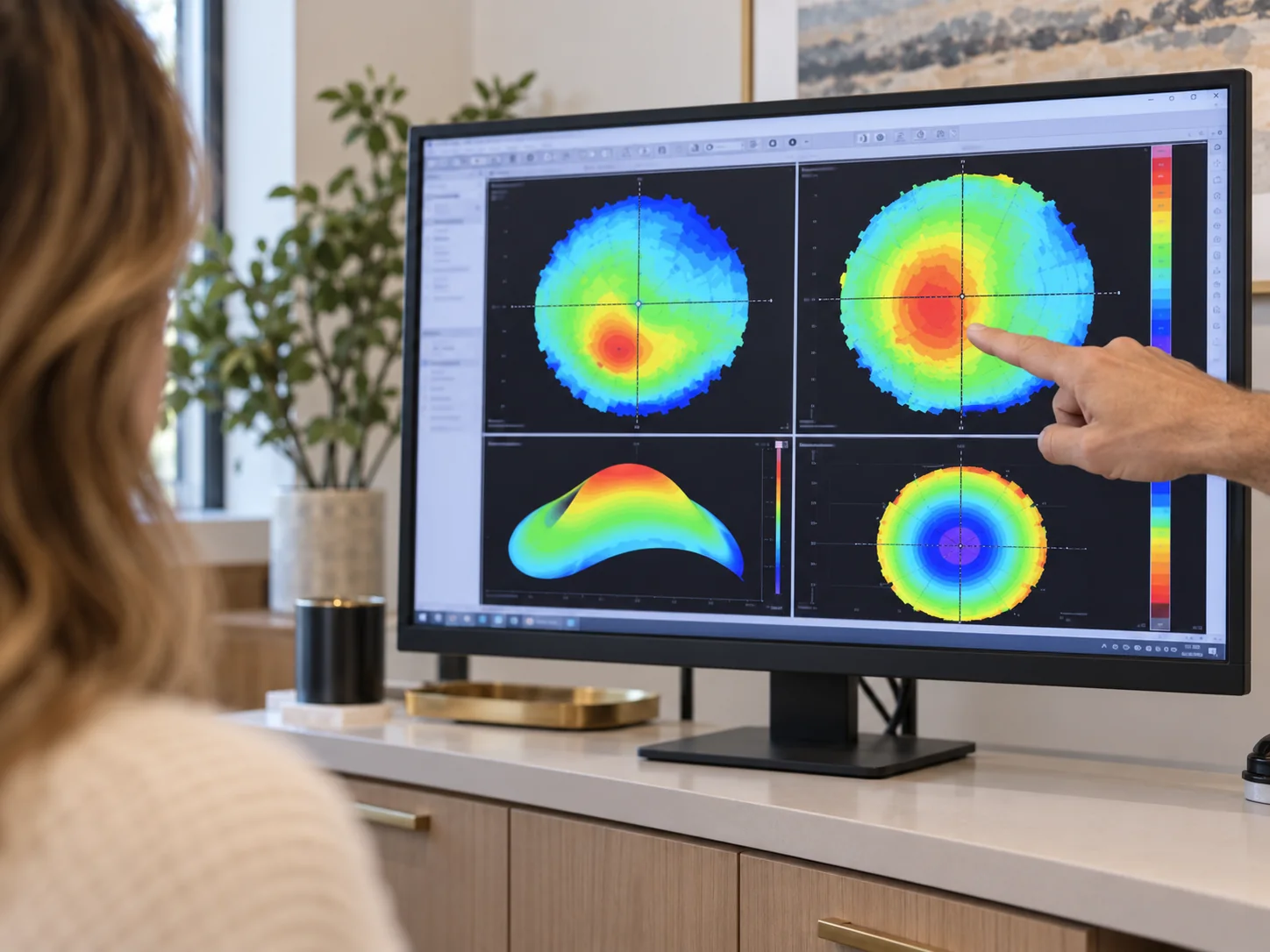
A multifocal contact lens layers distance and near power in rings across your pupil. Which ring your eye actually uses depends on your pupil size in real light, how the lens centers on your cornea, and whether the tear film keeps its optics smooth. None of that is visible in a prescription, but all of it is measurable.
- Pupil size, measured
Near zones are sized in millimeters. Our optometrists in Los Angeles measure your pupils in bright and dim light and choose designs whose zones match — the single most skipped step in failed fits.
- Centration, mapped
Corneal topography shows how a lens will sit and whether the optics will line up with your visual axis, or whether you need a custom or larger design that will.
- Tear film, prepared
Multifocal optics magnify dryness: a breaking tear film smears both distances at once. When the surface needs work, we treat it with IPL, drops or plugs before judging any lens.
- Dominance and balance, tuned
We measure eye dominance and bias each eye’s design deliberately, then refine with over-refraction instead of guessing.
The fitting
Measured, trialed, refined — until it works.
- 01
Measure everything first
Refraction, topography, pupil size in two lighting conditions, lid position and tear film testing, all before any lens goes on the eye.
- 02
Match a design, not a brand
Center-near, center-distance, extended-depth and aspheric designs behave differently on the same eye. We fit from the full market, including toric multifocals for astigmatism, not from one company’s trial drawer.
- 03
Wear it in real life
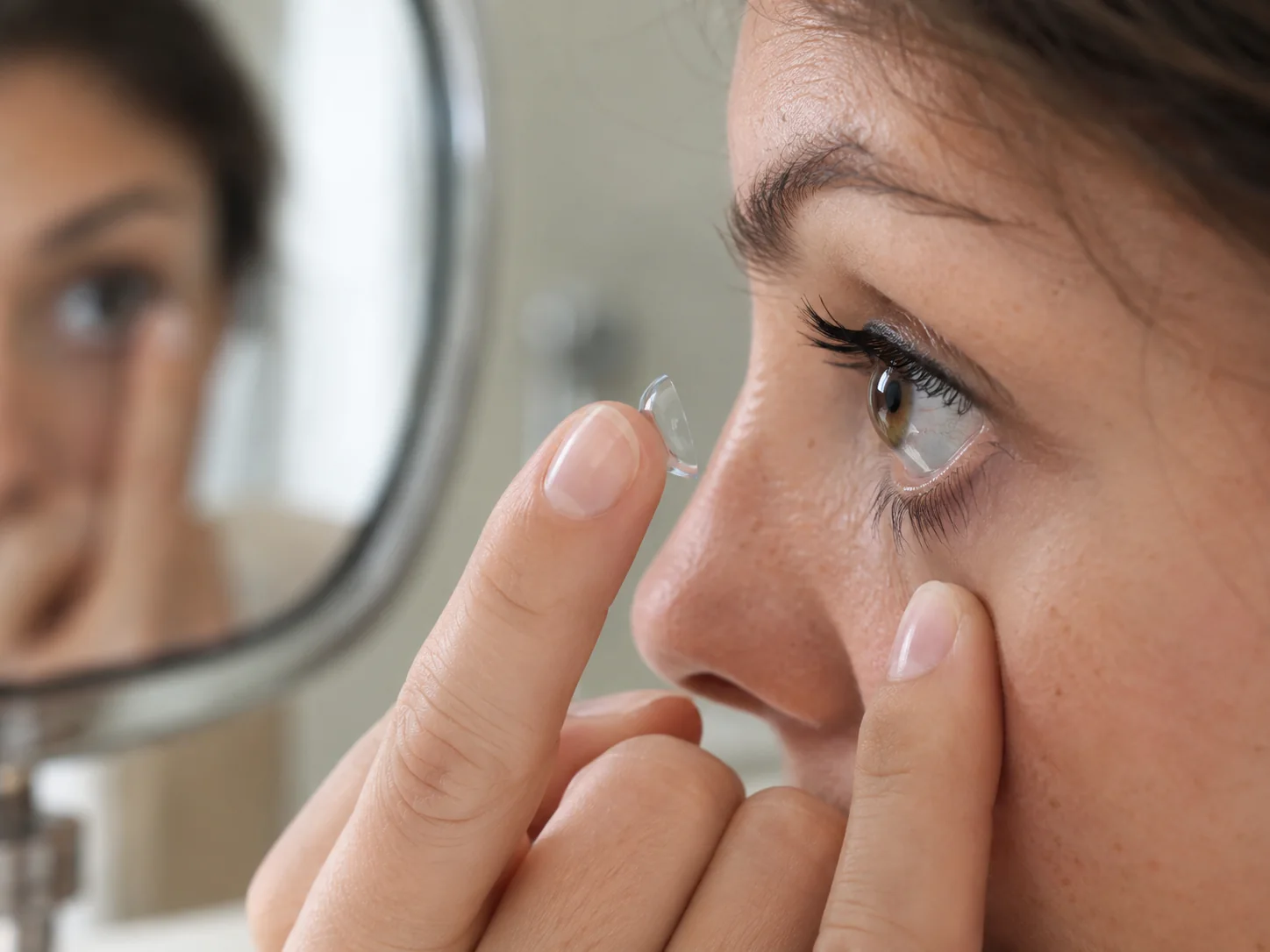
You leave in trial lenses and live with them: screens, driving, menus, phones. Multifocal vision is learned over days, not judged in a chair.
- 04
Refine by the numbers
Over-refraction, centration checks and your real-world notes drive design changes (power balance, zone size, a different geometry) until distance, intermediate and near all hold.
- 05
Escalate when soft can’t
When soft lenses genuinely can’t deliver (high astigmatism, irregular corneas, severe dryness), we move to custom soft, hybrid or multifocal scleral designs rather than giving up on the goal.
Dr. Brandon Cohenmehr, OD, personally oversees specialty and hard-to-fit lens care here. Multifocals get the same fitting discipline we bring to scleral lenses.
This fitting is for you if
- You were told multifocal contacts “don’t work” for your eyes
- You tried one brand, once, and gave up
- Monovision leaves you dizzy or ruins depth perception
- You juggle readers over distance contacts all day
- Astigmatism complicated every fit so far
- Dry eye blurred lenses that started out crisp
Why fits fail elsewhere
Most failed multifocal fits were never measured: a default lens from the fitting guide, one brand in the trial drawer, an untreated tear film, and a verdict after a single visit. The lens gets blamed for a process that never happened.
The toolkit
Five lens families, one goal: both distances, no readers.
- Soft multifocals — daily and monthly, every major design
- Toric multifocals — astigmatism and presbyopia in one lens
- Custom soft designs — made-to-order zones and geometries
- Hybrid multifocals — rigid-lens optics with a soft skirt
- Multifocal scleral lenses — for the eyes nothing else fits
Blended monovision and Ortho-K round out the options when your exam shows they suit your eyes better.
Book a multifocal fittingCommon questions
Multifocal contact lenses, answered.
Anything else, call the office at 310-828-2010.
Multifocal contact lenses near you
12222 Wilshire Blvd, on the Santa Monica border.
Also consider
Next step
Ready to retire the readers — for real this time?
Bring the lenses that failed and the story of what blurred. The fitting starts with measurements no one took, in our West Los Angeles office on the Santa Monica border.