Sudden blurry vision can mean anything from a dry tear film to a stroke. Call 911 for sudden loss of vision in one or both eyes, even if it comes back, sudden double vision, or blur with face drooping, arm weakness or trouble speaking. Call us right away, or go to an emergency room when we're closed, for new flashes, a shower of new floaters, a shadow over part of your vision, or severe eye pain with nausea, a headache or halos. Other blur with eye pain, redness or light sensitivity needs a same-day exam, or an emergency room when we're closed. Sudden blur on its own: if it clears right away, call us and come in for an exam; if it doesn't clear, go to an emergency room. Blur that comes and goes with dry, burning eyes is less urgent; book an exam if it keeps happening.
Key takeaways
- Whether sudden blurry vision is an emergency depends on what comes with it, since causes run from a dry tear film to a stroke.
- For new flashes, a shower of new floaters or a shadow over your vision, call us right away, or go to an emergency room when we're closed.
- When sudden blur with no warning signs clears right away, call us and come in for an exam, and if it doesn't clear, go to an emergency room.
- Call 911 for sudden vision loss, even if it comes back, sudden double vision, or blur with face drooping, arm weakness or trouble speaking.
01
Is sudden blurry vision an emergency?
It can be, depending on what comes with the blur; our urgent eye care page lists the problems we see the same day.
| What you notice | What it can mean | What to do |
|---|---|---|
| Sudden loss of vision in one or both eyes (even if it comes back), sudden double vision, or blur with face drooping, arm weakness or trouble speaking | Stroke | Call 911 |
| A chemical splashed in the eye | A chemical burn | Rinse for at least 15 to 20 minutes first, then call Poison Control (1-800-222-1222) and get care right away |
| New flashes, a shower of new floaters, or a dark curtain or shadow over part of your vision | Retinal detachment | Call us right away for a same-day exam; emergency room when we're closed |
| Sudden blur with severe eye pain and nausea, a headache or halos around lights | Angle-closure glaucoma | Call us right away; emergency room when we're closed |
| Blur with eye pain, redness or light sensitivity | Uveitis or keratitis | Same-day eye exam (take contact lenses out); emergency room when we're closed |
| Sudden blur on its own, with none of the signs above | Many possible causes, minor or serious | If it clears right away, call us and come in for an exam; if it doesn't clear, go to an emergency room |
| Blur that comes and goes with stinging, burning or a scratchy feeling | Dry eye | Book an exam |
| Blur after long hours on a screen | Digital eye strain | Take breaks; book an exam if it persists |
| Blur that shifts with your blood sugar | Diabetes | Tell your physician and book an exam |
02
When should you call 911 or go to the emergency room?
Call 911 if you suddenly lose vision in one or both eyes, if you suddenly see double, or if blurred vision comes with another stroke sign from the American Stroke Association's B.E. F.A.S.T. check: balance loss, face drooping, arm weakness or speech difficulty. Call even if the symptoms go away, and note the time they started.
Double vision or a drooping eyelid with a pupil that looks different, eye pain or a severe headache is a 911 call too. Our droopy eyelid (ptosis) page explains that a droop with double vision or a different pupil can signal a stroke or another nerve emergency.
For a chemical in the eye, rinse before anything else: the pain can make you close your eyes, which traps the chemical next to the eye and may cause more damage. Use lots of room-temperature water for at least 15 to 20 minutes, take out contact lenses and keep blinking. Then call Poison Control at 1-800-222-1222 and get care right away: call us during office hours, or go to an emergency room.
If something has cut or pierced the eye, go to an emergency room without rinsing it or removing anything, and protect it without pressing on it.
03
Which sudden blurry vision needs a same-day eye exam?
Flashes, a shower of new floaters, a shadow over your vision, severe eye pain or something stuck in the eye need a call to us right away, or an emergency room when we're closed. Blur with eye pain, redness or light sensitivity needs an exam the same day, or an emergency room when we're closed.
Call us right away
Many new floaters, flashes of light, or a dark shadow or curtain over part of your vision can mean a retinal detachment, which the National Eye Institute calls a medical emergency. Call us right away for a same-day exam, or go to an emergency room when we're closed.
Sudden intense eye pain with blurry vision, red eyes or nausea can be angle-closure glaucoma, a type in which fluid builds up quickly in the eye; untreated, it can cause blindness in just a few days. If severe eye pain comes with nausea, a headache or halos around lights, call us immediately, or go to an emergency room when we're closed.
If something is stuck in your eye, don't rub it. Call and come straight in, because our doctors remove these in the office, and go to an emergency room only when we're closed.
Book a same-day exam
Uveitis, inflammation inside the eye, and keratitis, an inflammation of the cornea, can both cause blur with pain, redness and light sensitivity. Uveitis symptoms usually start suddenly, and the National Eye Institute advises seeing your eye doctor right away. If you wear contact lenses and notice these symptoms or a white spot on the cornea, take the lenses out and call us right away for a same-day exam, or go to an emergency room when we're closed; the CDC's advice is to remove the lenses and call your eye doctor immediately.
We hold same-day appointments for these problems during office hours, Monday 10 to 5 and Tuesday to Friday 8 to 5. Call 310-828-2010 first so we can plan your visit. When we're closed, including weekends, don't wait for us to open: go to an emergency room for blurry vision that comes with eye pain, redness or light sensitivity. The National Eye Institute lists intense eye pain, blurry vision and very red, watery eyes among the reasons to go to the eye doctor or the emergency room. Blur that comes and goes with dry, burning eyes can wait for us to open.
04
Why is my vision suddenly blurry when nothing hurts?
A painless blur isn't always a minor one. NAION, an optic nerve condition, can cause sudden, painless vision loss, and vision that suddenly dims or goes dark is a 911 call, as above. Sudden blur that doesn't clear needs an emergency room; if it clears right away, call us and come in for an exam. A dark or missing patch, or straight lines that suddenly look wavy, need a same-day exam, at an emergency room if we're closed. When the blur comes and goes, clears with blinking or rest, and none of the warning signs above are present, these causes are worth checking first.
Dry eye
Blurry vision is on the National Eye Institute's list of dry eye symptoms, along with stinging or burning and a scratchy feeling. Our dry eye program looks for the cause, often the oil glands along the eyelids.
Screens
Long stretches of screen work can bring eyestrain, headaches, blurred vision and dry eyes, and many of these symptoms are temporary, easing once you stop. Blur that keeps coming back is worth a computer vision exam.
05
What does blurry vision with a headache mean?
It can be a migraine, but blurred vision with a headache can also be a stroke, angle-closure glaucoma, a blood pressure emergency or, during pregnancy and the year after delivery, an urgent warning sign. The pattern tells them apart:
- Migraine. An aura usually affects vision, with dots, zigzags or sparks. It appears about 10 minutes to an hour before the headache and usually lasts no more than an hour, and blurred vision can also come with the headache itself.
- Stroke. Call 911 for sudden loss of vision in one or both eyes, sudden double vision, a sudden, severe headache with no known cause, or vision changes that come with face drooping, arm weakness or trouble speaking, even if you've had migraines before.
- Angle-closure glaucoma. Sudden intense eye pain with blurry vision or nausea can be this eye emergency; if severe eye pain comes with a headache, call us right away, or go to an emergency room when we're closed.
- Very high blood pressure. The American Heart Association says to call 911 if your blood pressure is higher than 180/120 and you have symptoms such as a change in vision, chest pain, numbness, weakness or difficulty speaking.
- Pregnancy. During pregnancy and in the year after delivery, a headache that comes with blurred vision or dizziness, or vision that is blurry or doubled, is an urgent maternal warning sign: seek medical care immediately.
06
Can blood sugar make your vision blurry?
Yes. Over time, high blood sugar damages the blood vessels in the eyes, and it can also change the shape of the eye's lens and make vision blurry.
When we see a prescription that swings with blood sugar in someone without a diabetes diagnosis, we refer for testing, and our diabetic eye exams send a report to your physician.
07
Can medications cause sudden blurry vision?
Some can. Topiramate, used to treat certain seizures and to prevent migraine, carries an FDA label warning about sudden nearsightedness and a secondary angle-closure glaucoma. Symptoms include a sudden drop in vision and/or eye pain, typically within the first month of starting it, and the main treatment is stopping the drug as quickly as possible, a decision for the treating doctor. If your vision blurs or your eyes hurt while you're taking it, call us right away, or go to an emergency room when we're closed, and let your prescriber know.
Some studies suggest NAION, which is rare, may occur slightly more often in people taking GLP-1 medications, and sudden vision loss is a 911 call. The American Optometric Association also lists blurred or cloudy vision, missing or dark areas in your vision, and faded colors among the changes to report to an eye doctor immediately (an emergency room when we're closed). It says these risks don't mean you should stop taking your medication, but it does advise an eye exam before you start and regular follow-up exams while you take it.
Don't stop a prescribed medicine on your own; if one looks responsible, we talk it through with you and your prescriber.
08
How we check sudden blurry vision at Cohenmehr Optometry
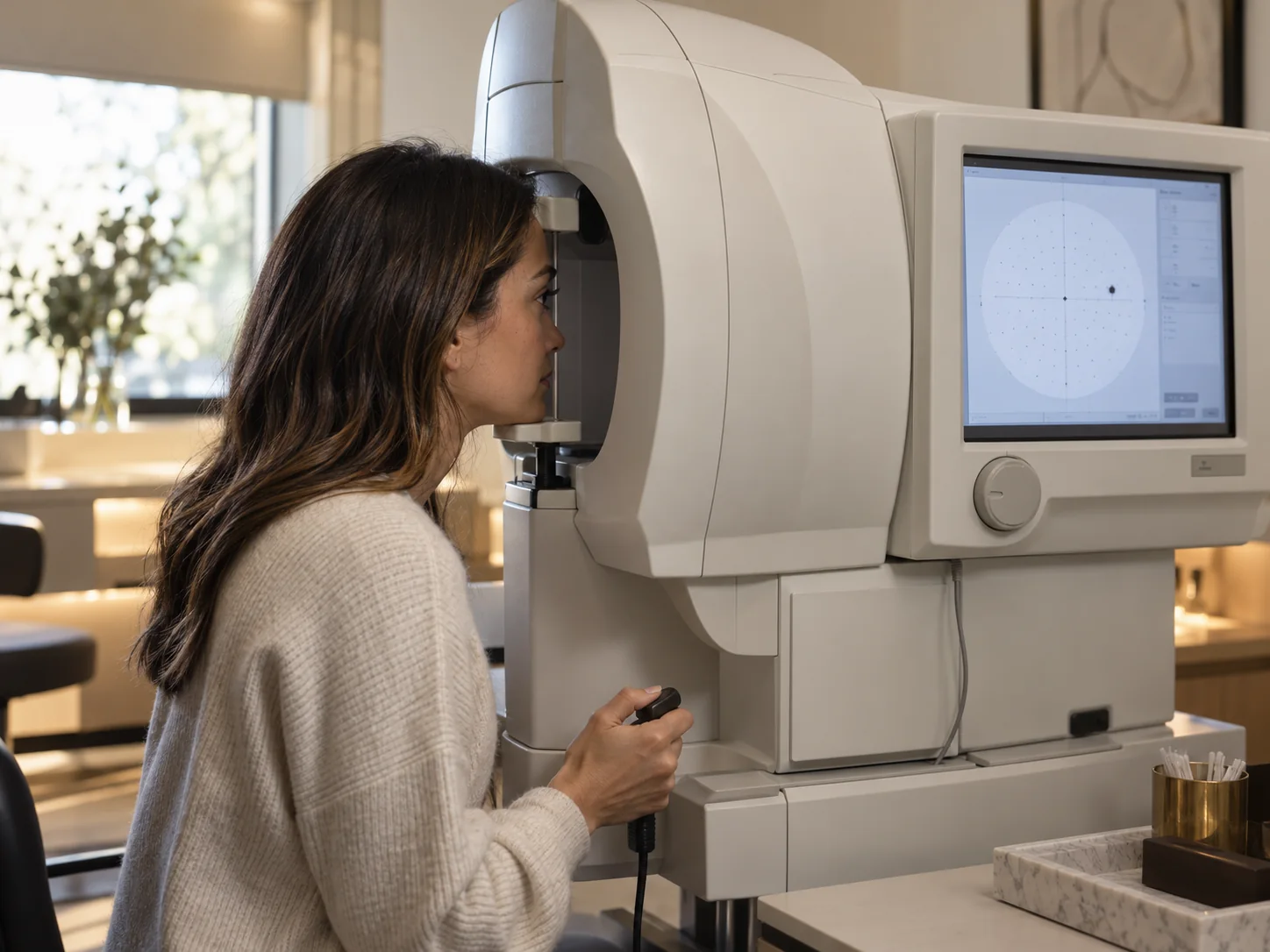
Call 310-828-2010, or 911 for stroke signs or sudden vision loss. Urgent cases are worked into the same day; when we're closed, go to an emergency room. In the urgent work-up, our eye doctors in Los Angeles use the slit lamp, pressure checks, dilation and imaging as your symptoms demand, including OCT scans and visual field tests when needed.
Many urgent problems, such as an eye infection, inflammation or something stuck in the eye, are treated here the same day. When you need a retina specialist or an ophthalmologist, we arrange the referral and send your records the same day.
09
Questions patients ask
Why is my vision blurry when I wake up?
Often the eye surface has dried out overnight, sometimes because the lids don't fully close during sleep, and that blur can clear within a few minutes of blinking; our article on waking up with crusty, irritated, blurry eyes explains. Another cause is Fuchs endothelial dystrophy, a condition of the cornea, the clear front of the eye. Its first symptom is typically blurred vision in the morning that usually clears during the day. New morning blur that doesn't clear needs an emergency room.
What does blurry vision with dizziness mean?
If both start suddenly, treat it as a possible stroke and call 911. If you have diabetes, low blood sugar is another cause to check right away. The CDC lists dizziness among its common symptoms, along with shaking, sweating and confusion, and says a severe low can cause trouble walking or seeing clearly. Blood sugar below 70 mg/dL is considered low. Check your level if you can, and treat a low the way your diabetes care plan directs.
Why do diabetics need annual dilated eye exams?
Because diabetic retinopathy, the damage high blood sugar does to blood vessels in the eye, may cause no symptoms in its early stages, and the sooner it is treated, the better treatment works. The CDC recommends a dilated eye exam at least once a year so your eye doctor can spot problems early. People with diabetes are also more likely to get cataracts, and at a younger age, and twice as likely to develop open-angle glaucoma. Our diabetic eye exams add retinal photography and OCT.
What is a corneal abrasion?
A corneal abrasion is a cut or scratch on the cornea, the clear front of the eye. Pain can range from mild discomfort to intense stabbing, and blurred vision, light sensitivity and uncontrolled watering can come with it. A foreign object lodged under the upper eyelid can scratch the cornea with every blink, so if something is stuck in your eye, don't rub it; call us and come straight in, or go to an emergency room when we're closed. The American Optometric Association says an optometrist should make the diagnosis. More on corneal abrasions.
10
Sources
- American Stroke Association: Stroke symptoms
- National Eye Institute: Uveitis
- National Eye Institute: Retinal detachment
- MedlinePlus: Eye injury
- MedlinePlus: Glaucoma
- CDC: Contact lens-related eye infections
- National Eye Institute: Dry eye
- American Optometric Association: Computer vision syndrome
- CDC: Vision loss and diabetes
- Poison Control: First aid
- National Eye Institute: Types of glaucoma
- National Institute of Neurological Disorders and Stroke: Migraine
- American Heart Association: Understanding blood pressure readings
- National Eye Institute: Corneal conditions
- CDC: Urgent maternal warning signs
- DailyMed: Topiramate label
- American Optometric Association: GLP-1 medications and your vision
- MedlinePlus Genetics: Fuchs endothelial dystrophy
- CDC: Low blood sugar
- American Optometric Association: Corneal abrasion

Written by
Dr. Kevin Cohenmehr, OD
Medical eye care: glaucoma, diabetic eye exams, macular degeneration and eye infections, plus vision therapy for children. A graduate of UCLA and SUNY College of Optometry.
About Dr. Kevin →