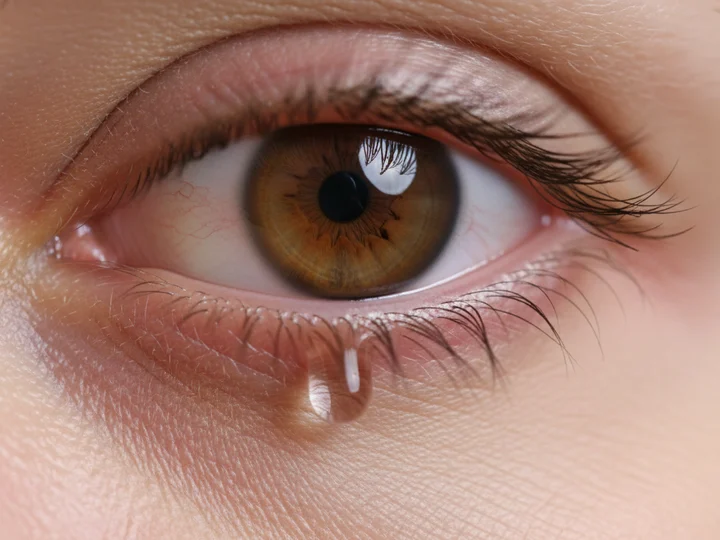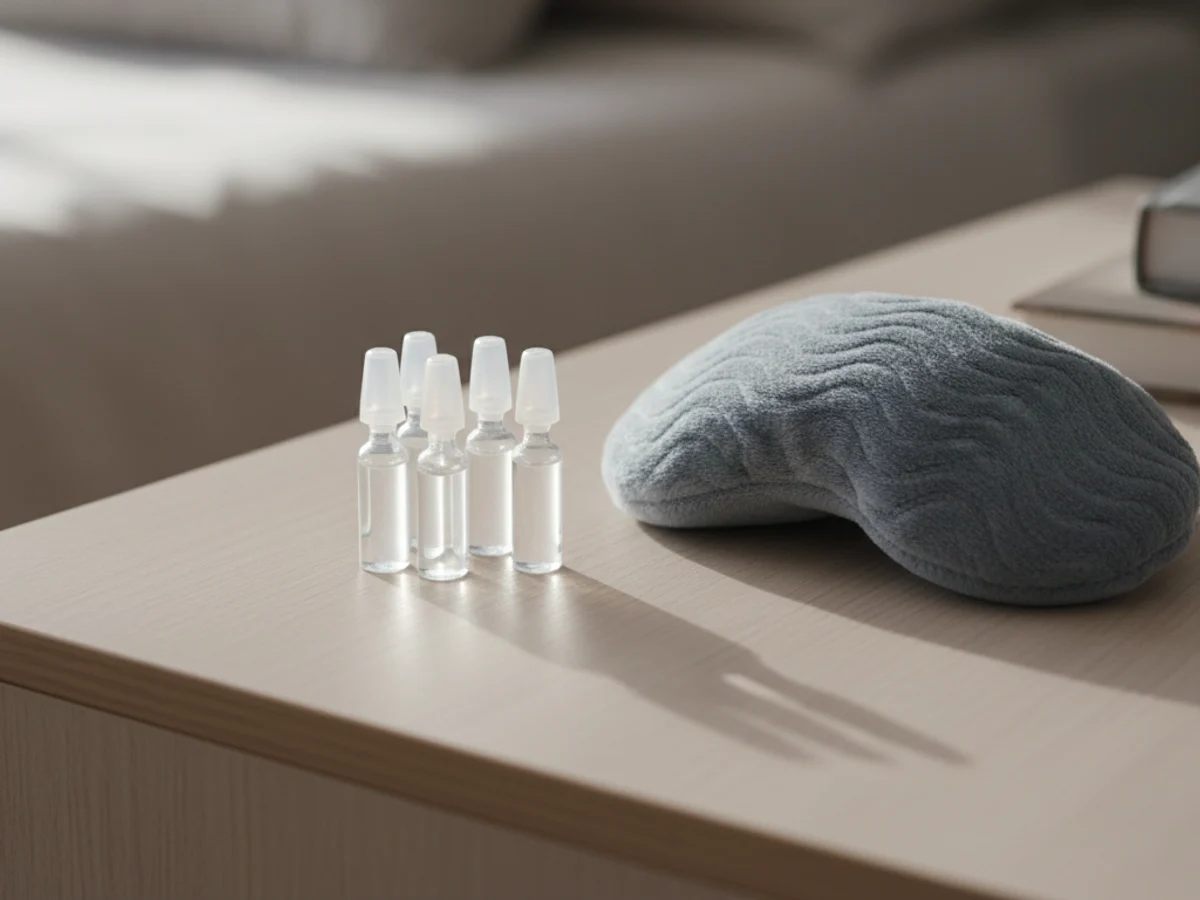
Dry eyes at night often have a few causes working together. Your eyelids may not close all the way (nocturnal lagophthalmos), and air from a fan or vent can dry whatever is left exposed. A long evening on screens, when you blink less, adds to it. The same causes explain dry eyes in the morning. An over-the-counter lubricating gel or ointment at bedtime may help, and keeping moving air off your face helps. If mornings still start dry, gritty or blurry, a dry eye evaluation can find out why.
Key takeaways
- Eyelids that don't close all the way, air from a fan or vent, and less blinking during evening screen time often combine to dry your eyes overnight.
- At bedtime, an over-the-counter lubricating gel or ointment may help, and so does pointing fans and vents away from the bed.
- If mornings keep starting dry, crusty or blurry, book a dry eye evaluation, where quick tests check how long your tears last after a blink.
- Call 911 if an eyelid suddenly won't close or one side of your face droops, because sudden face drooping is a warning sign of stroke.
01
Why do my eyes get dry at night?
Several things add up overnight. Eyelids that don't close all the way let the uncovered part of the eye dry out; in Bell's palsy, for example, difficulty closing one eyelid causes eye dryness. Blepharitis, an inflammation of the eyelids, can also show up as crusty eyelids or lashes when you wake up.
Evenings on screens make it worse. You may blink less while looking at a computer or tablet, which can lead to dry eye, so the eyes can already be dry by bedtime. Our page on screens and dry eye covers the blinking side of this.
02
Could your eyes be open while you sleep?
They might be, slightly. When the eyelids don't close all the way during sleep, it's called nocturnal lagophthalmos.
It shows up as dry eye: a scratchy feeling, stinging or burning, red eyes, light sensitivity and blurry vision. A partner may be the first to notice that your eyes stay slightly open.
One cause is weakness of the facial nerve, as in Bell's palsy, which makes one eyelid hard to close and leaves the eye dry. Eyelids that turn inward or outward can dry the eyes too, and so can lower eyelids that are too loose, which let tears drain too quickly. If an eyelid suddenly won't close, or one side of your face droops, call 911: sudden face drooping is a warning sign of stroke. Our lagophthalmos page and our article on crusty, irritated, blurry mornings explain how it's found.
If one eye is always worse in the morning, note which side you sleep on and mention it at your exam.
03
Can a fan or air conditioning dry out your eyes?
Yes. Windy, smoky or dry surroundings make tears dry up faster, and a ceiling fan, an air conditioner or a heating vent aimed at the bed keeps air moving across your face all night. The NEI suggests avoiding smoke, wind and air conditioning and using a humidifier to keep the air at home from getting too dry, so point vents away from the bed and turn off or redirect the fan.
The American Optometric Association's tips run the same way: raise the humidity at home and keep heated air from blowing into your eyes, for example by pointing car heaters away from your face. Our page on wind, weather and dry eye covers Santa Ana season and air conditioning.
CPAP masks
If you use a CPAP machine for sleep apnea and wake with dry or irritated eyes, tell your sleep doctor. Some masks cause irritation, and your provider can help you find the most comfortable mask that works for you.
04
Why are my eyes dry in the morning?
Dry eyes in the morning are often what the night left behind: a gap between the lids, air moving across your face or a loose lower lid. Other causes to rule out:
- Blepharitis, which can also start when the oil glands in your eyelids get clogged; our page on meibomian gland dysfunction covers those glands.
- Contact lenses, which make dry eye more likely. Sleeping in them also raises the risk of a lens-related eye infection six- to eightfold; if you wake with a painful, red eye after sleeping in lenses, take them out and get a same-day exam, or go to an emergency room when we're closed.
- Medicines, including some for colds and allergies, depression and high blood pressure, which can cause dry eye. Don't stop a prescribed medicine on your own; our page on medications that cause dry eye explains how we treat the eyes around it.
05
What helps dry eyes at night?
Start with a lubricant at bedtime. Besides artificial tears, there are over-the-counter moisturizing gels and ointments that may help your eyes feel better, and the American Optometric Association recommends preservative-free artificial tears, which have fewer additives that can irritate the eyes.
- Take screen breaks in the evening. The American Optometric Association suggests the 20-20-20 rule (every 20 minutes, look at something 20 feet away for 20 seconds) and blinking often.
- Take contact lenses out before bed unless your eye doctor has told you otherwise.
- If your lids don't close fully, ask your eye doctor how to protect the eye overnight; our lagophthalmos page describes night-time protection.
Our dry eye home care guide covers the daytime routine, including warm compresses and lid cleaning.
06
When should you see an eye doctor about dry eyes at night?
See an eye doctor if you think you might have dry eye, and especially if it gets in the way of everyday activities, as the National Eye Institute advises. Mornings that keep starting dry, crusty or blurry are a good reason to book a dry eye evaluation.
Common tests are quick. A tear breakup time test checks how long your tear film lasts after you blink, and a slit lamp, an eye microscope, shows whether your eyes are making enough tears.
Eye pain is different from dryness: pain on waking needs a same-day exam, or an emergency room when we're closed.
07
How we treat night-time dry eye at Cohenmehr Optometry
When mornings keep starting dry, crusty or blurry, our optometrists in Los Angeles look at the whole system: how well your lids close and how fully you blink, the tear film, and the meibomian glands, which we image with meibography.
Treatment depends on what we find:
- Night-time protection with a gel, an ointment or moisture protection while you sleep, plus prescription options, including autologous serum drops made from your own blood in select cases
- OptiLIFT, an FDA-cleared in-office treatment that combines muscle stimulation (DMST) with radiofrequency. The muscle stimulation strengthens the muscles that close the lids and blink, and it's often used for nocturnal lagophthalmos and weak, incomplete blinks
- IPL and gland expression when clogged oil glands are part of the problem
Bring every drop and medication you use to the visit, and tell us if anyone has seen your eyes open while you sleep.
08
Questions patients ask
Why do my eyes itch at night?
It may be an allergy. Allergic pink eye can make eyes itch, sometimes severely, triggers include dust mites, pollen, molds and pet dander, and it usually improves once the trigger is removed from your surroundings. Itchy, crusty eyelids that are worse on waking point instead to blepharitis, sometimes caused by Demodex mites.
Can dry eyes cause eye pain in the morning?
Dry eye can make your eyes sting, burn or feel scratchy, as if something is in them. Eye pain is a warning sign of its own: pain when you wake up, especially with blurry vision or light sensitivity, needs a same-day exam, where we check the cornea at the slit lamp. For severe pain with nausea, a headache or halos around lights, call us immediately. When we're closed, go to the emergency room for either kind of pain.
Can sleep apnea affect your eyes?
It can. Obstructive sleep apnea is strongly associated with floppy eyelid syndrome, in which a loose eyelid turns out easily and doesn't spring back to its normal shape on its own. It brings tearing, irritation, light sensitivity and a feeling that something is in the eye, which can be worse in the morning. Treating the apnea with CPAP can improve the eyelid and dry eye symptoms. Keratoconus and dry eye are related conditions, so it's worth having your eyes checked for both.
Can sleeping on your side affect your eyes?
It can if you have floppy eyelid syndrome, a common and often missed condition in which the eyelids are unusually loose. The looseness is usually worse on the side you sleep on, and tearing and irritation can be worse in the morning. StatPearls advises a sleeping position that doesn't disturb the eyelid during the night, which likely means not sleeping on your side or face down on the pillow. Care also starts with artificial tears and an ointment at night.
09
Sources
- National Eye Institute: Dry eye
- NINDS: Bell's palsy
- National Eye Institute: Blepharitis
- National Eye Institute: Causes of dry eye
- American Optometric Association: Dry eye
- American Stroke Association: Stroke symptoms and warning signs
- NHLBI: CPAP
- CDC (MMWR): Corneal infections associated with sleeping in contact lenses
- American Optometric Association: Computer vision syndrome
- CDC: Preventing eye infections when wearing contacts
- National Eye Institute: Testing for dry eye
- American Optometric Association: Conjunctivitis
- CDC: Pink eye causes and how it spreads
- CDC: How to treat pink eye
- StatPearls: Floppy eyelid syndrome

Written by
Dr. Bijan Cohenmehr, OD
Founder of Cohenmehr Optometry, in practice for over 40 years. He leads the practice’s dry eye care and myopia management. A graduate of SUNY College of Optometry.
About Dr. Bijan →