
Medically reviewed by Dr. Bijan Cohenmehr, OD Last reviewed
Medications That Cause Dry Eye
Sometimes the culprit is in the medicine cabinet.
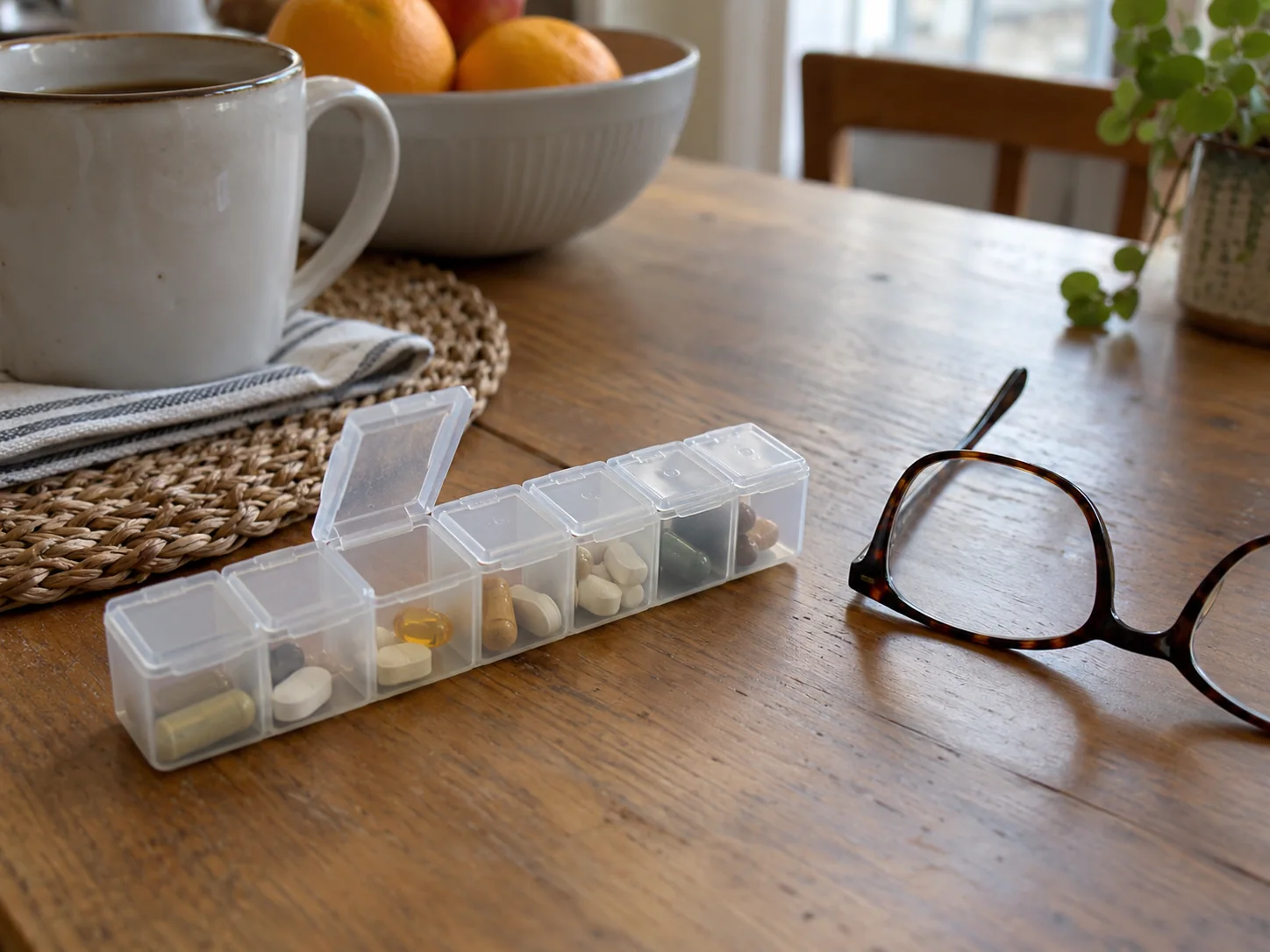
Plenty of excellent medications have one quiet side effect in common: drier eyes. Knowing which ones — and telling us what you take — often explains a dryness that drops alone never fixed. The goal is never to stop needed medicine; it is to treat the eyes with that medicine in the picture.
- Common culprits
- Allergy, mood, acne, BP medicines
- The mechanism
- Less tear volume or thinner oil
- Never
- Stop a medication on your own
- Instead
- Treat the glands around it
The usual suspects
Medicines that commonly dry the surface.
- Antihistamines & decongestants
Oral allergy pills (diphenhydramine, loratadine, cetirizine) and antihistamine drops are the heaviest hitters for tear volume; they quiet the lacrimal glands along with the sneeze.
- Antidepressants & anxiety medicines
Tricyclics and many SSRIs (amitriptyline, sertraline, fluoxetine) carry drying anticholinergic effects that build over long-term use.
- Blood-pressure medicines
Beta blockers (metoprolol, atenolol) dial down gland secretion; diuretics (hydrochlorothiazide) shrink fluid volume everywhere, tears included.
- Hormonal medicines
Oral contraceptives, hormone replacement and anti-androgen therapy shift the hormones that run the oil glands. The same axis is behind menopausal dry eye.
- Acne medication (isotretinoin)
Suppresses the meibomian glands directly and can change their structure lastingly — we image glands for patients on or after a course; Dr. Brandon has written about it in the journal. If your vision changes while you take it, its Medication Guide says to stop taking it and tell your prescriber right away.
- Anticholinergics across medicine
Bladder medicines (oxybutynin), motion-sickness patches (scopolamine) and some Parkinson’s and psychiatric drugs dry every secreting gland they meet.
The plan
Keep the medicine. Fix the eyes.
- 01
Bring the full list
The intake form asks about prescriptions, supplements and drops for a reason.
- 02
Image, don’t guess
Meibography shows whether glands are blocked, inflamed or thinning, so treatment matches the mechanism.
- 03
Treat around the medication
Preservative-free tears on a schedule, gland treatment like IPL or OptiLIFT when oil is failing, plugs when volume is low.
- 04
Coordinate, never cancel
If a medication seems central, our eye doctors in Los Angeles talk with your prescriber about options — changes are their call and yours, never a surprise.
Worth saying twice
Do not stop a prescribed medication over dry eyes.
- Dryness is manageable; untreated blood pressure or depression is not
- We treat the surface with your regimen in the picture
- Prescriber conversations happen with your consent, through proper channels
Medications & dry eye near you
12222 Wilshire Blvd, on the Santa Monica border.
Also consider
Next step
Suspect your medicine cabinet?
Bring the list. The evaluation reads your glands alongside it and builds a plan that keeps both your eyes and your treatment on track.