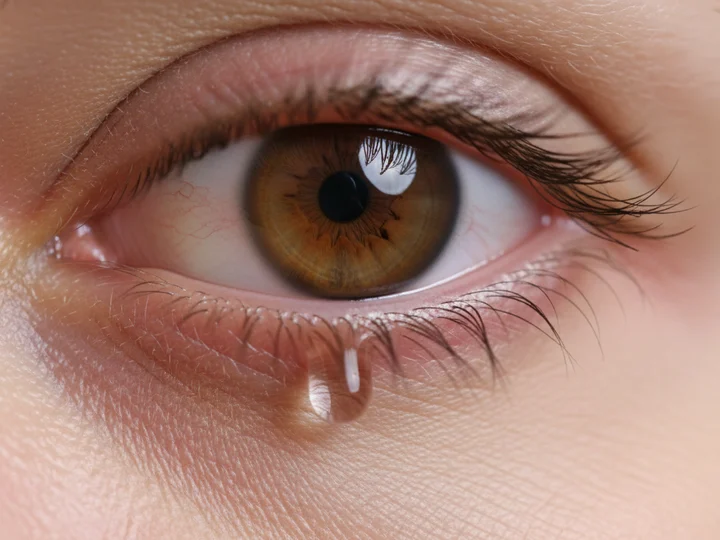
In Latisse's 4-month clinical trial, the most frequently reported side effects were itchy eyes, eye redness, darker eyelid skin, eye irritation, dry eyes and red eyelids, all in fewer than 4% of patients. Most show up in the eye or on the skin near the lash line. Two effects are worth discussing with your doctor before you start: Latisse can turn the colored part of the eye (the iris) browner, a change that is likely permanent, and it can interfere with some eye drops for high eye pressure. Latisse is bimatoprost 0.03%, a prescription treatment for hypotrichosis, the medical name for having inadequate or not enough eyelashes. It makes lashes longer, thicker and darker.
Key takeaways
- Itchy or red eyes, irritation, dryness and darker or red eyelid skin were reported most often in the 4-month trial, each in fewer than 4% of patients.
- Latisse can turn the colored part of the eye browner, a change that is likely permanent and can take months to years to notice.
- If you have glaucoma or use eye pressure drops, ask the eye doctor who checks your pressure before you start, since Latisse can interfere with some of them.
- A painful eye, or one that is very red or sensitive to light, needs a same-day exam, or an emergency room when we're closed.
01
What is Latisse, and how does it grow lashes?
Latisse is a prescription solution applied to the skin of the upper eyelid margin, at the base of the lashes, with the sterile applicators that come in the box. Its drug, bimatoprost, belongs to a class called prostaglandin analogs, which also includes eye drops that lower eye pressure.
Exactly how it grows lashes is unknown. The label says growth is believed to come from more hairs being in the growth phase, and for longer.
At a lower strength, 0.01%, bimatoprost is sold as Lumigan, a drop that lowers high eye pressure in open-angle glaucoma or ocular hypertension, which is eye pressure above the normal range without damage to the eye. Lumigan's label lists gradual eyelash changes, including longer, thicker and more numerous lashes, among its warnings.
Results build slowly: in the clinical study, half of patients saw a significant improvement by 2 months. Extra applications won't increase lash growth.
02
What are the side effects of Latisse?
Most of them show up on the skin near where Latisse is applied or in the eye itself.
| Side effect | What the label says |
|---|---|
| Itchy eyes, eye redness, darker eyelid skin, eye irritation, dry eyes, red eyelids | The most frequently reported in the 4-month trial, all in fewer than 4% of patients; eyelid darkening is expected to fade over several weeks to months after stopping |
| A browner iris | Seen in clinical trials; can take months to years to notice; likely permanent |
| Hair growth on nearby skin | Possible where the solution keeps touching the skin; blotting off excess lowers the chance |
| Uneven lashes between the eyes | Differences in length, thickness, color, number or direction are possible and usually go away after stopping |
Since approval, people have also reported dry or flaking skin around the eye, eyelid swelling, styes, local allergic reactions, rash, extra tearing, blurred vision, and temporary loss or breakage of lashes. These reports are voluntary, so their frequency can't always be reliably estimated.
03
Can Latisse change your eye color?
Yes. Bimatoprost has caused increased brown pigmentation of the iris, and the label says the change is likely to be permanent.
The change can be slow to appear, taking several months to years to become noticeable. Typically the brown around the pupil spreads outward until all or part of the iris looks browner. Freckles and spots on the iris don't appear to be affected.
The color comes from more melanin (pigment) in the iris's pigment cells. Its long-term effects aren't known, and the label allows treatment to continue if the iris darkens.
04
Can you use Latisse if you have glaucoma or high eye pressure?
Only if your eye doctor agrees and monitors your eye pressure. The label says that if you use Lumigan or another drop in the same class for high eye pressure, or have a history of abnormal eye pressure, you should use Latisse only under the close supervision of your physician.
Two findings explain the caution: in people using those drops, Latisse may interfere with how much they lower the pressure, and studies with Lumigan showed that more than one dose of bimatoprost a day may weaken its pressure-lowering effect. Latisse also lowered eye pressure in its own trials, though not by an amount that raised clinical concern, and the patient leaflet asks you to tell anyone who checks your eye pressure that you use it.
Other eye conditions call for caution too. Latisse may worsen active inflammation inside the eye, such as uveitis. Macular edema is swelling in the macula, the part of the eye that controls sharp, straight-ahead vision. It has been reported with bimatoprost drops for high eye pressure, so the label advises caution for people at risk of it, including some people who have had cataract surgery.
If you have glaucoma or ocular hypertension, or use any drop to lower eye pressure, ask the eye doctor who checks your pressure before you start, as the label advises. Our glaucoma testing and management page explains how we check eye pressure and the optic nerve at every comprehensive exam.
05
How do you apply Latisse safely?
Use it as prescribed, and only with the applicators in the box. The label's safety points:
- Start with a clean face, with makeup and contact lenses removed.
- Apply it only to the skin of the upper eyelid margin at the base of the lashes, never to the lower lash line.
- Blot any solution that runs past the lid margin with a tissue, which lowers the chance of hair growing on that skin.
- Use a new sterile applicator for each eye, throw it away after one use, and don't use any other brush. Reusing applicators raises the risk of contamination, and contaminated solutions or applicators can cause serious infections.
- Keep the bottle tip from touching your fingers or anything else.
- Wait 15 minutes before putting contact lenses back in. Latisse contains a preservative, benzalkonium chloride, that soft lenses can absorb and that can discolor them.
- If some gets into the eye itself, it isn't expected to cause harm, and you shouldn't rinse the eye.
Our page on makeup, lashes and dry eye covers removing eye makeup completely and keeping the lash line clean.
06
What happens when you stop using Latisse?
Your lashes are expected to return to their previous appearance over several weeks to months. In the clinical study, the effects had started to move back toward baseline during the 4 weeks after treatment ended.
Eyelid skin darkening is expected to fade over several weeks to months as well. Iris darkening is not expected to reverse.
07
When should you call an eye doctor about Latisse?
Ask your doctor right away whether to keep using Latisse if you develop a new eye problem such as an injury or infection, notice a sudden drop in vision, have eye surgery, or get a reaction in the eye or on the lids, especially conjunctivitis (pink eye). For some of these, get care first:
- Sudden loss of vision in one or both eyes, even if it comes back, sudden double vision, or any change in vision with face drooping, arm weakness or trouble speaking: call 911.
- A painful eye, an eye that is very red or sensitive to light, blurry vision while you wear contact lenses, or a blow to the eye that leaves pain or changed vision: call us at 310-828-2010 for a same-day exam during office hours (Monday 10 to 5, Tuesday through Friday 8 to 5), or go to an emergency room when we're closed. If you wear contact lenses, take them out first.
- Blurry vision that comes on suddenly, without the signs above: if it clears right away, call us and come in for an exam; if it doesn't clear, go to an emergency room.
Our urgent eye care page explains how same-day visits work.
08
How we look after lashes and lids at Cohenmehr Optometry
If your lids or lash line feel irritated, a lid evaluation checks the lash line and lid margins for the problems that lash and makeup routines can bring on, such as recurrent styes, blepharitis and Demodex overgrowth under lash extensions.
Our eye doctors in Los Angeles measure eye pressure at every comprehensive eye exam. Tell us if you use Latisse, as its label asks, and mention any other lash serum too.
09
Questions patients ask
Can Latisse cause a droopy eyelid?
It has been reported. Reports since approval include loss of fat and tighter skin around the eye, with a deeper upper lid crease and a drooping upper lid (ptosis); how often is unknown. A lid that droops suddenly needs a same-day exam: call us at 310-828-2010, or go to an emergency room when we're closed. Call 911 if it comes with a pupil that looks different, double vision, eye pain, a severe headache, face drooping, arm weakness or trouble speaking. Our ptosis page covers droopy lids.
Can Latisse cause dark circles under your eyes?
It can darken the skin near where it's applied. The label lists darker eyelid skin, which typically shows up close to where Latisse goes on, and reports since approval include discoloration of the skin around the eye. The label ties its instruction never to apply Latisse along the lower lash line to this risk, and it says to blot any solution that runs past the upper lid margin. The darkening has reversed after stopping in most patients and is expected to fade over several weeks to months.
Does Latisse work for everyone?
Not for everyone. By the end of Latisse's 4-month study of 278 adults, lashes had improved by at least one grade on a 4-point scale in 78% of the people using it, compared with 18% of those using an inactive solution. On average, the Latisse group's lashes grew 25% longer and 106% fuller, and got darker.
Is Latisse safe during pregnancy or breastfeeding?
There isn't enough research to say. The label notes there are no adequate, well-controlled studies of Latisse in pregnant women, although postmarketing experience with bimatoprost hasn't shown an increase in the risk of major birth defects or miscarriages. Because animal studies don't always predict the effect in people, the label says to use Latisse during pregnancy only if the potential benefit justifies the potential risk to the baby. It is also unknown whether enough is absorbed to show up in breast milk. Talk with your obstetrician or the doctor prescribing it before you start.
What is Upneeq?
Upneeq (oxymetazoline 0.1%) is a prescription eye drop for acquired blepharoptosis, an upper eyelid that has started to droop, in adults. It acts on Müller's muscle, a small muscle in the eyelid. Side effects seen in 1% to 5% of patients in its trials were tiny dry spots on the eye's surface (punctate keratitis), eye redness, dry eye, blurred vision, pain where the drop goes in, eye irritation and headache. We offer Upneeq after one of our doctors reviews your health questionnaire, or after an exam in the office.
10
Sources
- DailyMed: Latisse label
- DailyMed: Lumigan label
- American Optometric Association: Ocular hypertension
- National Eye Institute: Age-related macular degeneration
- American Stroke Association: Stroke symptoms
- DailyMed: Upneeq label
- NINDS: Cerebral aneurysms
- National Eye Institute: Corneal conditions
- CDC: Contact lens-related eye infections

Written by
Dr. Bijan Cohenmehr, OD
Founder of Cohenmehr Optometry, in practice for over 40 years. He leads the practice’s dry eye care and myopia management. A graduate of SUNY College of Optometry.
About Dr. Bijan →