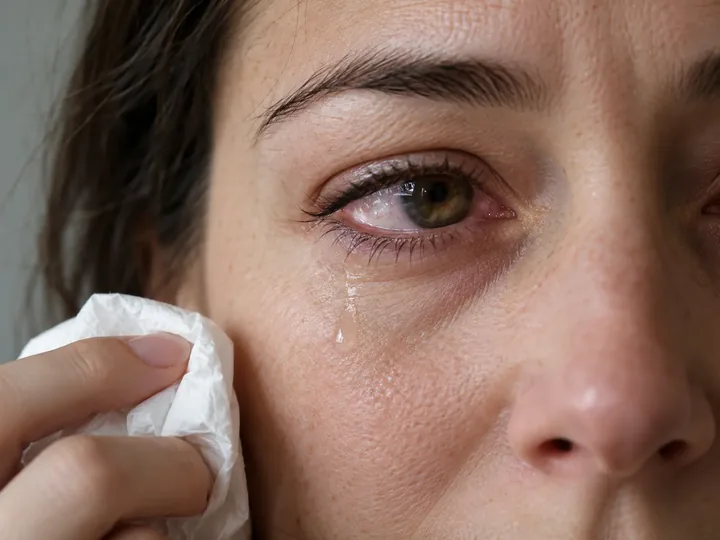
Several things that happen overnight can leave you with a headache in the morning. Headache is one of the symptoms of sleep apnea, clenching or grinding your teeth can strain the jaw joint and chewing muscles, and tension-type headache is the most common type of headache. The eyes can add to it. An eyelid that doesn't close all the way during sleep lets the front of the eye dry out, so the eye can feel sore and gritty right as the headache starts. Our optometrists in Los Angeles check the eyes for these causes, and for the teeth and jaw we work with our orthodontic partner, SC Orthodontics.
Key takeaways
- Morning headaches can come from sleep apnea, clenching or grinding your teeth at night, or a tension-type headache.
- An eyelid that does not close fully during sleep can leave the eye dry, gritty and sore on waking.
- Eye strain from an outdated prescription tends to bring headaches during close work later in the day.
- Severe eye pain with a headache, nausea or halos needs care right away, at our office during office hours or an emergency room when closed.
01
What causes a headache when you wake up?
Several causes start during the night, and each one leaves its own clues. This table sorts them by what you notice and who usually checks it.
| Possible cause | Clues when you wake up | Who checks it |
|---|---|---|
| Sleep apnea | Loud snoring, a headache | Your doctor or a sleep specialist |
| Clenching or grinding the teeth (bruxism) | A sore jaw or tired chewing muscles, sometimes clicking | A dentist or orthodontist |
| Tension-type headache | Head pain that comes with stress | Your doctor |
| Overusing pain relievers | Headaches that keep coming back | Your doctor |
| An eyelid that stays open in sleep | A dry, gritty, red or blurry eye | An eye doctor |
Frequent loud snoring and headache are both on the list of sleep apnea symptoms. With tension-type headache, emotional stress is an important trigger. And regular overuse of headache medicines can make headaches worse, which is worth raising with your doctor if you reach for a pain reliever most mornings.
02
Can your eyes cause a headache in the morning?
They can add to one, and the eye usually gives itself away. An eyelid that doesn't close fully is called lagophthalmos, and it leaves a strip of the eye uncovered all night. Trouble closing an eyelid causes eye dryness, and the lower part of the cornea (the clear front window of the eye) is the strip that dries: damage from lagophthalmos tends to show up on the lower cornea. Eye doctors call this drying injury exposure keratopathy.
Loose eyelids can cause a similar morning problem. Floppy eyelid syndrome is a loose eyelid that folds or flips easily, it has a strong association with obstructive sleep apnea, and its irritation often gets worse in the morning. A sore eye and a morning headache can share one root cause that way, since headache is also a sleep apnea symptom.
Eye strain runs on a different clock. Uncorrected refractive errors can cause headaches and eye strain, and with presbyopia (the age-related loss of near focus) the headaches come with close work. A headache from an outdated prescription tends to build through the day, so if yours is worst right after waking, look at the night first. Our article on eye strain headaches covers the daytime kind, and headache or pain behind the eye covers the other common patterns.
03
Why do my eyes hurt when I wake up?
Morning eye pain usually comes from the eye surface drying out or getting irritated overnight. Dry eye can feel scratchy, like something is in your eye, with burning, red eyes, light sensitivity or blurry vision. Blepharitis can leave crusty eyelids or eyelashes when you wake up.
Sleeping in contact lenses is its own risk: it raises the risk of a lens-related eye infection six- to eightfold. If you wear contacts and wake up with pain, redness, blurred vision, light sensitivity or a white spot on the cornea, take the lens out and call us right away at 310-828-2010 for a same-day exam, or go to an emergency room when we're closed.
For a lid that doesn't close at night, over-the-counter moisturizing gels and ointments may help your eyes feel better. Our guide to lagophthalmos and sleeping with your eyes open explains how we check lid closure and what else helps.
04
Could teeth grinding or your jaw be the cause?
It's worth ruling out, because jaw pain and eye pain can be hard to tell apart first thing in the morning. Temporomandibular disorders (TMDs), problems with the jaw joint and chewing muscles, can occur together with headaches. The most common sign is pain in the chewing muscles or the jaw joint, and that pain can spread to the face or neck.
We asked Dr. Shadi Haykani, DDS, a board-certified orthodontist and the founder of SC Orthodontics, our orthodontic partner, what she looks for. “Morning headaches and a sore jaw are something we see often,” she says. “Many people grind or clench at night without knowing it, and the teeth show it: flattened or chipped edges and tired jaw muscles on waking. A bite check tells us what's going on. If your eyes also hurt in the morning, see your eye doctor too, because an eyelid that doesn't close at night can feel like part of the same headache.”
SC Orthodontics offers a free consultation, and its page on TMJ and bruxism treatment explains what an orthodontic visit covers. A dentist may also suggest a mouth appliance, also known as a nightguard or bruxism splint, and reducing habits such as jaw clenching is a first step. Keep one finding in mind: research does not support the idea that a bad bite or braces cause TMDs, so a jaw exam looks at habits and muscles as well as the bite.
05
When is a morning headache an emergency?
A morning headache that comes and goes over weeks can wait for an appointment. These can't:
- A sudden, severe headache with no known cause, or any vision change with stroke signs such as face drooping, arm weakness or trouble speaking: call 911. A severe headache with no known cause is a stroke warning sign.
- Sudden loss of vision in one or both eyes, even if it comes back, or sudden double vision: call 911.
- Severe eye pain with a headache, nausea or halos around lights: call our office immediately at 310-828-2010 during office hours, or go to an emergency room when we're closed. These can be signs of angle-closure glaucoma, which is a medical emergency.
- A headache with a stiff neck, fever, confusion, or pain in the eye or ear: get medical help right away.
06
How we check morning eye pain at Cohenmehr Optometry
A comprehensive eye exam looks at the eye surface, the lids and the tear film, along with your glasses prescription. When dryness is the cause, our dry eye center tests the tear film and the oil glands and builds a treatment plan.
When the lids don't close well at night, treatment can start with nighttime gels or ointments, and some patients do well with OptiLIFT for poor eyelid closure or a scleral lens. If the clues point to your teeth, jaw or sleep instead, we'll tell you who to see. Our eye symptom guide sorts other symptoms by what they usually mean.
07
Questions patients ask
Can sleep apnea cause headaches?
Yes. Headache is on the list of sleep apnea symptoms, along with frequent loud snoring. Sleep apnea also has a strong association with floppy eyelid syndrome, a loose eyelid that can leave the eye irritated in the morning. If you snore loudly and wake up with headaches, ask your doctor about a sleep evaluation, and have your eyes checked if they're red or gritty when you wake up.
Can TMJ cause eye pain?
It can feel that way. Pain from a TMD can spread to the face or neck, so jaw pain is sometimes felt near the eye. An eye that is red, sensitive to light or blurry when you wake up points to the eye itself and needs an eye exam. Severe eye pain with a headache, nausea or halos needs care right away: call our office during office hours, or go to an emergency room when we're closed.
Can teeth grinding cause headaches?
It can contribute. Jaw joint and muscle disorders can occur together with headaches, and clenching is one of the habits to cut back on. A dentist or orthodontist can look for signs of grinding, and a mouth appliance may help with clenching. Stop using an appliance and consult your dentist or doctor if it causes pain.
What does a TMJ headache feel like?
The most common sign of a TMD is pain in the chewing muscles or the jaw joint, which can spread to the face or neck, along with jaw stiffness, a jaw that locks or won't open fully, and painful clicking or popping when the mouth opens or closes. A headache that comes with those jaw signs points toward the jaw. One that comes with a red, sore eye points toward the eyes.
08
Sources
- National Institute of Neurological Disorders and Stroke: Headache
- National Heart, Lung, and Blood Institute: Sleep apnea symptoms
- National Institute of Dental and Craniofacial Research: TMD (temporomandibular disorders)
- NINDS: Bell's palsy
- Indian Journal of Ophthalmology, 2021: Thygeson's superficial punctate keratopathy, a review and case series
- StatPearls: Floppy eyelid syndrome
- National Eye Institute: Refractive errors
- American Optometric Association: Presbyopia
- National Eye Institute: Dry eye
- National Eye Institute: Blepharitis
- CDC: Corneal infections and sleeping in contact lenses (MMWR, 2018)
- American Stroke Association: Stroke symptoms
- National Eye Institute: Types of glaucoma
- MedlinePlus: Headache

Written by
Dr. Bijan Cohenmehr, OD
Founder of Cohenmehr Optometry, in practice for over 40 years. He leads the practice’s dry eye care and myopia management. A graduate of SUNY College of Optometry.
About Dr. Bijan →