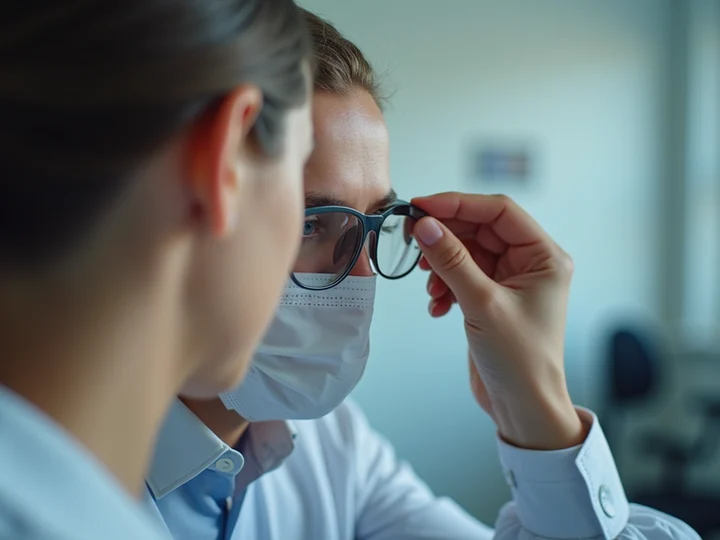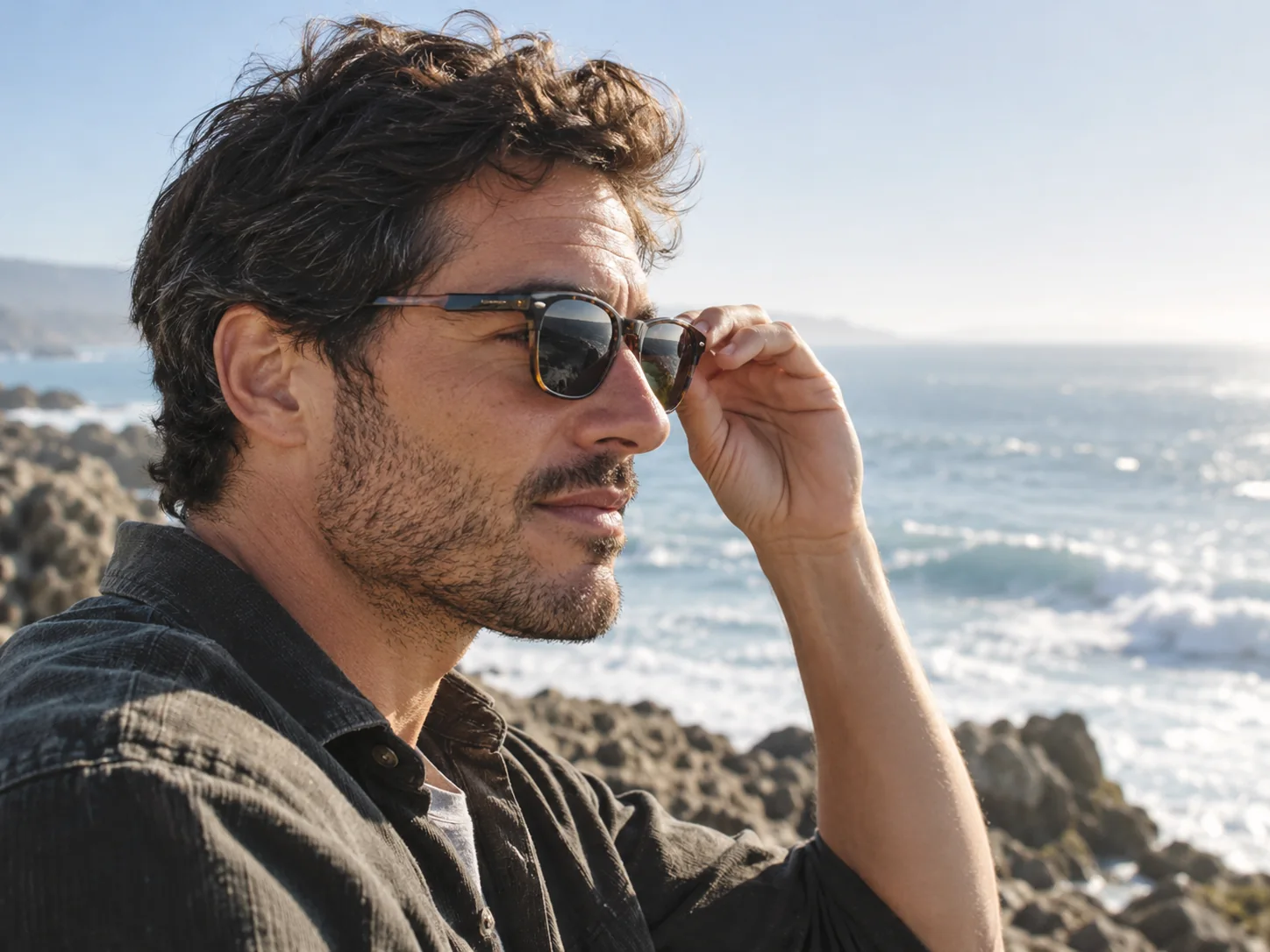
Photochromic lenses are eyeglass lenses that darken in sunlight and clear again indoors, so one pair works as your everyday glasses and your sunglasses. Many people call them transition lenses, after a brand name. They suit people who go in and out all day and children who play outdoors. Their limits are practical: many darken only a little behind a car windshield, and for long hours on water or snow, sunglasses made for those conditions usually do more. Whatever you choose, make sure the lenses are rated UV400 or 100% UV protection, because the darkness of a lens doesn't tell you how well it blocks UV.
Key takeaways
- Transition lenses darken because light-sensitive molecules change shape in ultraviolet light, and they clear when the molecules return to normal out of the sun.
- Photochromic lenses suit people who go in and out all day, but windshields filter much of the UV that darkens them, so many stay light in the car.
- Ask for a UV400 or 100% UV protection rating, because tinted lenses widen your pupils and, without that protection, can let more UV reach the retina.
- If your central vision looks gray or fuzzy after looking at the sun, call us for a same-day visit, or an emergency room when we're closed.
01
What are photochromic lenses?
Photochromic lenses look clear or nearly clear indoors, turn darker outdoors and fade back when you come inside. They can be made in your prescription, so on ordinary days they can stand in for a separate pair of prescription sunglasses.
Transitions is a brand name, but 'transition lenses' has become the everyday term for any lens that changes with light; the American Optometric Association (AOA) uses it too.
02
How do transition lenses work?
The lenses contain light-sensitive molecules that change shape when ultraviolet (UV) light reaches them, which makes the lens absorb more visible light and look darker. Out of the sun, the molecules return to their original shape and the lens clears.
Because UV drives the change, the lenses darken more in strong sun and less in shade. Most of the UV you're exposed to is UVA, and it can reach your eyes even under cloud cover, so the lenses can tint on an overcast day too.
03
Do photochromic lenses block UV?
They can, and the UV rating is what tells you. The FDA advises choosing sunglasses with a UV400 rating or '100% UV protection' on the label, which block more than 99% of UVA and UVB; for prescription photochromic lenses, ask for the same rating when you order. If you're unsure about a pair you already own, your eye care professional may be able to check it.
A tinted lens without UV protection can do harm, because tinted glasses make your pupils dilate, which can increase the UV reaching your retinas. Steady protection matters even more if you take a medicine that raises your sensitivity to UV; the FDA lists certain antibiotics and birth control pills among them.
The damage adds up over time. The longer your eyes are exposed to solar radiation, the greater the risk of cataracts, eye cancer, pterygium (surfer's eye, a growth on the white of the eye) and macular degeneration later in life. Everyone is at risk year-round, and MedlinePlus advises regular use of sunglasses that block at least 99% of UV rays.
04
What are the pros and cons of photochromic lenses?
The main advantage is convenience. One pair covers the office and the parking lot, and if the lenses are rated UV400 or 100% UV protection, you're covered for UV outdoors without a second pair to remember. They make the most sense for:
- People who go in and out all day for work or errands
- Children and teens who wear glasses and play outside
- Anyone who keeps leaving their sunglasses behind
The drawbacks come down to darkness and timing. Many photochromic lenses stay lighter in the car, they take a little time to clear when you walk inside, and on bright water or snow they may not get as dark as sunglasses made for those conditions.
05
Do transition lenses work in the car?
Not very well, for most lenses. Car windshields filter much of the UV that triggers them, so in the driver's seat many photochromic lenses stay much lighter than they would outdoors.
That gap matters because daytime driving has its own glare problem: the AOA points to sun reflecting off windshields and pavement during the day. If you drive a lot by day, a dedicated pair of prescription sunglasses is more dependable in the car. Polarized lenses cut the reflected glare drivers notice, and California's driver handbook recommends polarized sunglasses for sun glare. Our optical makes prescription sunglasses in your exact prescription.
06
Photochromic lenses vs sunglasses: which do you need?
For everyday errands, photochromic lenses are the more convenient choice; for long, bright hours outdoors, sunglasses built for the job do more. The AOA's standard for sunglasses is lenses that block 100% of UVA and UVB, screen out 75 to 90% of visible light and are gray for proper color recognition.
| Situation | Photochromic lenses | Prescription sunglasses |
|---|---|---|
| Indoors | Clear or nearly clear | Too dark to wear |
| In and out all day | Adjust on their own | Need swapping with your clear pair |
| Driving by day | Often stay light behind the windshield | Fully tinted, and polarized options cut road glare |
| Long hours on water, sand or snow | May not get dark enough | Can be dark, polarized and wraparound |
UV exposure is also greater around snow, sand, pavement and water because those surfaces reflect it, and sunglasses rated for 100% UV protection plus a wide-brim hat help against that reflected UV. Wraparound frames may add protection by covering the whole eye socket. For sports, the AOA recommends polycarbonate or Trivex lenses in sunglasses used for eye-hazardous outdoor activities.
07
Are photochromic lenses good for children?
They can be, especially for kids who already wear glasses and spend recess and practice outdoors. The AOA lists transition lenses alongside UV-protection grade sunglasses as a way to protect children's eyes from UV during outdoor sports, and children and teens typically spend more time in the sun than adults.
Check the UV rating on any child's eyewear: the FDA says children's sunglasses should state their UV protection level, and toy sunglasses may not have UV protection. For basketball, soccer and racquet sports, the National Eye Institute recommends sports goggles with polycarbonate lenses, and the AOA notes that regular prescription eyeglasses or contact lenses are not a substitute for appropriate, well-fitted protective eyewear.
08
Glasses and sunglasses at Cohenmehr Optometry
Your exam sets the prescription for whatever lenses you choose, and it's a good time to talk through how much of your day is spent outdoors and behind the wheel. In our optical boutique, experienced opticians help you choose frames that suit your features and lifestyle, and a dispensing-grade pupillary distance measurement is part of every glasses fitting.
For sunglasses, the optical at our eye clinic in Los Angeles builds sunwear in your exact prescription, polarized options included, so you keep your clarity outdoors.
09
Questions patients ask
Are photochromic lenses polarized?
Not automatically. Darkening in sunlight and polarization are separate features: polarized lenses filter glare reflected off water, roads and windshields, while photochromic lenses change how dark they are. Some lenses combine both, so ask which you're getting. Either way, ask for a UV400 or 100% UV protection rating.
Are expensive sunglasses better for your eyes?
Not when it comes to UV. The FDA points out that pricier sunglasses don't ensure greater UV protection; the UV400 or 100% UV protection label is what counts. Beyond UV, the AOA's standard asks for lenses that are perfectly matched in color and free of distortion and imperfection, and a frame that covers your eyes well. The same checks apply to photochromic lenses, whatever they cost.
Can you wear transition lenses at night?
Only once they have cleared completely. After a sunny day, check that they look fully clear before you drive after dark, because any tint left in the lens takes away light you need at night; if yours still look tinted indoors, wear a clear pair for night driving. If headlights bother you even through clear lenses, our guide to night vision and glare covers the usual causes.
Can you look at a solar eclipse through photochromic lenses?
No. Looking directly at the sun during a solar eclipse is unsafe and can cause temporary or even permanent damage to your eyes. Even very dark glasses can't protect your eyes when you look straight at the sun, so photochromic lenses and regular sunglasses won't either; use special-purpose solar filters that meet the ISO 12312-2 standard. If your central vision looks gray or fuzzy after looking at the sun, call us for a same-day visit, or go to an emergency room when we're closed.
10
Sources
- FDA: Tips to stay safe in the sun
- AOA: School-aged vision
- FDA: Ultraviolet radiation
- AOA: UV protection
- MedlinePlus: Eyewear
- AOA: Adult vision, 41 to 60 years of age
- California DMV: Driver handbook, safe driving
- National Eye Institute: Protective eyewear
- AOA: Solar eclipses and eye safety
- National Eye Institute: Safely viewing a solar eclipse

Written by
Dr. Bijan Cohenmehr, OD
Founder of Cohenmehr Optometry, in practice for over 40 years. He leads the practice’s dry eye care and myopia management. A graduate of SUNY College of Optometry.
About Dr. Bijan →