Hypertensive retinopathy is damage to the retina's small blood vessels caused by high blood pressure. (The retina is the light-sensitive tissue at the back of the eye.) Without blood flow to the retina, vision can blur or be lost completely, and managing blood pressure is the only way to treat the condition. High blood pressure usually doesn't cause symptoms until it has caused serious problems, which is why a dilated eye exam matters. If your blood pressure is higher than 180/120 and your vision changes, call 911. Sudden loss of vision, even if it comes back, is also a reason to call 911.
Key takeaways
- High blood pressure can damage tiny blood vessels in the retina, the light-sensitive tissue at the back of the eye, and vision can then blur or be lost.
- Most people with high blood pressure need a dilated eye exam at least once a year, since it usually causes no symptoms until it has caused serious problems.
- Managing blood pressure is the only way to treat this eye damage, so take blood pressure medicine as prescribed and don't stop it without asking your doctor.
- Call 911 if your blood pressure is higher than 180/120 and your vision changes, or for sudden vision loss, even if it comes back.
01
What is hypertensive retinopathy?
It is eye damage that builds up when blood pressure stays high. Blood vessels in the eyes can get strained or damaged, and in most cases damage from high blood pressure happens over time. The retina, the thin, light-sensitive tissue at the back of your eye, senses light and sends signals to your brain so you can see.
High blood pressure can harm the many tiny blood vessels in your eyes, and people with both diabetes and high blood pressure are at greater risk for hypertensive retinopathy. If you have diabetes too, the yearly diabetic eye exam includes a dilated look at the same retina.
02
What are the symptoms of hypertensive retinopathy?
You may notice nothing. High blood pressure usually has no signs or symptoms, so many people don't know they have it, and it usually doesn't cause symptoms until it has also caused serious problems.
When high blood pressure does harm the eyes, the American Heart Association lists these effects on vision.
- Blurred vision, or complete loss of sight, when the retina loses its blood flow
- Distorted vision, or scars that harm vision, when fluid builds up under the retina (choroidopathy)
- Vision loss when blocked blood flow damages the optic nerve, which connects the eye to the brain (optic neuropathy)
A dilated eye exam is the only way to check for eye diseases early, when they're easier to treat and before they cause vision loss.
03
How does high blood pressure affect your eyes?
High blood pressure can damage the retina's blood vessels, let fluid build up under the retina, cut off blood flow to the optic nerve, and raise the risk of a blocked retinal vein or a stroke.
| Problem | What happens | Possible effect on vision |
|---|---|---|
| Hypertensive retinopathy | High blood pressure damages the tiny blood vessels of the retina | Blurred vision or loss of sight |
| Choroidopathy | Fluid builds up under the retina | Distorted vision, or scars that harm vision |
| Optic neuropathy | Blocked blood flow damages the optic nerve and can kill nerve cells | Vision loss |
| Central retinal vein occlusion | A blood clot blocks the main vein that carries blood out of the retina; high blood pressure is a risk factor | Often blurry vision, sometimes sudden vision loss, usually in one eye |
| Stroke | High blood pressure can cause a stroke, which can damage the optic nerve or the part of the brain that processes images | Blurred vision, double vision or loss of sight |
Stroke warning signs include blurred vision, double vision or loss of sight in one or both eyes. A blocked artery in the retina is a stroke in the eye: sudden, total vision loss in one eye may signal one, and it means calling 911. Because it strongly predicts future heart attacks and strokes, an American Heart Association News report says people should be screened afterward for risk factors such as high blood pressure.
04
What blood pressure numbers are too high?
Readings that stay at or above 130/80 count as high blood pressure, and anything higher than 180/120 is in the American Heart Association's most serious category. The top number (systolic) is the pressure of your blood against your artery walls when the heart beats; the bottom number (diastolic) is the pressure while the heart muscle rests between beats.
| Category | Top number (systolic) | And/or | Bottom number (diastolic) |
|---|---|---|---|
| Normal | Less than 120 | and | Less than 80 |
| Elevated | 120 to 129 | and | Less than 80 |
| Stage 1 hypertension | 130 to 139 | or | 80 to 89 |
| Stage 2 hypertension | 140 or higher | or | 90 or higher |
| Severe hypertension, or a hypertensive emergency when symptoms are present | Higher than 180 | and/or | Higher than 120 |
Outside of pregnancy, the American Heart Association calls a reading higher than 180/120 without symptoms of organ damage severe hypertension; with symptoms, it is a hypertensive emergency.
05
When is high blood pressure with vision changes an emergency?
It's an emergency when your reading is higher than 180/120 and you have symptoms. Call 911 if your blood pressure is higher than 180/120 and you have symptoms that may include chest pain, shortness of breath, back pain, numbness, weakness, a change in vision or difficulty speaking, and don't wait to see whether it comes down on its own. The National Heart, Lung, and Blood Institute also lists a sudden, severe headache.
If a reading is higher than 180/120 and you feel fine, wait at least 1 minute and take it again. If it's still that high and you have no symptoms, the American Heart Association says you likely have severe hypertension, which usually does not need a hospital stay: contact your health care professional as soon as possible.
Whatever your blood pressure, call 911 for:
- Sudden loss or dimming of vision in one or both eyes, even if it comes back
- Sudden double vision, or double vision or a droopy eyelid that comes with a pupil that looks different, eye pain or a severe headache
- Any change in vision with face drooping, arm weakness or trouble speaking, or a sudden severe headache with no known cause
These can be signs of a stroke, and the American Stroke Association says to call 911 even if the symptoms go away.
Call us right away at 310-828-2010 for a same-day exam, or go to an emergency room when we're closed, for a dark curtain or shadow over part of your vision, new flashes of light, a shower of new floaters or any other sudden change in your vision that isn't on the 911 list above. For sudden blur, go to an emergency room if it doesn't clear, or call us and come in for an exam if it clears right away. MedlinePlus advises getting medical care right away for flashes of light, sudden vision changes or a sudden increase in floaters. If your vision changes suddenly and you have a home monitor, check your blood pressure: with a reading higher than 180/120, call 911 instead. Our office hours are Monday 10 to 5 and Tuesday through Friday 8 to 5, and we're closed Saturday and Sunday; read more about same-day urgent visits.
06
Can an eye exam detect high blood pressure?
It can show what high blood pressure has done to the eye. During the eye health part of a comprehensive exam, which often includes dilating drops, a doctor of optometry can find eye diseases and systemic diseases (conditions that affect the whole body) you didn't know you had. High blood pressure itself is diagnosed with a blood pressure cuff, and your provider takes two or more readings at separate appointments before making the diagnosis.
If we see changes in the retina's blood vessels, we explain what we found and what it means for your eyes. Your blood pressure is treated by your primary care doctor or another health care professional, and the only way to know whether you have high blood pressure is to measure it regularly.
07
How is hypertensive retinopathy treated?
By treating the blood pressure: managing it is the only way to treat hypertensive retinopathy. Treatment for high blood pressure includes heart-healthy lifestyle changes and medicines, and some people need more than one type of medicine.
For stage 1 hypertension, the American Heart Association says your health care professional should prescribe lifestyle changes, may add medication based on your risk of heart disease or stroke, and should add it if you have conditions such as diabetes, heart failure or kidney disease. For stage 2, the AHA calls for blood pressure medication and lifestyle changes. Take blood pressure medicine as prescribed, and don't stop it without talking to the doctor who prescribed it.
Some eye complications need their own treatment. When a blocked retinal vein causes swelling, anti-VEGF injections can reduce and prevent macular edema (swelling in the center of the retina), steroid medicines can also help with swelling, and severe cases may need laser treatment. Retina specialists give these treatments, and we coordinate referrals with them when specialized care is needed.
08
How we check for hypertensive retinopathy at Cohenmehr Optometry
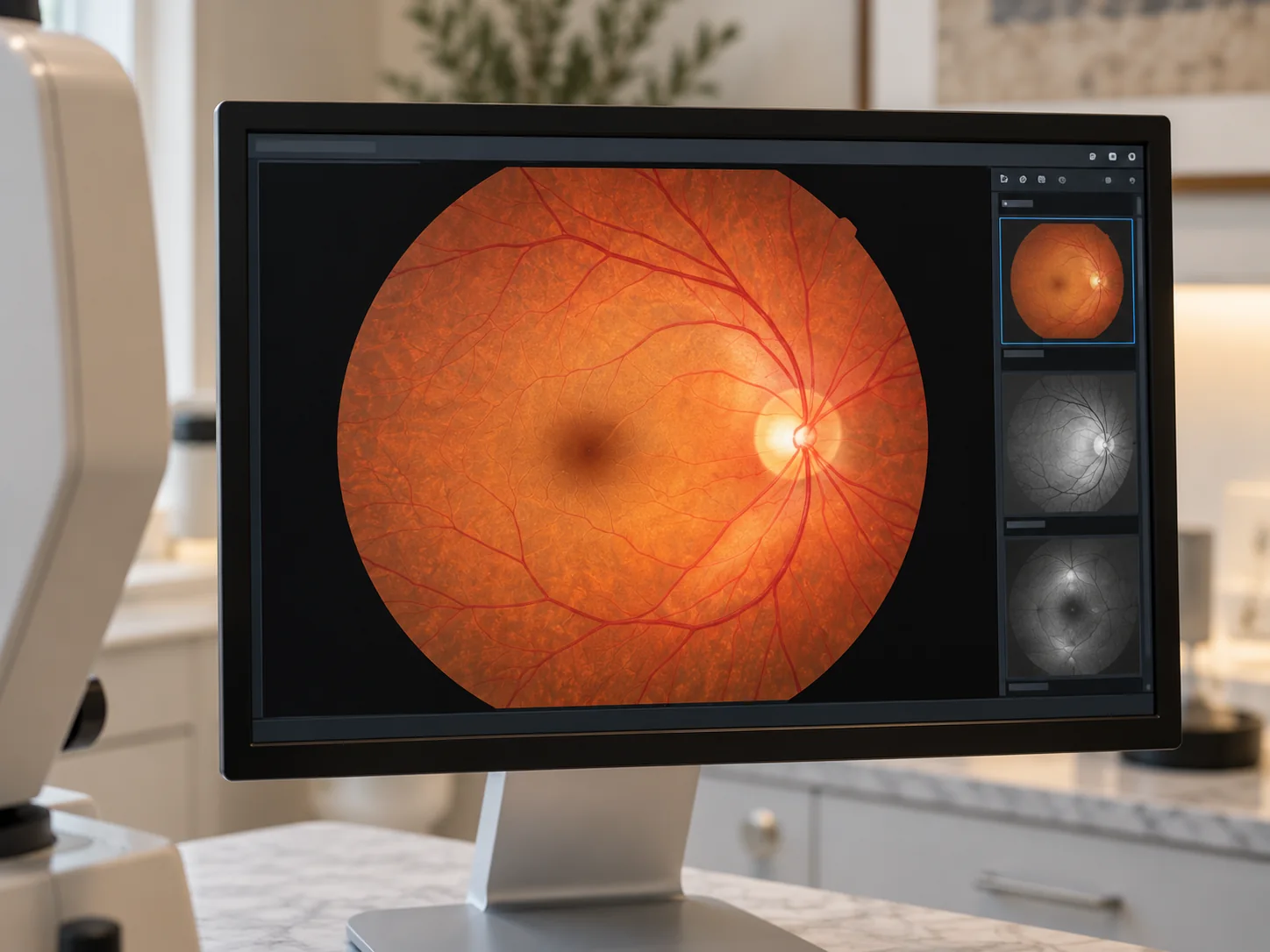
Dr. Kevin Cohenmehr leads medical eye care at our office. Every comprehensive eye exam includes a view of the retina, macula and blood vessels, by dilation or wide-field imaging, and we evaluate vascular retinal disease with retinal photography and with OCT scans that detect swelling, thinning or structural change.
Those images become a baseline: our eye doctors in Los Angeles compare a later exam against them, so change is caught while it's still subtle. Read more about our glaucoma and ocular disease care and the imaging we use.
09
Questions patients ask
Is high eye pressure the same as high blood pressure?
No. Eye pressure is the pressure inside the eye, measured during an eye exam. Many people with glaucoma have high eye pressure, and treatments that lower eye pressure help slow the disease. Blood pressure is the force of your blood pushing against the walls of your arteries, measured with a cuff. Our page on ocular hypertension explains high eye pressure.
How often should you get an eye exam if you have high blood pressure?
At least once a year for most people. The National Eye Institute says most people with diabetes or high blood pressure need a dilated eye exam at least once a year, and to ask your doctor how often you need one. The American Optometric Association also recommends an exam at least once a year, or as recommended, for adults with general health conditions that can affect the eyes.
Should I worry about blurry vision and a headache?
Yes, when they're sudden or your blood pressure is very high. With blood pressure above 180/120, a sudden, severe headache or sudden vision change means calling 911. A sudden severe headache with no known cause, or blur with face drooping, arm weakness or trouble speaking, can mean a stroke: call 911. Sudden blur alone that doesn't clear needs an emergency room; if it clears right away, call us and come in for an exam. Slowly building blur and headaches can mean a refractive error that glasses or contacts correct.
Can high blood pressure cause glaucoma?
It may raise the risk. The American Heart Association says high blood pressure may increase the risk of eye conditions such as glaucoma and macular degeneration. The National Eye Institute names people over 60 (especially Hispanic/Latino adults), African American adults over 40 and anyone with a family history as being at higher risk for glaucoma. It usually has no symptoms at first, and a comprehensive dilated eye exam is the only way to find it.
10
Sources
- American Stroke Association: Stroke symptoms
- MedlinePlus: Retinal disorders
- National Eye Institute: Glaucoma
- American Heart Association: How high blood pressure can lead to vision loss
- American Heart Association: Health threats from high blood pressure
- American Heart Association: When to call 911 about high blood pressure
- American Heart Association: Understanding blood pressure readings
- American Heart Association News: The brain isn't the only place a stroke can occur
- National Heart, Lung, and Blood Institute: High blood pressure symptoms
- CDC: About high blood pressure
- MedlinePlus: High blood pressure
- National Eye Institute: Central retinal vein occlusion
- National Eye Institute: Get a dilated eye exam
- American Optometric Association: Comprehensive eye exams
- National Eye Institute: Refractive errors

Written by
Dr. Kevin Cohenmehr, OD
Medical eye care: glaucoma, diabetic eye exams, macular degeneration and eye infections, plus vision therapy for children. A graduate of UCLA and SUNY College of Optometry.
About Dr. Kevin →