An eye stroke happens when blood flow is blocked to the main artery of the eye, and it typically causes painless, immediate vision loss in that eye. The blockage cuts off blood to the retina, the light-sensitive layer of tissue in the back of the eye. Treat it like a brain stroke: call 911 for sudden loss of vision in one or both eyes, even if it comes back, and don't wait for an eye appointment. The American Heart Association calls eye strokes a warning of future brain strokes.
Key takeaways
- In an eye stroke, a blocked artery cuts off blood to the retina, and the main symptom is sudden, painless loss of vision in one eye.
- The clot-dissolving drug tPA has to be given within 4.5 hours of the first symptom to be most effective and safe, so note when your vision changed.
- Brain stroke risk rises after an eye stroke, fastest in the first weeks, so keep up with your medical follow-up.
- Call 911 for sudden loss of vision in one or both eyes, even if it comes back, and don't drive yourself or wait for an eye appointment.
01
What is an eye stroke?
Eye stroke usually means a central retinal artery occlusion (CRAO), a form of stroke in which blood flow is blocked to the main artery of the eye. The American Heart Association and American Stroke Association define stroke as a blocked blood supply to the brain, spinal cord or retina that causes cell death.
An eye stroke typically happens when plaque that has built up in a carotid artery, one of the large arteries in the neck, breaks loose and travels to the retina. There is also evidence that heart problems such as atrial fibrillation, an irregular heart rhythm, can cause one.
Eye strokes are less common than strokes in the brain. A related problem, central retinal vein occlusion (CRVO), happens when a blood clot blocks the main vein where blood flows out of the retina, and it usually affects only one eye.
02
What are eye stroke symptoms?
The main symptom is sudden, painless loss of vision in one eye. Total vision loss in that eye is typical, but some people lose only part of their vision and may still be able to see light or motion.
Vision that dims in one eye and then returns can also come from a clot, a problem doctors call amaurosis fugax. It still needs emergency care: the American Stroke Association says to call 911 even if the symptoms go away.
A central retinal vein occlusion often causes blurry vision, and it can cause sudden vision loss. A more severe one can cause pain or redness in the eye, and some people have no symptoms at all.
03
What should you do about sudden vision loss in one eye?
Call 911 right away, even if your vision comes back. Sudden loss of sight in one or both eyes is a stroke warning sign, and the American Stroke Association says to call 911 even if the symptoms go away. The American Heart Association advises that anyone diagnosed with a central retinal artery occlusion in a doctor's office be sent immediately to a hospital emergency department.
Minutes matter because the window for treatment is narrow. Vision loss can be permanent if it isn't treated within the first few hours, and the clot-dissolving drug tPA has to be given within 4.5 hours of the first symptom to be most effective and safe.
What to do:
- Call 911. Don't drive yourself or wait for a ride: first responders can start treatment on the way to the hospital.
- Note the time your vision changed, and go even if your vision comes back.
- Tell the team you have sudden vision loss in one eye, and mention any other stroke signs, such as face drooping, arm weakness, trouble speaking or loss of balance.
Blurry vision in one eye that comes on suddenly is itself a stroke warning sign, so call 911 if it comes with face drooping, arm weakness or trouble speaking. Without those signs, call us and come in for an exam if the blur clears right away, and go to an emergency room if it doesn't. Blur that has come on gradually still needs an eye doctor as soon as you can, even if it seems mild, since a central retinal vein occlusion can cause it: call 310-828-2010 for a same-day appointment during office hours, or as soon as we open.
A few other symptoms need a same-day eye exam. A dark curtain or shadow over part of your vision, new flashes of light, or a shower of new floaters can be signs of a retinal detachment, which is a medical emergency. Call our office immediately for a same-day urgent eye care exam during office hours (Monday 10 to 5, Tuesday through Friday 8 to 5), and go to an emergency room when we're closed. A shadow that blacks out all of the vision in one eye, or one that comes and then clears, counts as sudden vision loss: call 911.
Severe eye pain with nausea, a headache or halos around lights can be acute angle closure, a type of glaucoma that is a medical emergency. Call us immediately during office hours, or go to an emergency room.
04
Does an eye stroke raise your risk of a brain stroke?
Yes. The American Heart Association describes eye strokes as a warning of future brain strokes, and American Heart Association News reports that CRAO is a strong predictor of future heart attacks, strokes or death.
The risk rises fastest in the first weeks. In a 2023 study of 34,874 people with a retinal artery occlusion, 1.72% had a stroke within two weeks, compared with 0.08% of a matched group of people with cataracts. At one year, the figures were 5.89% and 1.13%.
The emergency visit is also a chance to find risk factors that need treatment. American Heart Association News calls for immediate screening for other cardiovascular risk factors, and the 2023 study's authors suggest that people who have had a retinal artery occlusion may need evaluation by several specialties and long-term follow-up of their overall health.
05
Who is at risk for an eye stroke?
The risk of a central retinal artery occlusion rises with age and with cardiovascular risk factors such as these:
- High blood pressure
- High cholesterol and other blood fats (hyperlipidemia)
- Type 2 diabetes
- Smoking
- Obesity
American Heart Association News also names sleep apnea among the risk factors to screen for after an eye stroke.
Adults 50 or older are more likely to have a central retinal vein occlusion, and its risk factors include high blood pressure, diabetes, glaucoma and hardening of the arteries (arteriosclerosis). If you have glaucoma, keep up with your glaucoma checks.
Giant cell arteritis, an inflammation of the arteries that almost always affects people over 50, is a separate and urgent cause of vision loss. Along with double vision or vision loss, it can cause headaches, pain and tenderness over the temples, and jaw pain. Early treatment matters: without it, there is a risk of permanent vision loss or stroke. If it comes with sudden vision loss or double vision, call 911.
06
How is an eye stroke treated?
For a central retinal artery occlusion, current research suggests that tPA, the clot-dissolving drug also used for brain strokes, may be effective when it's given in time. Other treatments, such as hyperbaric oxygen and alteplase delivered directly into an artery, show promise but need more study.
Vision often doesn't come back: fewer than 20% of people regain functional vision in the affected eye.
For a central retinal vein occlusion, treatment targets the complications. Too much of a protein called VEGF can cause swelling in the retina, called macular edema. Anti-VEGF drugs and steroid medicines can reduce it, and a laser treatment lowers the chance of bleeding and high pressure in the eye. There is no cure for CRVO, but treatment can improve your vision or keep it from getting worse.
07
What follow-up care do your eyes need after an eye stroke?
Keep up with your medical follow-up, because an eye stroke is a warning sign of other blood vessel problems, including a future stroke or heart attack. After a CRVO, follow-up can last years: in research on CRVO treatment, most patients' vision improved, but many still needed treatment after 5 years.
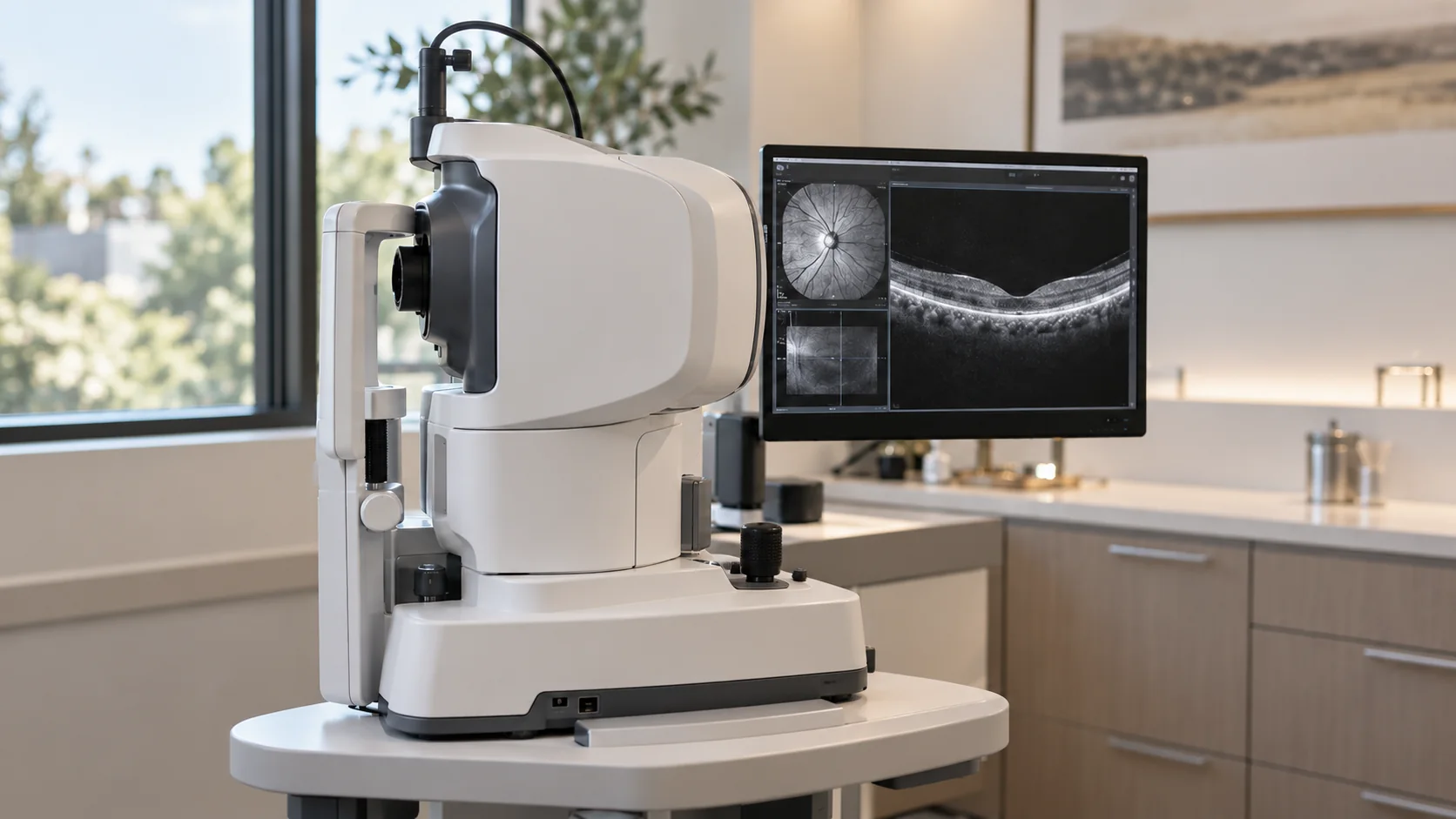
Our medical eye care covers vascular retinal disease and macular edema. Follow-up visits with our eye doctors in Los Angeles use OCT imaging to measure swelling in the retina, retinal photography to document changes over time, and eye pressure checks. When injections or laser treatment are needed, we coordinate referrals with retina specialists.
If an eye stroke leaves you with vision that glasses can't fix, a low vision evaluation starts with the tasks you want to do again and works on magnification, lighting and contrast, with training so the tools get used.
If you have diabetes, a yearly diabetic eye exam checks the small blood vessels of the retina, and we send the report to your physician.
08
Questions patients ask
How does smoking affect your eyes?
Smoking raises your risk of eye disease. The National Eye Institute says it increases the risk of macular degeneration and cataracts and can harm the optic nerve, which carries signals from the eye to the brain. Smoking is also one of the cardiovascular risk factors for an eye stroke.
How does alcohol affect your eyes?
Heavy drinking raises your risk of cataracts: MedlinePlus lists drinking excessive amounts of alcohol among the risk factors for this clouding of the eye's lens. Drinking too much alcohol is also on the list of migraine triggers, and migraine auras usually affect vision. If your vision has slowly become blurry or cloudy, or colors look faded or glare bothers you, talk with your eye doctor, since these can also be signs of other eye problems. Sudden loss of vision, sudden double vision, or any vision change with stroke signs means calling 911; other sudden blur needs an exam with us if it clears right away, or an emergency room if it doesn't.
What is diabetic retinopathy?
Diabetic retinopathy is an eye disease that affects the blood vessels in the retina, the light-sensitive layer of tissue in the back of your eye. High blood glucose can damage those vessels over time. The early stages usually don't have any symptoms, so if you have diabetes, get a comprehensive dilated eye exam at least once a year. Our diabetic retinopathy guide covers the stages and treatment.
What are the symptoms of angle-closure glaucoma?
Angle-closure glaucoma can cause sudden, intense eye pain, nausea, a red eye and blurry vision. It happens when the outer edge of the iris, the colored part of the eye, blocks fluid from draining out of the front of the eye, so the pressure inside rises quickly. It is a medical emergency, and without treatment it can cause blindness in just a few days, so call us immediately during office hours or go to an emergency room. Our page on narrow angles explains who is at risk and how we check.
09
Sources
- American Heart Association: Stroke affecting the eye requires immediate treatment
- American Heart Association News: The brain isn't the only place a stroke can occur
- MedlinePlus: Diabetic eye problems
- American Stroke Association: Stroke symptoms
- National Eye Institute: Central retinal vein occlusion (CRVO)
- StatPearls: Retinal migraine headache
- National Eye Institute: Retinal detachment
- National Eye Institute: Types of glaucoma
- JAMA Ophthalmology, 2023
- MedlinePlus: Giant cell arteritis
- National Eye Institute: Keep your eyes healthy
- National Institute of Neurological Disorders and Stroke: Migraine
- MedlinePlus: Cataract
- National Eye Institute: Diabetic retinopathy

Written by
Dr. Kevin Cohenmehr, OD
Medical eye care: glaucoma, diabetic eye exams, macular degeneration and eye infections, plus vision therapy for children. A graduate of UCLA and SUNY College of Optometry.
About Dr. Kevin →