
Same-day urgent eye care
Mon 10–5 · Tue–Fri 8–5 310-828-2010 Book online Intake form
Cohenmehr Optometry — Vision · Dry Eye · Keratoconus Book appointment
Cohenmehr OptometryVision · Dry Eye · Keratoconus Center
Our Practice
Meet the Doctors TestimonialsShare FeedbackTraveling to See UsAreas We Serve Hours & Directions
Eye Care

Routine care

Comprehensive Eye CareContact Lens ExamsComputer Vision SyndromeGlasses and Contact LensesNeurolensAdvanced Diagnostics

Medical eye care

Glaucoma & Ocular DiseaseDiabetic Eye ExamsMacular Degeneration CareLow VisionStye & Chalazion TreatmentUrgent Care

Children’s vision

Pediatric Eye ExamsMyopia ManagementAtropineOrtho-KEssilor Stellest LensesVision Therapy

Surgery co-management

Surgical Co-ManagementLASIKPRKSMILEEVO ICLRefractive Lens ExchangeCataract SurgeryCorneal TransplantPterygium Surgery
Dry Eye
The Dry Eye CenterOptiLIFTIPL (Intense Pulsed Light)Punctal PlugsBlephExAmniotic MembranesPrescription DropsAutologous Serum DropsMeibomian Gland ProbingIPL for Rosacea

Understand

Types of Dry EyeThe Tear FilmDemodex BlepharitisDry Eye After LASIKMenopause & Dry EyeSjögren’s & Dry EyeContact Lens Discomfort

Cosmetics

Upneeq® · Buy OnlineUpneeq Intake Form
Myopia Control
The Myopia ProgramMyopia Estimator — free toolOrtho-K — $1,500 totalAtropineStellest LensesMultifocal ContactsMiSight 1 Day

For parents

Choosing a TreatmentWhy Myopia MattersOutdoor Time & ScreensFirst Ortho-K NightMeasuring Progression
Keratoconus
The Keratoconus CenterScleral Contact LensesSpecialty Contact LensesScleral Lens UsesEaglet Surface ProfilerScleral Lens Care

Go deeper

Eye Rubbing & KeratoconusKeratoconus in TeensCorneal HydropsTransplant Co-Management
Scleral Lenses

The lenses

Scleral Contact LensesEvery Use, at a GlanceEaglet Surface ProfilerScleral vs RGP vs HybridSpecialty Contact LensesSpecialty Soft & ProstheticLens Care & HandlingTraveling to See Us

Corneal conditions

KeratoconusPost-LASIK EctasiaPellucid Marginal DegenerationCorneal ScarringAfter Corneal TransplantAfter Radial Keratotomy (RK)Post-Surgical ComplicationsOcular Shingles Scarring

Surface disease & more

Severe Dry EyeSjögren’s SyndromeStevens-Johnson SyndromeGraft-vs-Host DiseaseBell’s Palsy & ExposureRare Tear DeficiencyPresbyopia & High RxSports & Active Wear
Library
Start With a SymptomEye Conditions A–ZArticlesFree ToolsFull Site Index

Patients

Patient Intake FormCommon QuestionsAccepted InsurancePaying for Care (FSA/HSA)
Call the office310-828-2010
Book appointment

Medically reviewed by Dr. Bijan Cohenmehr, OD Last reviewed

Dry Eye Before Eye Surgery

The tear film is the first lens light touches — and the first thing surgery measures through.

Every laser and lens calculation starts from maps of your cornea taken through your tear film. If that film is broken, the maps lie a little — and implants or ablations calculated from them inherit the error. Treating dry eye before surgery isn’t a delay; it’s accuracy insurance. It’s also a standard part of how we prep co-managed patients here.
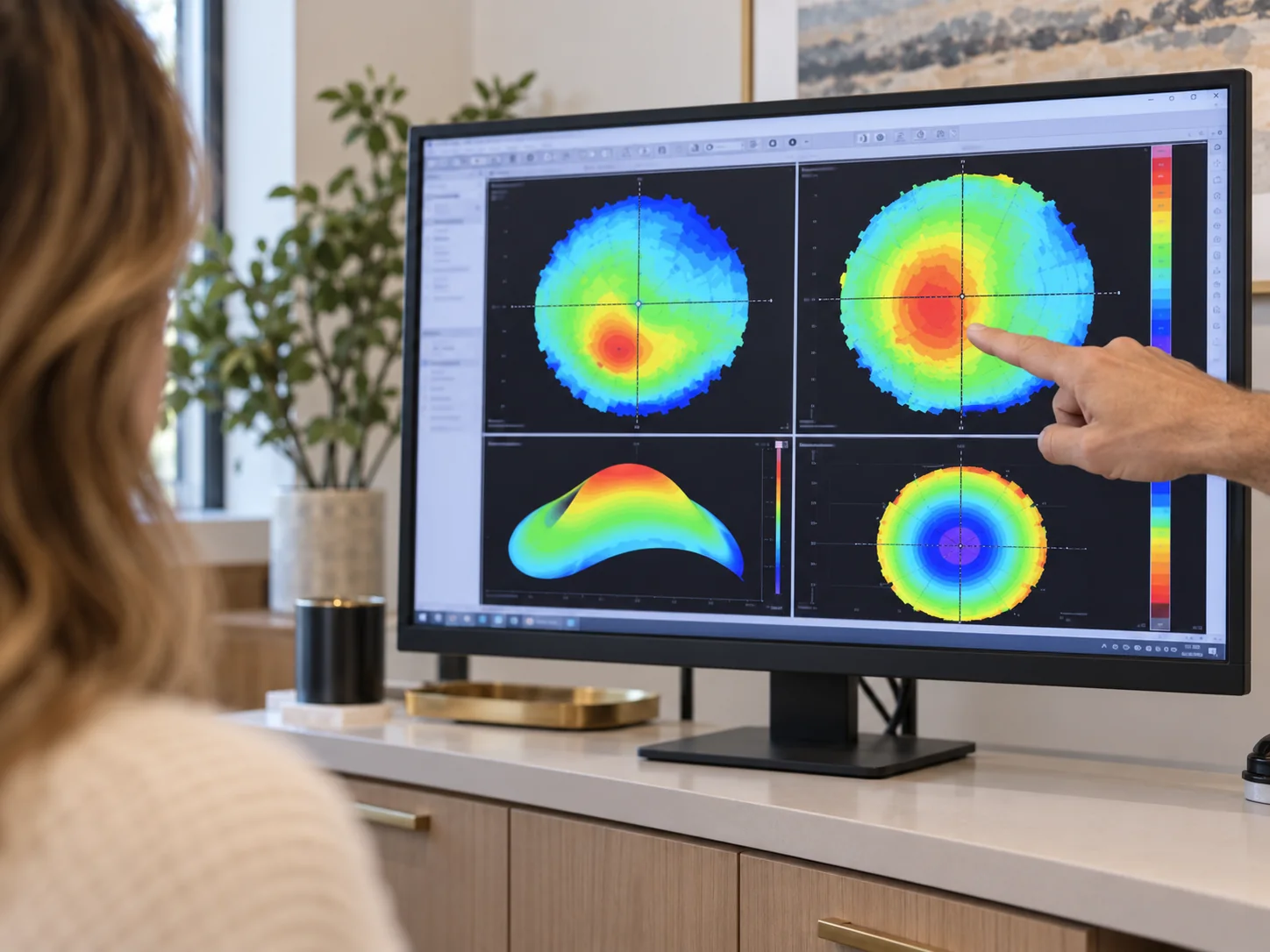
Measurement screens glowing before a procedure
The risk
Unstable film → skewed measurements
Affects
LASIK ablations, IOL power picks
The other half
Surgery itself dries eyes for a while
Our role
Film tuned before the work-up

Why it matters

Bad film in, bad numbers out.

Topography through tears

Corneal maps are read through the film’s surface; dry spots masquerade as corneal irregularity and nudge treatment plans off-center.

IOL math

Lens-implant power calculations lean on precise curvature readings. The difference between delighted and “why am I still in glasses” can hide in a dry measurement day.

The post-op dip

LASIK and lens surgery both dampen surface nerves for a while, so dryness worsens before it recovers. An eye that starts compromised starts the recovery behind.

The fix is ordinary

A few weeks of targeted treatment (gland therapy, drops, sometimes plugs) stabilizes the film so measurements repeat and surgeons calculate from truth.

This is a quiet specialty of co-management: the surgeon gets measurement-grade eyes; you get the result you paid for.

The sequence

Considering surgery? Order of operations:

  • Dry eye screening at the candidacy work-up, automatic here
  • Treat the film until measurements repeat cleanly
  • Then biometry, then surgery, then co-managed aftercare
  • The full co-management picture
Book a pre-surgical work-up

Common questions

Dry eye before surgery, answered.

Anything else, call the office at 310-828-2010.

  • Typically weeks, not months — and those weeks buy measurement accuracy that lasts the lifetime of the result.

  • Yes — and bring our findings. Surgeons calculate better from a stabilized film, and most welcome the prep.

  • Usually the dryness is a recovery-phase dip that fades over months; starting with a healthy film makes that dip shallower and shorter.

  • Yes, it can. The implant's power is calculated from measurements that include the curvature of your cornea (keratometry), and those readings are taken through your tear film. If the film is broken, the readings come out slightly off, and a lens calculated from them inherits the error. That is why we follow an order: treat the film until the readings repeat cleanly, then do the final measurements your surgeon uses to choose the lens.

  • Possibly, depending on how severe the dryness is and how it responds to treatment. Dry eye is one of the eye conditions that can raise your risk of complications from LASIK, and it is also a common side effect of the surgery. That is why dry eye screening is automatic at our candidacy work-up: we treat the tear film until measurements repeat cleanly, and your surgeon gets our findings.

Dry eye before surgery near you

12222 Wilshire Blvd, on the Santa Monica border.

West Los AngelesBrentwoodSanta MonicaWestwoodBeverly HillsCulver CityPacific PalisadesWest HollywoodMarina del ReyNewport Beach

Also consider

Next step

Surgery on the calendar?

Get the film measurement-ready first — one work-up with our optometrists in Los Angeles tells us how close you already are.

Book a work-up Or call 310-828-2010