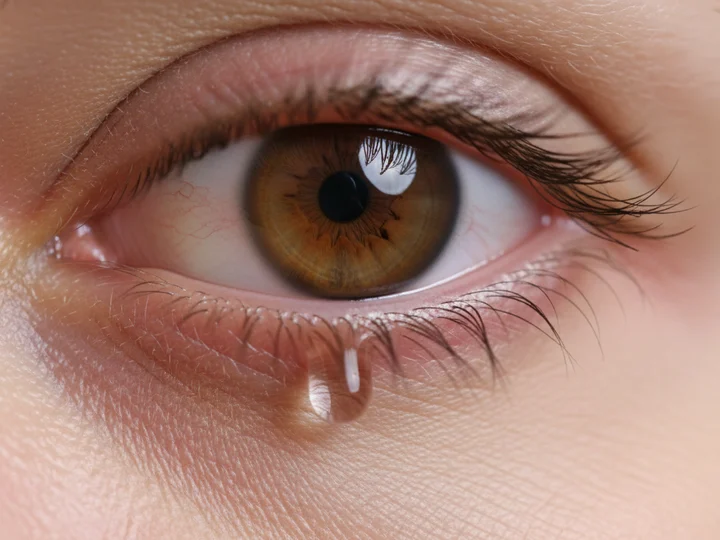
Xanthelasma are soft, yellowish patches of cholesterol in the skin of the eyelids, usually near the inner corners. They're benign and don't turn into cancer, but they're worth raising with your primary care doctor. They can go along with high cholesterol, and in a Copenhagen study that followed 12,745 adults for up to 33 years, people with xanthelasma had a higher risk of heart attack and heart disease, even after accounting for their cholesterol levels. A simple blood test called a lipid profile checks your cholesterol. Removing the patches is a cosmetic choice, and they often come back. We check the eyelids at every comprehensive eye exam.
Key takeaways
- Yellow eyelid patches called xanthelasma are benign cholesterol deposits that don't turn into cancer, but they can go along with high cholesterol.
- In a Copenhagen study of 12,745 adults, people with xanthelasma had a higher risk of heart attack and heart disease, even after accounting for cholesterol.
- Ask your primary care doctor for a lipid profile, a simple blood test that checks your cholesterol.
- Removal is a cosmetic choice, the patches often come back, and you shouldn't try to remove them yourself.
01
What is xanthelasma?
Xanthelasma (in full, xanthelasma palpebrarum) are sharply outlined, yellowish, flat plaques on the upper or lower eyelids. They're the most common kind of xanthoma, a fatty deposit in the skin, and they appear more often on the upper lid than the lower, most commonly near the inner corner of the eye.
Most feel soft, though some are firmer. They usually appear in adulthood: the age of onset ranges from 15 to 73 years, with a peak between 30 and 50. In a Danish study of 12,745 adults, 4.4% had xanthelasma when the study began.
The patches are benign, and they have no premalignant potential, meaning they don't turn into cancer.
02
Does xanthelasma mean you have high cholesterol?
Not always, but it's a reason to check. Xanthelasma can occur in people whose blood fat (lipid) levels are normal apart from a low HDL, the "good" cholesterol that helps your body get rid of cholesterol.
The researchers behind the Copenhagen study note that, on average, half of people who come in with xanthelasma and arcus have relatively low lipid levels. Arcus is a gray ring that forms when cholesterol builds up at the edge of the cornea, the clear front surface of the eye.
Sometimes the cholesterol is very high. Familial hypercholesterolemia is an inherited condition with very high levels of cholesterol in the blood, and in people who have it, yellowish cholesterol deposits can develop under the skin of the eyelids. It affects an estimated 1 in 200 to 1 in 250 people in most countries.
03
Is xanthelasma a sign of heart disease?
It can be, and the link doesn't come down to cholesterol alone. The Copenhagen City Heart Study followed 12,745 people aged 20 to 93, none of whom had ischemic vascular disease (disease from blocked blood flow) at the start, for up to 33 years. People with xanthelasma had a higher risk of heart attack, ischemic heart disease, severe atherosclerosis (hardened, narrowed arteries) and death, independently of well-known risk factors including cholesterol and triglyceride levels.
After adjustment for other risk factors, people with xanthelasma had 1.48 times the risk of a heart attack. The highest 10-year risk of ischemic heart disease was in men aged 70 to 79: 53% for those with xanthelasma and 41% for those without.
The same study looked at arcus. Unlike xanthelasma, it was not an important independent predictor of risk.
04
Should you get your cholesterol checked?
Yes. A review of xanthelasma advises measuring blood lipids, including cholesterol and triglycerides, in people who have it. High cholesterol usually has no symptoms, and your health care team can check it with a simple blood test called a lipid profile. After that, how often you need the test depends on your age, risk factors and family history.
If your cholesterol is high, heart-healthy lifestyle changes can lower it, and if they aren't enough, you may also need medicine. Familial hypercholesterolemia can't be treated by diet and exercise alone; treatment usually involves a statin drug.
Even if your numbers come back normal, mention xanthelasma when you and your doctor talk about heart health: the Copenhagen researchers suggest it should be considered an independent, added risk factor for heart attack and ischemic heart disease.
05
How is xanthelasma removed?
Removal is a cosmetic choice. The patches never limit function, and people who want them removed consult dermatologists, ophthalmologists or plastic surgeons. The options include simple surgical excision (cutting the patch out), laser therapy, chemical cauterization with trichloroacetic acid (TCA), radiofrequency and cryotherapy (freezing).
Each method carries some risk this close to the eye. Surgery can cause ectropion (a lower lid that turns outward) and changes in skin color, and laser treatment has been linked to ectropion and to injuries of the cornea.
The patches also tend to return. Recurrence is common whatever the treatment, and in one series 40% of patients had a recurrence after a first surgical excision.
Don't try to remove them yourself. The FDA warns consumers not to buy or use certain chemical peel products, including ones containing TCA, without supervision by a dermatologist or other licensed and trained practitioner, because they can cause severe chemical burns, infection, skin color changes and disfiguring scars.
06
When should a spot on your eyelid be checked?
Have any new or changing spot on your eyelid looked at. A change in your skin is the most common sign of skin cancer, and basal cell carcinoma, for example, can look like a shiny bump, a pink or red scaly patch, or a sore that doesn't heal and is crusty or bleeds.
Flat yellow patches near the inner corners fit the picture of xanthelasma. A spot that bleeds, crusts, won't heal or keeps changing should be examined.
07
How we check your eyelids at Cohenmehr Optometry
The lids are part of every comprehensive eye exam. At the slit lamp, under magnification, our optometrists in Los Angeles examine the lids, the cornea and the rest of the front of the eye, along with the retina and optic nerve.
If you've noticed yellow patches, point them out at your visit, and take the cholesterol question to your primary care doctor, who can order a lipid profile. We don't perform surgery, so removal is a conversation for the dermatologist, ophthalmologist or plastic surgeon you choose.
If you have diabetes, our diabetic eye exams include a dilated retinal exam, and Dr. Kevin Cohenmehr co-manages that care with your primary doctor or endocrinologist.
08
Questions patients ask
Does lowering cholesterol get rid of xanthelasma?
Usually not by itself. A review of xanthelasma notes that medical management, although important in the overall care of someone with abnormal lipids, has a limited role in treating the patches themselves. Lowering high cholesterol still matters for your arteries, since a high LDL level leads to the buildup of plaque. If the patches bother you, removal is the more direct route.
Can diabetes or thyroid problems cause xanthelasma?
They may play a part. Hyperlipidemia (high blood fats), thyroid dysfunction and diabetes are listed as possible triggers of xanthelasma. If you have xanthelasma and haven't been checked for these, ask your primary care doctor. If you already have diabetes, our diabetic eye exams check the retina every year, or as your doctor advises.
Is xanthelasma the same as a chalazion?
No. A chalazion is a slowly developing lump that forms when an oil gland in the eyelid is blocked and swollen, and most clear up on their own in a few weeks to a month. A stye is an infection of an oil gland at the edge of the eyelid. Xanthelasma is neither: it's a yellowish patch of cholesterol near the inner corner of the lid. Our stye and chalazion treatment page covers lid lumps.
Does xanthelasma run in families?
It can when an inherited cholesterol disorder is behind it. Familial hypercholesterolemia is an inherited condition that causes very high blood cholesterol and can produce yellowish deposits on the eyelids. If one person in a family has familial hypercholesterolemia, all first-degree relatives (parents, siblings and children) should be checked for it, and children at increased risk should be screened starting at age 2.
09
Sources
- MedlinePlus: Eyelid disorders
- Clinical, Cosmetic and Investigational Dermatology, 2017
- BMJ, 2011
- MedlinePlus Genetics: Familial hypercholesterolemia
- American Heart Association: Familial hypercholesterolemia
- MedlinePlus: Cholesterol
- CDC: Testing for cholesterol
- FDA: Warning on chemical peel products
- CDC: Symptoms of skin cancer
- American Optometric Association: Chalazion
- American Optometric Association: Hordeolum (stye)

Written by
Dr. Bijan Cohenmehr, OD
Founder of Cohenmehr Optometry, in practice for over 40 years. He leads the practice’s dry eye care and myopia management. A graduate of SUNY College of Optometry.
About Dr. Bijan →