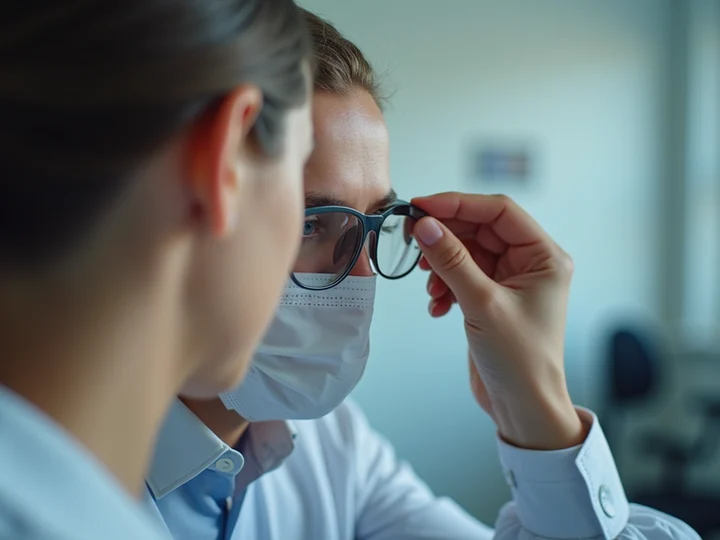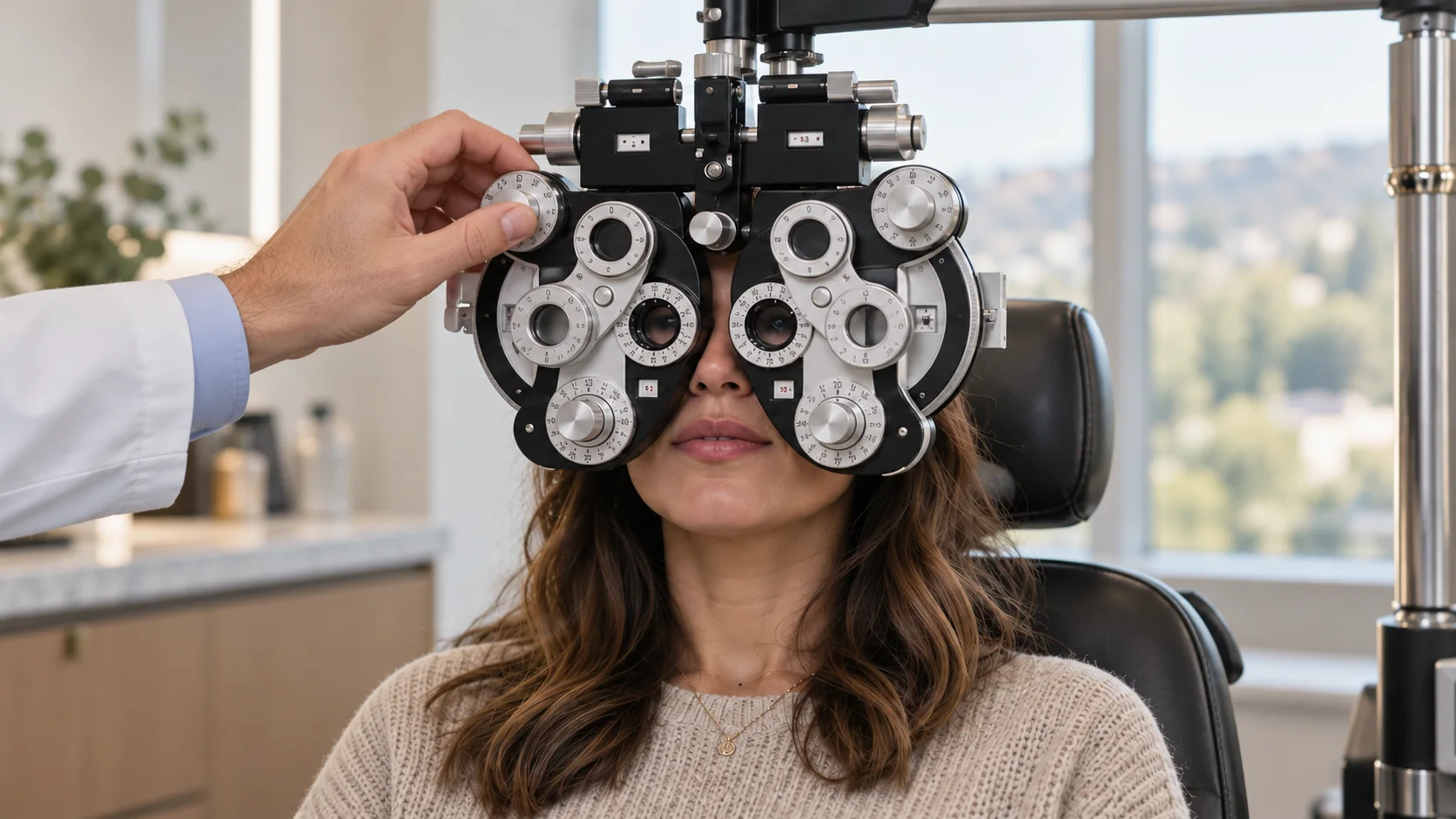
An optometrist is a doctor of optometry (OD) who examines eyes, prescribes glasses and contact lenses, and diagnoses, treats and manages eye diseases, including with prescription medicines. An ophthalmologist is the other basic type of eye doctor and may offer treatments, like surgery, that optometrists don't. Opticians aren't doctors; they fit glasses and contacts from your prescription. For general eye care, either kind of eye doctor is a good option.
Key takeaways
- Optometrists and ophthalmologists both examine eyes and prescribe glasses, contacts and medicines, and ophthalmologists may also offer treatments, like surgery, that optometrists don't.
- Start with either kind of eye doctor for general eye care, and for serious eye problems you may want an ophthalmologist.
- An optician fits glasses and contacts from your prescription and isn't a doctor, while an optometrist holds a doctor of optometry (OD) degree.
- Call 911 for sudden loss of vision or double vision, even if it comes back, or other stroke signs.
01
What is an optometrist?
An optometrist is an eye doctor with a doctor of optometry (OD) degree. The American Optometric Association (AOA) calls optometrists America's primary eye health care providers.
The degree takes four years at a college of optometry, after undergraduate study at a college or university. Many optometrists then complete a residency in a specific area of practice.
All three doctors at our practice are Los Angeles optometrists who trained at SUNY College of Optometry: Dr. Bijan, Dr. Kevin and Dr. Brandon Cohenmehr. Each of them sees patients for comprehensive eye exams.
02
What does an optometrist do?
Optometrists examine, diagnose, treat and manage diseases and disorders of the eye. Day to day, that covers:
- Comprehensive eye exams, including a dilated exam of the retina and optic nerve
- Prescriptions for glasses and contact lenses, and contact lens fittings
- Prescription medicines for eye conditions
- Testing and monitoring for eye diseases such as glaucoma and macular degeneration
- Vision therapy and low vision rehabilitation
- Advice on surgical and non-surgical options, and in practices like ours, care before and after surgery
An eye exam can also turn up signs of conditions elsewhere in the body, such as high blood pressure and diabetes.
The AOA notes that optometrists also perform certain surgical procedures. An ophthalmologist, though, may offer treatments, like surgery, that optometrists don't. We don't perform surgery: for an operation such as cataract surgery or LASIK, we refer you to a trusted surgeon and look after your eyes before and after it.
03
Are optometrists doctors?
Yes. An optometrist is a doctor of optometry (OD), and Medicare recognizes doctors of optometry as physicians. The OD after each of our doctors' names stands for that degree.
04
What is an ophthalmologist?
An ophthalmologist is the other basic type of eye doctor. Like optometrists, ophthalmologists can give you a comprehensive dilated eye exam, write a prescription for glasses or contacts and prescribe medicines, and they may offer treatments, like surgery, that optometrists don't.
Some ophthalmologists specialize in specific eye diseases, like glaucoma or diabetic retinopathy.
Subspecialists are often the doctors we refer you to. A retinal tear goes to a retina specialist, with the referral and records sent the same day, and glaucoma that needs advanced treatment goes to a glaucoma specialist.
05
What does an optician do?
An optician fits glasses and contact lenses from an eye doctor's prescription. Opticians aren't doctors: after your eye doctor gives you an exam and writes a prescription, the optician uses it to set you up with the right glasses or contacts.
Your eye doctor may have an optician working in the office. Ours work in our optical, so a new prescription goes straight to frame selection and lens measurements in the same visit.
06
How do optometrists, ophthalmologists and opticians compare?
The two kinds of eye doctor overlap on exams, prescriptions and medicines. Eye surgery falls mostly to ophthalmologists, and opticians don't examine eyes at all.
| Optometrist | Ophthalmologist | Optician | |
|---|---|---|---|
| Doctor? | Yes, a doctor of optometry (OD) | Yes, an eye doctor who may also offer surgery | No |
| Eye exams and vision tests | Yes | Yes | No |
| Glasses and contact lens prescriptions | Writes them | Writes them | Fills them |
| Diagnoses and treats eye disease | Yes, including with prescription medicines | Yes, including with medicines and surgery | No |
| Eye surgery | Certain procedures only | Yes | No |
07
Should I see an optometrist or an ophthalmologist?
For general eye care, start with either one. Both can give you a comprehensive dilated eye exam, write a prescription for glasses or contacts, and prescribe medicines.
An optometrist is a natural first stop for:
- Routine eye exams for adults and children
- Glasses, contact lenses and specialty lens fittings
- Red, dry, itchy or irritated eyes
- Ongoing checks for conditions such as glaucoma, diabetic eye disease and macular degeneration
For serious eye problems, the National Eye Institute suggests you may want an ophthalmologist, since this type of eye doctor may offer treatments, like surgery, that optometrists don't. In practice, that means an operation or treatment from a subspecialist, such as a retina specialist.
You don't have to pick one for life. Here, routine and medical eye care happen in our office, you see a surgeon or subspecialist when a referral calls for it, and records flow both ways.
To find an eye doctor, start by asking your regular doctor for the names of local eye doctors, and ask family and trusted friends what they like or don't like about theirs. If you have health insurance, your plan's website or a call to the insurer can give you a list of eye doctors in its network. After a visit, think about whether things were explained in a way you understood, whether you got to ask questions and whether you felt rushed. If you're not happy, it's okay to look for a different eye doctor.
08
How do optometrists and ophthalmologists work together?
They work together through referrals and co-management, an arrangement in which the surgeon operates and the optometrist handles the care around the operation. At our office, surgical co-management means we confirm you are a candidate and prepare your eyes, a trusted surgeon performs the procedure, and afterward we manage your drops, healing checks and final prescription. Before surgery, that work-up covers corneal mapping, the stability of your prescription and the health of your eyes, with dry eye treated first when needed.
The procedures we co-manage include LASIK and PRK laser vision correction, EVO ICL implantable lenses, refractive lens exchange, cataract surgery, corneal cross-linking for keratoconus and corneal transplants.
The same partnership covers medical eye care. Dr. Kevin Cohenmehr leads our glaucoma care and diabetic eye exams, works with glaucoma and retina specialists when a condition needs them, and sends diabetic exam reports to your physician.
09
Questions patients ask
Can optometrists prescribe antibiotic eye drops?
Yes. Optometrists can prescribe medicines, antibiotic eye drops among them. Antibiotics, usually given as drops or ointment, treat bacterial infections such as bacterial pink eye. They will not improve viral pink eye, because these drugs are not effective against viruses, so the exam has to find the cause first.
Can an optometrist test for glaucoma and treat it?
Yes. A comprehensive eye exam with a doctor of optometry can identify and treat diseases such as glaucoma. Eye doctors check for glaucoma as part of a comprehensive dilated eye exam, and prescription eye drops are the most common treatment; if medicines and laser treatment don't work, your doctor might suggest surgery. Dr. Kevin Cohenmehr leads glaucoma testing and management here, with eye pressure checks, OCT imaging and visual fields, and works with glaucoma specialists when advanced treatment is needed.
Can an optometrist do your yearly diabetic eye exam?
Yes. With diabetes, you need a comprehensive dilated eye exam at least once a year. Optometrists and ophthalmologists both give that exam. If it finds diabetic retinopathy (damage to the retina from diabetes) that needs treatment, such as injections or laser, we coordinate a referral to a retina specialist. Dr. Kevin Cohenmehr leads diabetic eye exams at our office, with retinal photography, OCT imaging and a report to your physician.
Should kids see an optometrist or an ophthalmologist for an eye exam?
Either can examine a child: for general eye care, an optometrist or an ophthalmologist is a good option, and for serious eye problems an ophthalmologist may offer treatments, like surgery, that optometrists don't. Here, all three doctors see children for pediatric eye exams, and Dr. Kevin Cohenmehr leads vision therapy for children.
Should I see an optometrist or an ophthalmologist for an eye emergency?
Call 911 for sudden loss of vision or double vision, even if it comes back, or other stroke signs. A cut or a pierced eye needs an emergency room, without rinsing or removing anything. If something is stuck in your eye, don't rub it; call and come straight in so we can remove it, or go to an emergency room when we're closed. Do the same for new flashes or floaters, a shadow over your vision, or severe eye pain with nausea, headache or halos. For a chemical splash, rinse with room-temperature water for at least 15 to 20 minutes, then call Poison Control at 1-800-222-1222.
10
Sources
- American Optometric Association: What's a doctor of optometry?
- National Eye Institute: Finding an eye doctor
- National Eye Institute: Glaucoma
- National Eye Institute: Diabetic retinopathy
- National Eye Institute: Corneal conditions
- CDC: How to treat pink eye
- American Stroke Association: Stroke symptoms
- Poison Control: Splashed a poison in your eye?
Written by
Dr. Kevin Cohenmehr, OD
Medical eye care: glaucoma, diabetic eye exams, macular degeneration and eye infections, plus vision therapy for children. A graduate of UCLA and SUNY College of Optometry.
About Dr. Kevin →