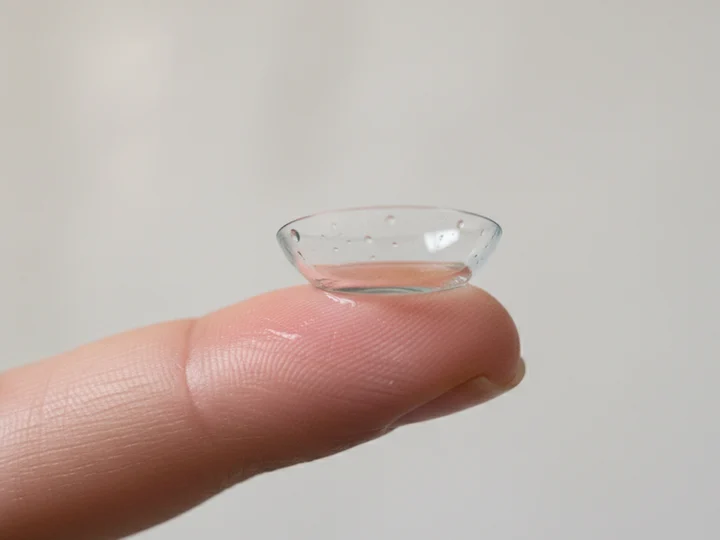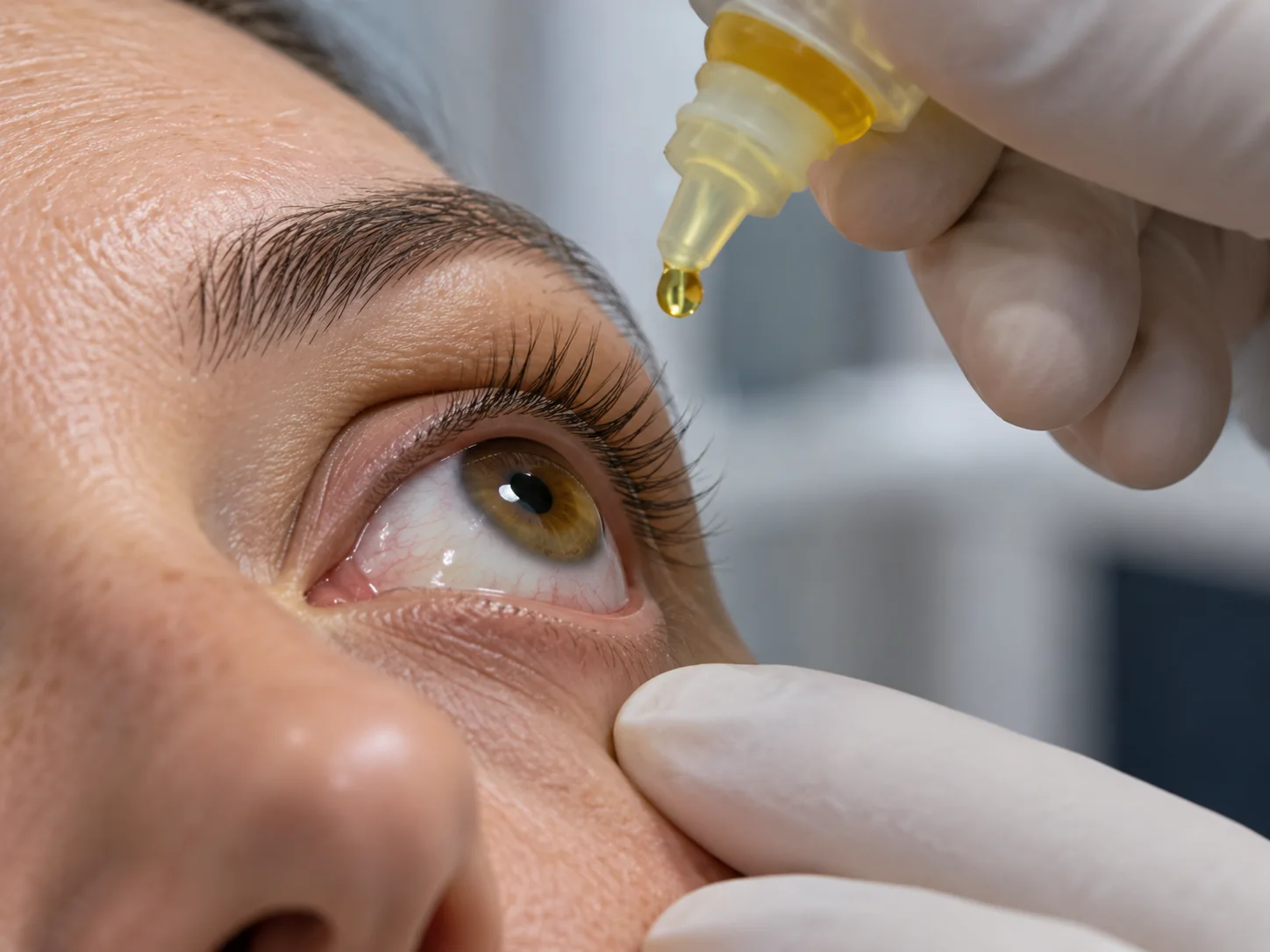
Keratoconus surgery covers several procedures, and each has a different job. Corneal cross-linking stabilizes the cornea to slow or halt progression, and a corneal transplant is necessary in a few cases. Intacs, small inserts placed in the cornea, have a humanitarian FDA approval to reduce nearsightedness and astigmatism in people 21 and older with keratoconus whose contact lenses or glasses no longer give adequate vision. For vision, lenses come first: as keratoconus progresses, rigid gas permeable lenses correct vision adequately in most cases, and even after a transplant, glasses or contact lenses are often still needed. We don't operate. We co-manage with corneal surgeons, so the mapping, the referral and the aftercare happen here, as part of our keratoconus care.
Key takeaways
- Cross-linking stabilizes the cornea to slow or halt progression, and a transplant, which replaces a damaged cornea with donor tissue, is needed in a few cases.
- Surgery usually isn't needed for vision, since rigid gas permeable lenses correct vision adequately in most cases as the cornea keeps changing.
- Intacs, small inserts placed in the cornea, can improve vision for some people, though any halt in progression is likely only temporary.
- A transplant is outpatient surgery with a slow recovery, up to a year depending on the type, and glasses or contact lenses are often still needed afterward.
01
What surgery is there for keratoconus?
Four procedures come up, and they do different things, according to the American Optometric Association and the FDA's Intacs labeling:
| Procedure | What it does | Keep in mind |
|---|---|---|
| Corneal cross-linking | Stabilizes the cornea to slow or halt progression | Its goal is a stable cornea; most of our patients still wear specialty lenses afterward |
| Intacs (corneal ring segments) | Removable inserts that reshape the cornea to reduce nearsightedness and astigmatism | Not a treatment for progression; any halt is likely only temporary |
| Implantable Collamer lens (ICL) | A lens placed inside the eye that corrects a high prescription | Only once progression has stabilized; its FDA approval is for nearsighted adults 21 to 45 and doesn't mention keratoconus |
| Corneal transplant | Replaces a damaged cornea with donor tissue | Needed in a few cases; glasses or contacts are often still needed afterward |
A surgeon performs all four, and they can follow one another over the years: cross-linking first if the cornea is changing, ring segments when its shape blocks a good lens fit, and a transplant for corneas that lenses can no longer help. For the ICL, the FDA approval covers nearsighted adults 21 to 45. Its labeling asks for a stable prescription and says safety and effectiveness haven't been established in eyes with unstable or worsening myopia, previous eye surgery or a progressive sight-threatening disease other than myopia, so whether it suits a keratoconus eye is your surgeon's call.
02
Do you need surgery for keratoconus?
Not for vision, in most cases. As keratoconus progresses and the cornea keeps changing shape, rigid gas permeable lenses can be prescribed to correct vision adequately, and in most cases that is enough. For moderate to advanced keratoconus, the lens we fit most is a custom scleral lens, which rests on the white of the eye and vaults over the cornea on a layer of saline.
Stopping progression is a separate question, and that is where cross-linking comes in. AOA notes that cross-linking is indicated early after diagnosis, or later if the glasses prescription is still increasing. Symptoms usually appear in the late teens or early 20s, and keratoconus may progress for 10 to 20 years, which is why we re-map younger patients' corneas more often.
Ring segments and transplants are for a smaller group: eyes whose shape blocks a good lens fit, or corneas where scarring has gone past what lenses and cross-linking can do.
03
What is corneal cross-linking for keratoconus?
Cross-linking uses riboflavin (vitamin B2) eye drops activated by ultraviolet A (UV-A) light, as the Photrexa and Epioxa labels describe. AOA calls it corneal cross-linking surgery and says it halts or slows progression.
The FDA has approved an epi-off and an epi-on version:
- Epi-off, with Photrexa drops and the KXL System, approved April 15, 2016, for progressive keratoconus and July 15, 2016, for corneal ectasia after refractive surgery such as LASIK. The surgeon first removes the epithelium, the cornea's thin surface layer. The label says safety and effectiveness have not been established below age 14.
- Epi-on, with Epioxa, approved October 17, 2025, for keratoconus in adults and children 13 and older, used with the O2n System and the Boost Goggles. The epithelium stays in place.
In the epi-off trials, most side effects cleared within the first month, while corneal haze took up to 12 months to resolve. Our cross-linking page explains how we decide when to refer and what the two versions mean for you.
04
Do Intacs work for keratoconus?
They can improve vision for some people with keratoconus, but they aren't the treatment for a cornea that is still changing. Intacs are two small, clear plastic segments that a corneal surgeon places in the outer part of the cornea. The FDA labeling says the procedure is likely to stop progression only temporarily, and cross-linking is the treatment that halts or slows it.
The FDA approved Intacs for keratoconus on July 26, 2004, through its Humanitarian Device Exemption. That pathway today covers devices for conditions affecting no more than 8,000 people in the U.S. a year, and it is exempt from the usual effectiveness requirements. The Intacs labeling says the effectiveness of the inserts for this use has not been demonstrated.
The approval covers people who:
- Are 21 or older
- Have had a progressive decline in vision, to the point that contact lenses or glasses no longer give adequate functional vision day to day
- Have clear central corneas, with a corneal thickness of at least 450 microns where the incision is made
- Have a corneal transplant as the only other option left to improve their functional vision
The stated aim is to restore functional vision so that a transplant may be put off. The FDA's summary of the device says most patients with the inserts still need glasses or contact lenses. Most eyes with ring segments see their sharpest through a specialty lens fitted after healing, so we plan for one.
05
When is a corneal transplant needed for keratoconus?
In a few cases. A transplant is for a cornea whose damage can't be repaired: doctors remove the damaged part and replace it with healthy corneal tissue from a donor.
There are two main types:
- A full-thickness transplant (penetrating keratoplasty, or PK), when scarring or other damage affects the whole cornea
- A partial-thickness transplant (lamellar keratoplasty), when only part of the cornea is damaged
It is outpatient surgery, but recovery is slow: depending on the type, full recovery can take up to a year. One major risk is rejection, when your body treats the new cornea as a foreign object and tries to get rid of it; your doctor can give you medicine to help stop a rejection and save the cornea.
Glasses or contact lenses are often still needed after a transplant. Once your surgeon clears the eye, commonly 3 to 12 months after surgery, we fit scleral lenses that vault both full-thickness (PK) and partial-thickness (DALK) grafts; our page on corneal transplant co-management covers that year.
06
Which symptoms need a call right away?
If you suddenly lose vision in the eye that had surgery, even if it comes back, call your surgeon right away; if you can't reach the surgeon, call 911. Call 911 right away for sudden loss of vision in your other eye or both eyes, sudden double vision, or any change in vision with face drooping, arm weakness or trouble speaking. Sudden loss of vision in one or both eyes at any other time, even if it comes back, is a 911 call. For the problems below, call your surgeon or us at 310-828-2010 right away, and go to an emergency room when the offices are closed:
- After cross-linking: severe pain in the treated eye, or vision that suddenly gets worse. The FDA labels for Photrexa and Epioxa both tell patients to contact their doctor immediately.
- After cross-linking: the bandage contact lens placed on the eye at the end of the procedure falls out or slips. Don't put it back in, as the Photrexa and Epioxa labels advise.
- After a transplant: eye pain, light sensitivity, red eyes, or cloudy or hazy vision, which can be signs of rejection.
- With or without surgery: a sudden white or gray haze on a keratoconus cornea, with aching and light sensitivity, which can be corneal hydrops.
07
How we co-manage keratoconus surgery at Cohenmehr Optometry
We don't perform surgery. Corneal surgeons we co-manage with perform cross-linking, ring segments and transplants, and the care around each procedure happens here, through our surgery co-management.
Before a procedure, our optometrists in Los Angeles map the cornea with topography, tomography and pachymetry, and we repeat the maps over time to document whether your keratoconus is progressing. We explain the options in plain language, help you decide whether and when a procedure makes sense, and send your surgeon complete imaging and clinical data.
Afterward, you come back to us. After cross-linking, follow-up imaging checks that the cornea stays stable. After ring segments, we check healing, then re-map the eye on the Eaglet Eye Surface Profiler and design a new free-form lens. After a transplant, healing checks (pressure, sutures, the surface and any sign of rejection) are shared with your surgeon, and the scleral lens refit starts once the surgeon clears the graft. Our page on scleral lenses after eye surgery explains those fittings.
08
Questions patients ask
What's the difference between ICL and LASIK?
LASIK reshapes the cornea; an ICL works from inside the eye. In LASIK, a laser removes corneal tissue to reshape the cornea, and keratoconus is a reason not to have it: the FDA's summary for one LASIK laser lists diagnosed keratoconus, or any signs suggesting it, among its contraindications. An implantable Collamer lens sits behind the iris, in front of your natural lens, which stays in place. Its FDA approval covers nearsighted adults 21 to 45.
How are corneal scars treated?
It depends on how the scar affects vision. Where a scar is irregular it bends light, and a scleral lens can give light a smooth new surface to enter through; our page on scleral lenses for corneal scarring explains how. For some corneal conditions, a laser treatment called phototherapeutic keratectomy (PTK) can reshape the cornea and remove scar tissue. When the damage can't be repaired, a transplant replaces it with healthy donor tissue.
How many times can you have a corneal transplant?
More than once, when needed. If you have tissue rejection or other severe problems with a new cornea, you may need another transplant. Your doctor can give you medicine to help stop a rejection and save the cornea, so report eye pain, light sensitivity, red eyes, or cloudy or hazy vision after a transplant right away: call your surgeon or us, or go to an emergency room when the offices are closed.
How soon can I drive after a corneal transplant?
Not on the day of surgery. A corneal transplant is outpatient surgery, but you won't be able to drive, so you'll need someone to take you home, and you'll have a follow-up visit the next day. After that, it depends on how well you see and what your surgeon says. Full recovery can take up to a year, so ask your doctor when you can get back to your normal activities, driving included.
09
Sources
- American Optometric Association: Keratoconus
- FDA: Intacs for keratoconus (HDE H040002)
- FDA: Intacs labeling
- FDA: EVO/EVO+ Visian implantable Collamer lens
- FDA: EVO ICL directions for use
- FDA: Photrexa prescribing information
- FDA: Epioxa prescribing information
- FDA: Photrexa approval letter, April 2016
- FDA: Photrexa approval letter, July 2016
- FDA: Epioxa approval letter, October 2025
- FDA: Humanitarian Device Exemption
- FDA: Intacs approval order, 2004
- FDA: Intacs summary of safety and probable benefit
- National Eye Institute: Corneal conditions
- National Eye Institute: Corneal transplants
- FDA: What is LASIK?
- FDA: WaveLight EX500 summary of safety and effectiveness
Written by
Dr. Brandon Cohenmehr, OD
Specialty contact lenses, with a focus on Ortho-K, scleral lenses, and co-managing patients with keratoconus and other corneal disease. A graduate of SUNY College of Optometry.
About Dr. Brandon →