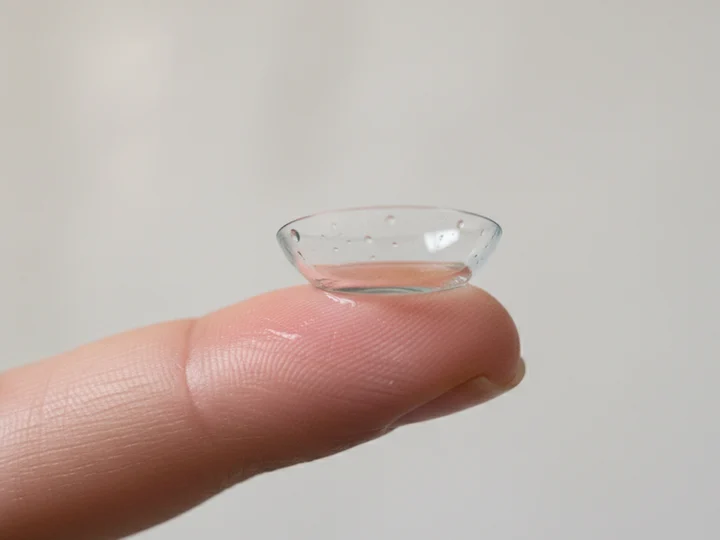
Keratoconus can count as a disability, depending on which program is asking and how much it limits your vision with the correction you can use day to day. Social Security defines blindness as central visual acuity of 20/200 or less in the better eye with a correcting lens, and it uses vision measured with a specialized lens, such as a contact lens, only if you have shown you can use that lens on a sustained basis. Under the ADA, a disability includes an impairment that substantially limits a major life activity, and seeing is one. California's DMV asks a different question: whether you pass its vision screening for driving. None of this is legal advice; each agency decides individual cases, so check with it directly.
Key takeaways
- Keratoconus may qualify as a disability, depending on the program and how limited your vision is with your everyday correction, and each agency decides individual cases.
- For Social Security, blindness means 20/200 or less in the better eye with a correcting lens, and contact lens results count only if you've shown sustained use.
- Under the ADA, keratoconus can be a disability when it substantially limits your vision, since seeing is a major life activity.
- California's DMV screening standard, with or without corrective lenses, is 20/40 with both eyes together, and 20/40 in one eye and at least 20/70 in the other.
01
Can you get Social Security disability for keratoconus?
Possibly, if keratoconus keeps you from working and your vision stays severely limited even with the correction you can wear. Social Security's definition of disability requires that a medical condition keeps you from working at the level it calls substantial gainful activity, keeps you from doing the work you did before or adjusting to other work, and has lasted, or is expected to last, at least 12 months. It pays nothing for partial or short-term disability, and to qualify for its disability benefits you must also have worked long enough, and recently enough, under Social Security.
For vision, its listing for loss of central visual acuity (the sharpness of your straight-ahead vision) is met when the remaining vision in the better eye is 20/200 or less after optimal correction, the sharpest vision a corrective lens can give. Social Security also considers you legally blind if the visual field in your better eye is 20 degrees or less, even with a corrective lens.
The lens rule matters for keratoconus. Your vision can be tested with a specialized lens such as a contact lens, but Social Security uses those results only if you have shown that you can use the lens on a sustained basis. The vision listings don't mention keratoconus or scleral lenses, so how the rule applies to a particular lens is for Social Security to decide.
Not meeting a listing doesn't settle the question. If your impairment doesn't meet or medically equal a listing, you may or may not still have the capacity to do substantial gainful work, and Social Security goes on to assess that. To evaluate a vision disorder, it usually needs a report of an eye examination.
02
Is keratoconus a disability under the ADA?
It can be, when it substantially limits your vision. The ADA defines a person with a disability as someone with a physical or mental impairment that substantially limits one or more major life activities, and its examples of major life activities include seeing. The term "substantially limits" is interpreted broadly and is not meant to be a demanding standard.
The EEOC's guidance explains an ADA rule about lenses: a decision about disability must ignore the benefits of mitigating measures other than "ordinary eyeglasses or contact lenses," meaning lenses intended to fully correct visual acuity or eliminate refractive error. A person who uses ordinary glasses or contact lenses intended to fully correct their vision typically isn't covered as having an "actual" or a "record of" visual disability.
The EEOC guidance doesn't mention keratoconus or specialty lenses such as scleral lenses, so it doesn't say how that rule applies to them. A person can also be covered for having a record of a disability, for example when a substantially limiting vision impairment has been corrected surgically.
03
What work accommodations help with keratoconus?
Changes to lighting, screens and schedules are among the examples the EEOC gives for employees with vision impairments: a workspace with brighter or lower lights, computer screen magnification tools, a larger monitor with a high-contrast theme, screen magnification software and modified work schedules.
Glare is part of keratoconus from the start: even in its earliest stages it increases sensitivity to glare and light, so lighting is worth raising first.
No special wording is needed to ask. The EEOC says you simply tell your employer that you need an adjustment or change at work because of an impairment. The ADA doesn't require job applicants to disclose a vision impairment unless they need an accommodation during the application process, such as application materials in larger print, and an employer may not ask about an applicant's medical condition before making a conditional job offer.
The EEOC also points to the Job Accommodation Network (JAN), a free, federally funded, confidential service that provides information on accommodations.
04
Can you drive with keratoconus in California?
Yes, if you pass the DMV's vision screening, with or without corrective lenses. The screening standard is 20/40 with both eyes together, and 20/40 in one eye and at least 20/70 in the other. If you take the vision test in glasses or contact lenses, your license will carry a corrective lenses restriction.
If you don't pass, the DMV refers you to a vision specialist, who examines you and completes a Report of Vision Examination (DL 62). After reviewing it, the DMV may schedule a drive test or a Supplemental Driving Performance Evaluation to see whether the vision condition impairs your driving or whether you can compensate for it. When the condition could improve, or more training could help, it can impose restrictions that limit driving while allowing practice. People with vision of 20/200 or worse may not be scheduled for a drive test.
A diagnosis alone isn't what decides it: depending on the severity, functional impairment and stability of a vision condition, the DMV may take different actions.
Glare matters for driving, too. The DMV describes glare from oncoming headlights as a disruption of vision and glare recovery as how fast your vision returns afterward, and keratoconus raises sensitivity to glare. Our article on how scleral lenses helped one patient drive at night describes one person's experience.
05
Why does corrected vision matter so much with keratoconus?
Correction matters to each of these programs in a different way, and with keratoconus the type of correction you use can change the result. Early on, glasses or soft contact lenses may correct the mild nearsightedness and astigmatism it causes. As the cornea becomes more irregular, glasses may no longer correct vision adequately, and rigid, scleral or hybrid contact lenses may be needed.
That is why lens wear comes up with every program. Social Security counts vision measured with a specialized lens only if you've shown you can use it on a sustained basis, the ADA treats ordinary lenses intended to fully correct vision differently from other measures, and the DMV's screening standard applies with or without corrective lenses.
If your vision still limits daily tasks even with the right lens, low vision care works on the tasks themselves with magnification, lighting and contrast.
06
How we can help at Cohenmehr Optometry
Keratoconus care with our Los Angeles optometrists starts with measurements: corneal topography, tomography and pachymetry, your vision with correction, and how much your prescription has changed over the last few years. Keratoconus monitoring visits compare each new map with that baseline.
For vision, we fit the full range of specialty lenses, most often scleral lenses for moderate to advanced keratoconus. When the maps show the cornea changing, we start the conversation about corneal cross-linking and a referral to a corneal surgeon.
If keratoconus is affecting school, work or driving, tell us at your visit. For students, we provide what schools need for seating and screen accommodations.
07
Questions patients ask
What does a low vision specialist do?
A low vision specialist helps you use the vision you have when it can't be fully corrected. Low vision makes everyday activities hard and can't be fixed with glasses, contact lenses or standard treatments like medicine or surgery; vision rehabilitation can include training to use a magnifying device for reading, help setting up your home and adjusting phone or computer settings. Our low vision evaluations start with the tasks you want to do again.
Does it matter if keratoconus is worse in one eye?
It can. Keratoconus may affect each eye differently, and Social Security and the DMV look at the eyes in different ways. Social Security's vision listings focus on the better eye: listing 2.02, for example, asks whether the remaining vision in the better eye after optimal correction is 20/200 or less. California's DMV screening standard is 20/40 with both eyes together, and 20/40 in one eye and at least 20/70 in the other, with or without corrective lenses. Each agency decides individual cases.
Can my employer ask about my keratoconus?
In certain situations, according to the EEOC. Before a conditional job offer, an employer may not ask about an applicant's medical condition. Once you're working, it generally may ask disability-related questions when it has a reasonable belief, based on objective evidence, that a medical condition will impair your ability to do essential job functions or that you'll pose a direct threat at work because of one. It may also ask about a vision impairment when the information is needed to support your own accommodation request, and with limited exceptions it must keep medical information confidential. This is general information, not legal advice.
Do I need medical documentation to ask for a work accommodation?
Not always. When a visual disability or the need for an accommodation isn't obvious or already known, the employer may ask for reasonable documentation about how the condition limits the function of the eyes, seeing or other major life activities, and why an accommodation is needed. You can ask for an accommodation at any time, and the EEOC notes that employees may wish to tell their employer as soon as they realize they need one to do their job.
08
Sources
- Social Security: Special senses and speech listings
- Social Security: How to qualify for disability
- ADA.gov: Introduction to the ADA
- EEOC: Visual disabilities in the workplace
- California DMV: Vision impairment and DMV requirements
- California DMV: Driver handbook, the testing process
- American Optometric Association: Keratoconus
- FDA summary review: Photrexa, 2016
- National Eye Institute: Low vision

Written by
Dr. Brandon Cohenmehr, OD
Specialty contact lenses, with a focus on Ortho-K, scleral lenses, and co-managing patients with keratoconus and other corneal disease. A graduate of SUNY College of Optometry.
About Dr. Brandon →